 |
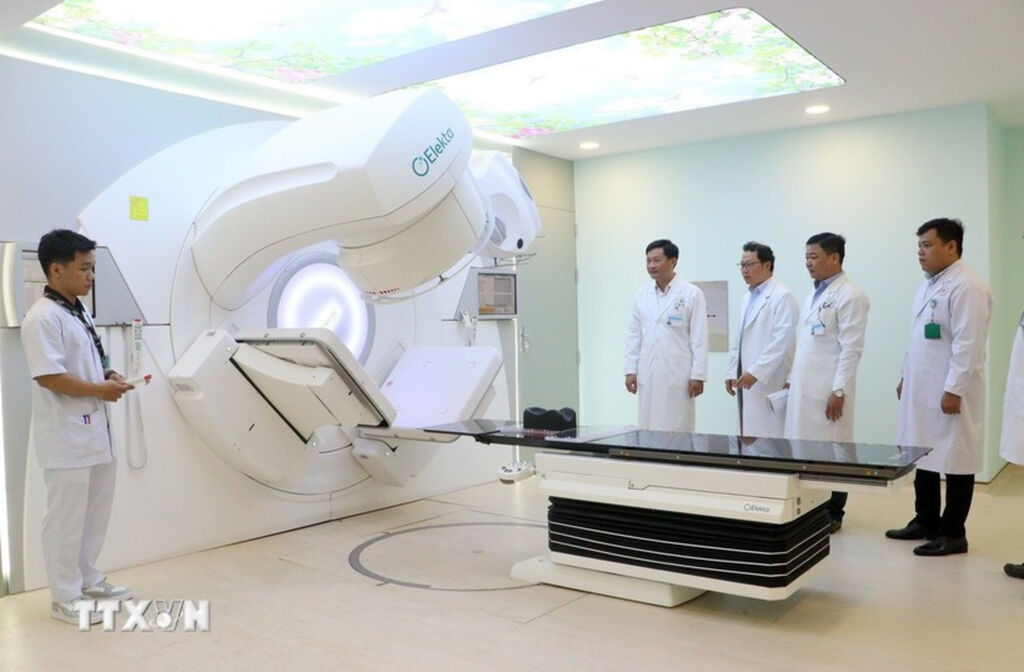
| Doctors from Cho Ray Hospital (Ho Chi Minh City) and Vinh Long General Hospital (Vinh Long province) test the operation of a linear accelerator radiotherapy system for cancer treatment (Photo: VNA) |
Hanoi (VNA) – Deputy Prime Minister Nguyen Chi Dung on December 17 signed Decision No. 2736/QD-TTg approving a plan to implement the master plan on the development and application of nuclear energy through 2030, with a vision to 2050.
The plan aims to ensure the effective implementation of Decision No. 245/QD-TTg dated February 5, 2025, which approved the national master plan, while concretising objectives, orientations, solutions and resources for applying radiation and radioisotopes across sectors. It also assigns responsibilities to ministries, sectors and localities, and sets roadmaps and priorities for key programmes and projects.
Key tasks through 2030 focus on developing and applying radiation and radioisotopes in healthcare, natural resources and environment, agriculture and industry, alongside strengthening nuclear science and technology capacity, human resources, and nuclear safety and security.
In health care, the plan targets upgrading and expanding networks of radiotherapy, nuclear medicine and diagnostic imaging facilities to meet medical demand, improve quality and efficiency, and ensure radiation safety.
Tasks include investing in or building oncology and nuclear medicine departments in centrally run provinces and cities, prioritising underserved regions, and equipping central hospitals with advanced technologies. Private hospitals are encouraged to invest in modern radiation-based equipment, while clinical dose verification systems and international quality assurance programmes will be strengthened.
Regarding nuclear science and technology capacity, the plan focuses on improving research infrastructure, legal frameworks, state management capacity, and human resources, while ensuring nuclear safety and security. Tasks include upgrading modern laboratories, enhancing the national radiation and nuclear safety authority, and strengthening governance in nuclear energy applications.
Under the plan, research, application and training institutions in nuclear energy will see improved facilities, workforce quality and operational efficiency. Priorities include studying the establishment of a national institute or centre for radiation medicine; investing in leading oncology and nuclear medicine units, including military facilities; developing specialised human resources and equipment for geological surveys, environmental monitoring and water resources; and forming strong research groups applying radiation and radioisotopes in agriculture, such as crop breeding, pest control and food irradiation.
A number of major projects will be implemented, including upgrading the national radiation environment monitoring and early warning network; enhancing research and technical support capacity of the Vietnam Atomic Energy Institute; investing in a cyclotron accelerator and laboratories in Hanoi to develop radiopharmaceuticals; strengthening national radiation medicine capacity and medical exposure control in line with international guidelines; and establishing monitoring stations using cosmic-ray neutron techniques and stable isotopes to support soil moisture mapping, drought monitoring and water resources management./.