 |
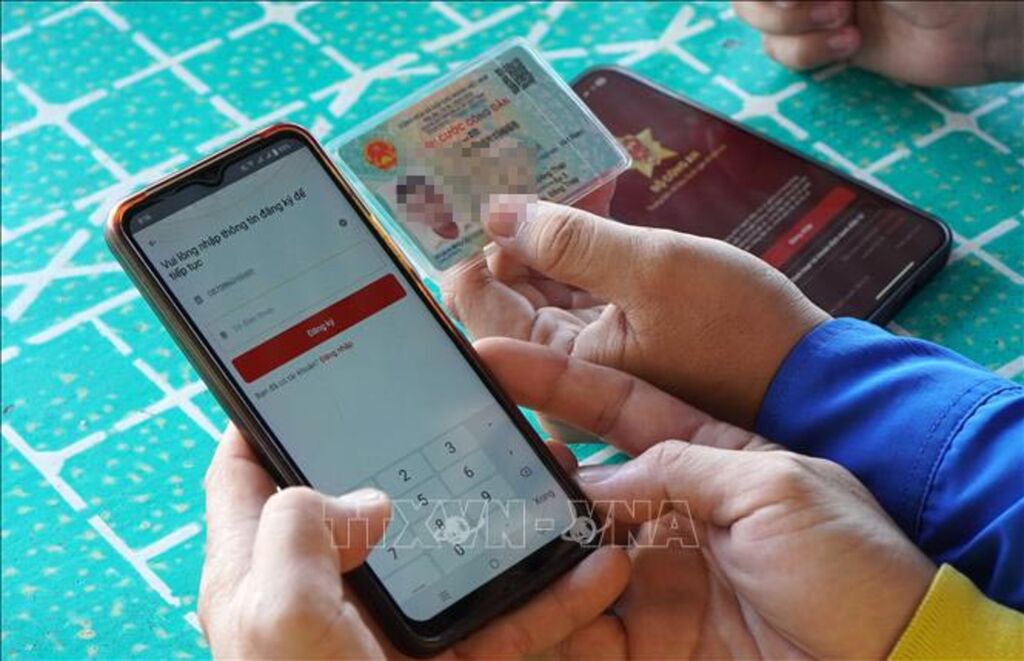
| A person accesses online public services via the VNeID application. (Photo: VNA) |
Hanoi (VNA) – Deputy Prime Minister Ho Quoc Dung has signed Decision No. 2836/QD-TTg approving Vietnam’s national action plan on civil status registration and statistics for the 2026–2030 period, with the overarching goal of fully digitising civil status registration and management.
Under the plan, all civil status events of Vietnamese citizens, foreign residents in Vietnam, as well as foreigners and people of Vietnamese origin, must be registered in a timely, complete and accurate manner in accordance with the law. Priority will be given to improving the quality and on-time rate of registration, especially birth and death registration, while ensuring access to civil status registration for vulnerable groups and people in remote and disadvantaged areas.
A key objective is that every person is provided with an individual electronic civil status record and issued valid civil status documents in both electronic and paper forms, particularly birth certificates with complete and standardised content in line with international practices.
The plan also seeks to strengthen communications to raise public awareness, encourage behavioural change and increase social acceptance and use of electronic documents, online registration, personal identification numbers and the national digital identity application (VNeID).
Civil status data will be fully, accurately and promptly compiled and publicised in a transparent manner, meeting state management requirements and ensuring the public’s right to access information as prescribed by law. The quality of statistics will be improved to enhance reliability, transparency and effective use, ensuring that data are accurate, complete, up-to-date, consistent and can be shared and exploited effectively.
Regarding birth registration, by 2030, Vietnam aims for 98.5% of births to be registered on time under national regulations, and 99% of live births to be registered within one year of birth in line with international statistical standards. The plan also targets the creation of electronic birth certificates for all citizens who registered births before January 1, 2016 and are still alive, ensuring that 100% of Vietnamese citizens have valid birth certificates.
For death registration, the on-time registration rate is expected to reach 90% by 2030, while 95% of deaths should be registered within one year. All deaths occurring at health facilities and accompanied by death notifications are to be registered on time.
Marital status changes resulting from divorce or marriage annulment will be updated in real time through data synchronisation between the Supreme People’s Court and the electronic civil status database.
The plan comprises seven key components, comprising establishing a national steering committee led by the Minister of Justice; fine-tuning the legal framework on civil status registration and statistics; upgrading the electronic civil status database into a national database, and modernising registration and statistical methods; proposing measures for perfecting processes and improving the quality of personnel working in the field; strengthening communications and public awareness; improving the capacity of health workers in issuing birth and death notifications; and improving the collection of civil status statistics./.