 |
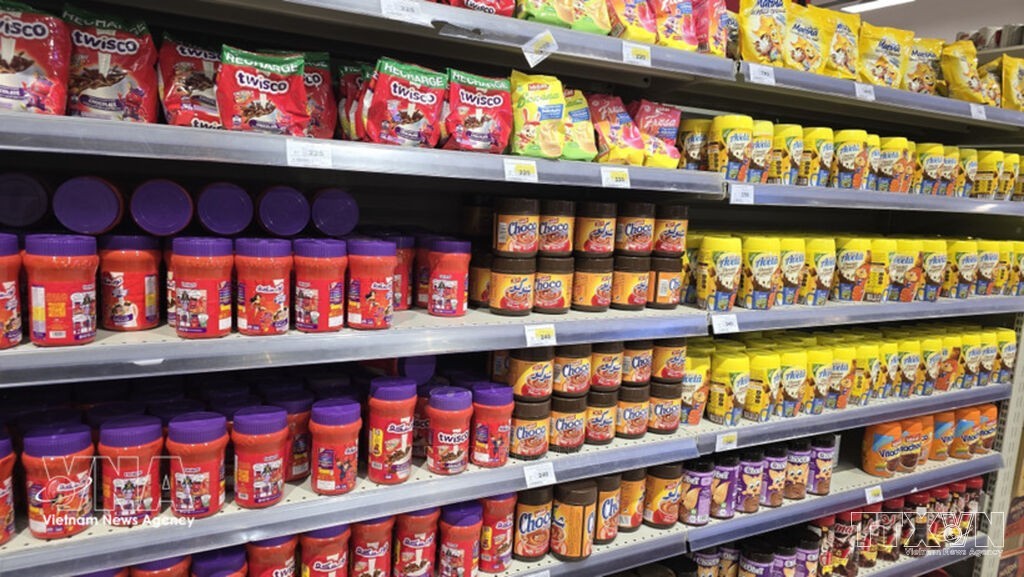
| Cocoa-based products on a supermarket shelf in Algeria (Photo: VNA) |
Hanoi (VNA) – Vietnamese agricultural products have significant room to expand in Algeria, but tapping the North African market will require exporters to better understand import regulations, build direct partnerships and strengthen their presence in the country, according to a representative of the Algerian Forum for Import-Export, Trading and Investment (AFIETI).
Speaking to Vietnam News Agency correspondents in Algeria, Mohamed Nabil, a trade adviser of AFIETI, said Vietnamese businesses need a better understanding of Algeria's import regulations and should proactively adjust their market approaches to expand their share.
Vietnam's agricultural exports to Algeria have maintained an upward trend in recent years, but remain concentrated in several key products, while many of the country's other competitive products have yet to fully realise their potential there.
Major Vietnamese agricultural exports to Algeria include coffee, cashew nuts, pepper, rice, dried coconut and some seafood products. Coffee accounts for a large share of export value, reaching 80-85% of Vietnam's total exports to Algeria at times. The range of exported products has gradually expanded, indicating considerable demand in Algeria for tropical agricultural products. However, exports remain heavily dependent on several key products and are affected by Algeria's import management policies.
Rice, one of Vietnam's major agricultural exports, once had a significant presence in Algeria but has declined sharply in recent years and is now scarcely seen in the country's retail system.
Algeria mainly consumes three types of rice – parboiled, basmati and white rice. Parboiled and white rice are regulated by the Algerian Interprofessional Office of Cereals (OAIC), with import rules and mechanisms varying according to programmes and orders. Vietnamese exporters therefore need to regularly update import requirements and ensure compliance before signing contracts.
Basmati rice, meanwhile, represents a promising segment given its relatively strong demand in Algeria, he said, noting that identifying the right segment, consumer preferences and import mechanisms could open up additional opportunities for Vietnamese exporters.
Beyond rice, Nabil said many other Vietnamese agricultural products also have considerable room for growth in Algeria. Coffee is a notable example, as Algeria is among the markets with significant coffee consumption, yet Vietnamese coffee still needs stronger promotion to enhance brand recognition and expand its market share.
Nabil cited Algeria's tea market to highlight the importance of direct commercial presence. Besides quality and price, access to importers, business relationships, promotion and product branding are crucial to turning production advantages into actual market share, he said.
Vietnam also has strengths in spices such as star anise, cinnamon and pepper, but access to the Algerian market and direct links with local partners remain limited, he said, noting that stronger government-level cooperation could help facilitate bilateral trade and enable businesses from both countries to better tap untapped potential.
Nabil said Vietnamese companies could work with local distributors and technical partners or establish representative offices or businesses in Algeria. He stressed that a stronger local presence would help them better understand market demand and regulations, build distribution networks and respond more quickly to changes in import policies.
He also suggested a “triangle” business model, under which Vietnamese companies could source materials from Algeria while selling products there or using the country as a gateway to other markets. Such an approach could shift ties from simple import-export activities towards production cooperation and greater value creation.
Vietnamese firms should also consider investing in processing and production in Algeria for products with strong market potential. Cooperation with Algerian companies in processing, packaging and product development could help Vietnamese goods better adapt to local demand while creating a foundation for expansion into other regional markets.
Nabil recommended that Vietnamese businesses step up direct trade promotion, regularly send representatives to Algeria to seek partners and study the market rather than relying mainly on remote export transactions.
According to Nabil, the opportunities for Vietnamese agricultural exports remain substantial, but expanding trade will depend not only on production capacity and prices but also on adapting to import regulations, developing local partnerships and strengthening market presence. Vietnam should maintain its strengths in coffee, cashews and pepper while exploring rice, tea, spices, coconut products and processed foods to diversify exports and make better use of the Algerian market./.