 |
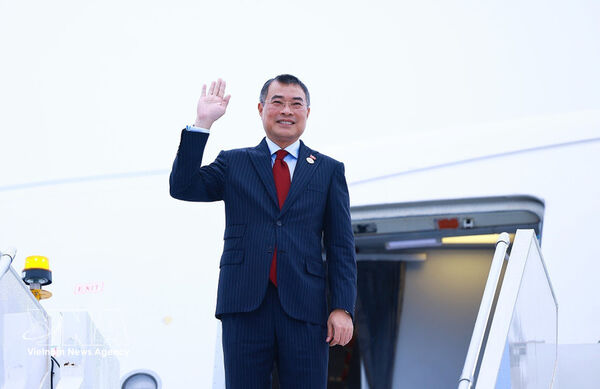
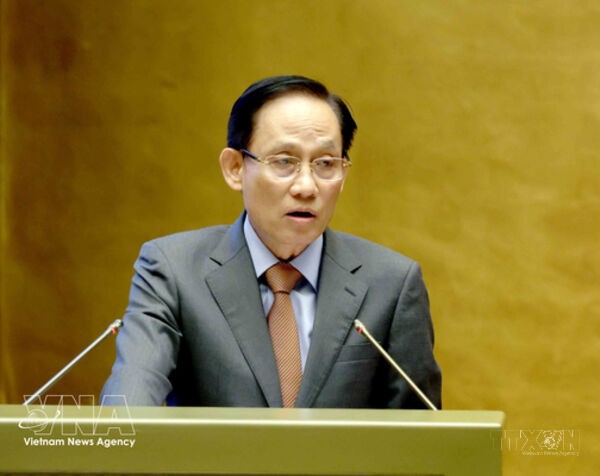
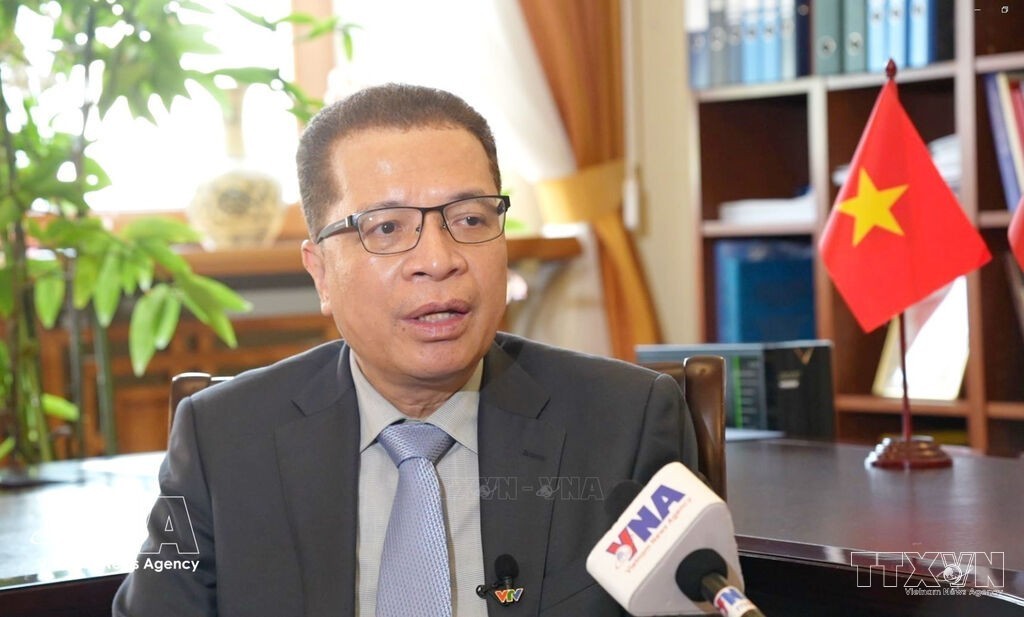
| Vietnamese Ambassador to Russia Dang Minh Khoi (Photo: VNA) |
Hanoi (VNA) – Vietnamese Ambassador to Russia Dang Minh Khoi has expressed his belief that the upcoming state visit to Russia by General Secretary of the Communist Party of Vietnam Central Committee and President To Lam from September 7-9 will make important contribution to elevating bilateral comprehensive strategic partnership to a new level, meeting the aspirations and interests of both countries and their people and for the sake of peace, stability, cooperation and development in the region and the world.
Speaking to the Vietnam News Agency's correspondents in Moscow, Ambassador Khoi said it is the first time Vietnam's top Party and State leader in his capacity as General Secretary and President has paid a state visit to Russia, which is a vivid testament to the durability of a relationship that has outlasted rapid changes in the world.
The visit signals that both Vietnam and Russia attach great importance to their friendly cooperation, reflecting the aspirations and political will of their leaders and people to inherit and carry forward their long-standing traditional friendship, while sharing a strong determination to consolidate and deepen their comprehensive strategic partnership. Vietnam counts Russia among the top priorities in its foreign policy while Russia views Vietnam as a leading Asia-Pacific partner.
As part of the visit, the Lev Tolstoy International Peace Prize Foundation will present the Lev Tolstoy International Peace Prize to General Secretary and President Lam, a recognition from the international community in general and Russia in particular for Vietnam's and its top leader's push for a fair world order based on international law.
According to him, both Vietnam and Russia attach particular importance to fostering high-level political ties, jointly repositioning and further elevating comprehensive bilateral cooperation in the new situation. He believed that General Secretary and President Lam and President Putin will devote considerable time to in-depth discussions on major strategic orientations to elevating bilateral ties, opening up new avenues for cooperation across various areas where both sides have needs and strengths, while discussing major global and regional issues. A number of important cooperation documents are in final preparation for signing.
Defence, security, energy and oil-and-gas cooperation remain pillars with room for expansion. An agreement to build Vietnam’s first nuclear power plant, alongside broadened oil and gas cooperation, will bolster the country’s energy security. The visit coincides with the 45th anniversary of Vietsovpetro, the flagship bilateral energy venture. Leaders will discuss measures enabling oil and gas companies to expand exploration under favourable terms, while extending cooperation into clean and renewable energy, liquefied natural gas (LNG), and energy storage infrastructure in Vietnam.
Trade and investment will also feature. Russian exports of food, pharmaceuticals, minerals, machinery and equipment to Vietnam are rising, while Vietnamese apparel, electronics and agricultural products are gaining shelf space in Russian retail and e-commerce. This year marks a decade since the Vietnam-Eurasian Economic Union free trade agreement took effect, and both sides are weighing further trade expansion.
Science, technology and education – training offer additional scope. Russia retains strengths in nuclear technology, new materials, aerospace applications, AI, cybersecurity and biotechnology. The countries are advancing a nuclear science and technology centre in Vietnam and building a bilateral intellectual network. Vietnam is prioritising Russian scholarships in basic research, technology, culture and arts to develop skilled labour.
Aviation and logistics cooperation is on the agenda, including more direct air routes, expanded maritime shipping and enhanced rail cargo transit through China. Localities are also exploring cooperation in metro and urban rail systems.
Cultural and people-to-people ties will be discussed as a foundation for public support. Russia is weighing visa exemptions for Vietnamese citizens, with an initial agreement under negotiation for Vietnamese tourist groups.
Vietnam-Russia relations have deep historical roots, more than 75 years of cooperation and high political trust among leaders, providing a basis for further growth, Khoi said.
Turning political ties into concrete projects will fall to ministries, sectors and localities. The Ninh Thuan nuclear project should serve as a symbol of the new phase. Both sides should pursue more joint research, technology transfer and education cooperation, leveraging the Vietnam-Russia Tropical Centre and the Joint Institute for Nuclear Research in Dubna, and consider reviving peaceful space cooperation 46 years after Pham Tuan became the first Vietnamese astronaut.
Culture and arts remain central. Many Vietnamese forged connections with Russia through its culture, while Russians have developed affinity for Vietnam through its heritage. Generations of Vietnamese studied and worked in Russia and serve as bridges between the two peoples. Strengthening youth ties is now a priority and a responsibility of current generation.
Khoi reported that bilateral trade is regaining momentum, reaching 4.77 billion USD in 2025 and 3.24 billion USD in the first seven months of 2026. Energy cooperation has expanded.
Tourism has recovered strongly. Russian visitors to Vietnam exceeded 690,000 in 2025, surpassing the pre-pandemic peak, and jumped 174% year-on-year to more than 863,000 in the first seven months of 2026. The full-year figure is forecast to top one million. Vietnamese travel to Russia rose 21.4% in the first half of this year.
Cultural exchanges have accelerated. The first Vietnam Cultural Festival at Red Square in July 2025 drew more than one million visitors. The Ho Chi Minh City Conservatory of Music’s Youth Chamber Orchestra performed in Moscow in last month, while Russian art troupes have staged performances in Vietnam.
This year’s science and education cooperation agenda has included more than 100 activities, including the third Vietnam-Russia University Presidents’ Conference, with numerous agreements signed. Education ties are producing substantive results, with Vietnamese students increasingly choosing Russia for overseas study./.