 |
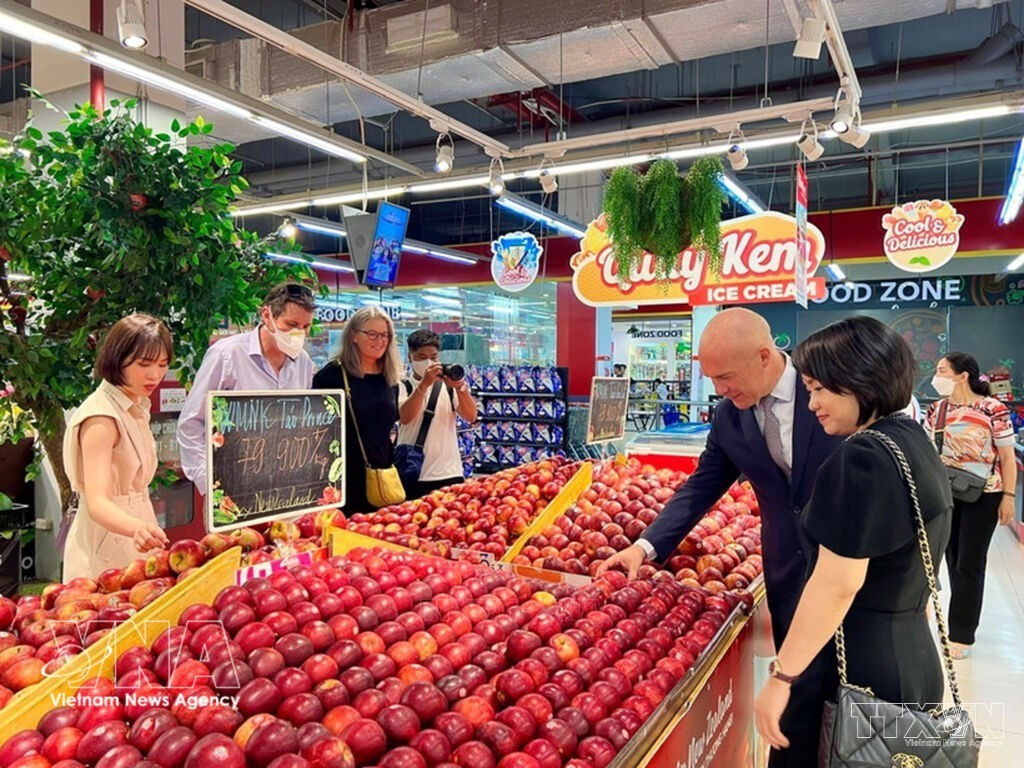
| New Zealand apples on sale at a supermarket in Vietnam (Photo: VNA) |
Hanoi (VNA) – For years, fruit from Australia and New Zealand has been a familiar choice among Vietnamese consumers.
According to statistics from the Department of Customs, in the first six months of 2026, Vietnam imported 102.8 million USD worth of fruit, vegetables and flowers from Australia, up 55.7% from the same period last year. Australia's share of total imports rose from 5.5% to 6.51%, highlighting the growing position of the market as a supplier. Imports from New Zealand reached 78.04 million USD, up 20.4% year-on-year.
New Zealand stands out with a number of strongly branded “stars” such as kiwifruit and apples, while Australia offers not just one signature fruit but a diverse range throughout the year. From grapes, apples, oranges and mandarins to peaches, nectarines, cherries and plums, Australian fruit arrives according to different seasons, growing regions and price segments. Vietnamese consumers can find them at supermarket chains, imported food shops, premium fruit stores and seasonal sales programmes.
Nguyen Thanh Hoa, a senior finance director at a bank in Ho Chi Minh City, told Thanh Nien (Young People) Newspaper that Vietnamese fruit is delicious and diverse, but she also enjoys imported varieties such as kiwifruit and apples. Besides buying them for her family, she often chose imported fruit as gifts for clients and business partners because of its consistent quality and attractive appearance.
Representatives of distribution chains said a shift in consumer preferences towards imported fruit, including supplies from Australia and New Zealand, has helped distributors expand their market share and achieve stronger revenue growth.
A representative of Co.opmart said the market is undergoing a change in consumer behaviour. Imported fruit was previously viewed mainly as a premium product, often purchased for festivals, Tet holidays or gift baskets. Today, however, some urban consumers have begun buying apples, kiwifruit, grapes, cherries, oranges and other imported fruit as part of their everyday shopping.
According to a representative of Kingfoodmart, consumption of imported fruit is rising strongly. Key suppliers include New Zealand, Australia, the US, the Republic of Korea and South Africa. The fruit most sought after by consumers includes kiwifruit, apples, grapes, oranges and pears.
Nguyen Van Muoi, Deputy Secretary General of the Vietnam Fruit and Vegetable Association, said the rapid growth in supplies from Australia and New Zealand had given domestic consumers a wider range of choices. In particular, during the fourth quarter and the run-up to the Lunar New Year, Australia, New Zealand and other countries are expected to benefit from demand for premium fruit with stable quality, attractive appearance and strong appeal as gifts.
Meanwhile, Vietnam's fruit and vegetable exports have recorded strong growth in the first months of 2026. Australia is among Vietnam's 10 largest export markets, maintaining its position as one of the country's key strategic partners in Oceania alongside markets in Asia, Europe and the Americas.
According to the Department of Customs, Vietnam's fruit and vegetable exports to Australia grew at an average annual rate of 15.06% over the first five months of the 2022-2026 period, rising from 37.21 million USD in such period of 2022 to a period high of 60.69 million USD in the first five months of 2026./.