 |
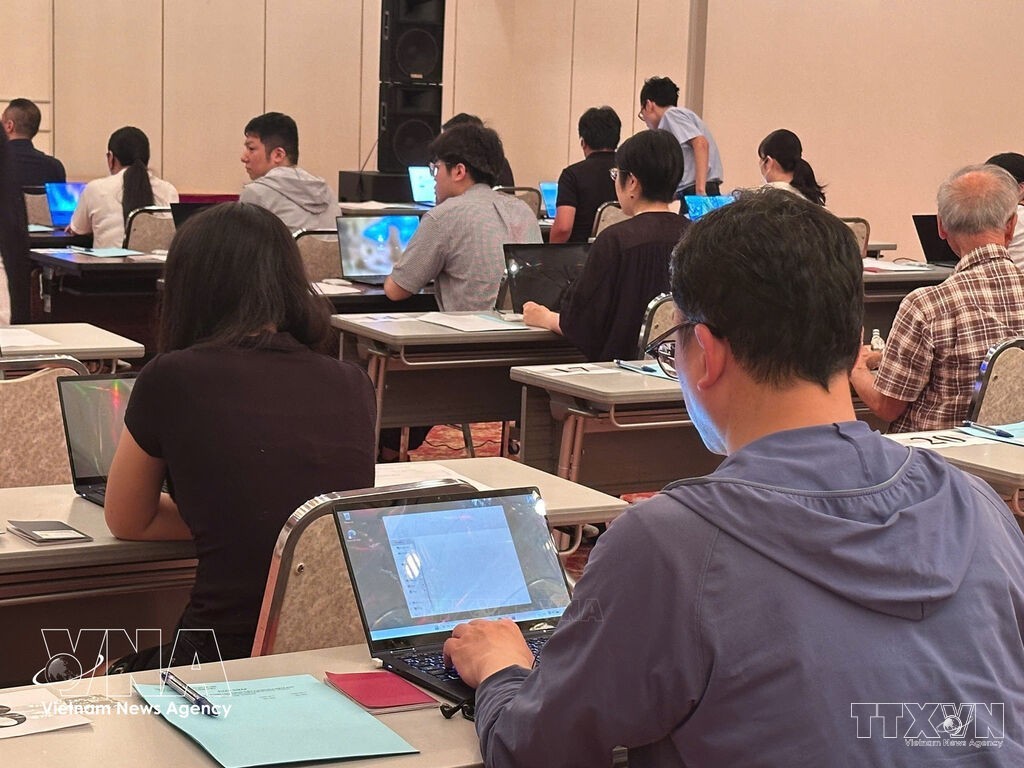
| Candidates familiarise themselves with the computers before sitting the Vietnamese language proficiency assessment in Osaka on August 15, 2026. (Photo: VNA) |
Hanoi (VNA) – A Vietnamese language proficiency assessment, based on the six-level Vietnamese language proficiency framework for foreigners, has been held on computers for the first time overseas at the Consulate General of Vietnam in Osaka, Japan.
The August 15 examination marked a new step forward in the teaching, assessment and international promotion of the Vietnamese language.
The test was organised academically by Hanoi National University of Education, under the auspices of the Consulate General of Vietnam in Osaka and in coordination with the Vietnam Studies Centre under the Vietnam - Japan Economic Cooperation Promotion Association. Its results will serve the needs of learners pursuing study, research, employment and cultural exchanges, as interest in the Vietnamese language continues to grow in many countries.
The Osaka examination was conducted on a pilot basis in a computer-based test room for 25 candidates. The trial was intended not only to test the computer-based format, but also to assess and refine organisational procedures, laying the groundwork for expanding the examination to more countries and territories in the future.
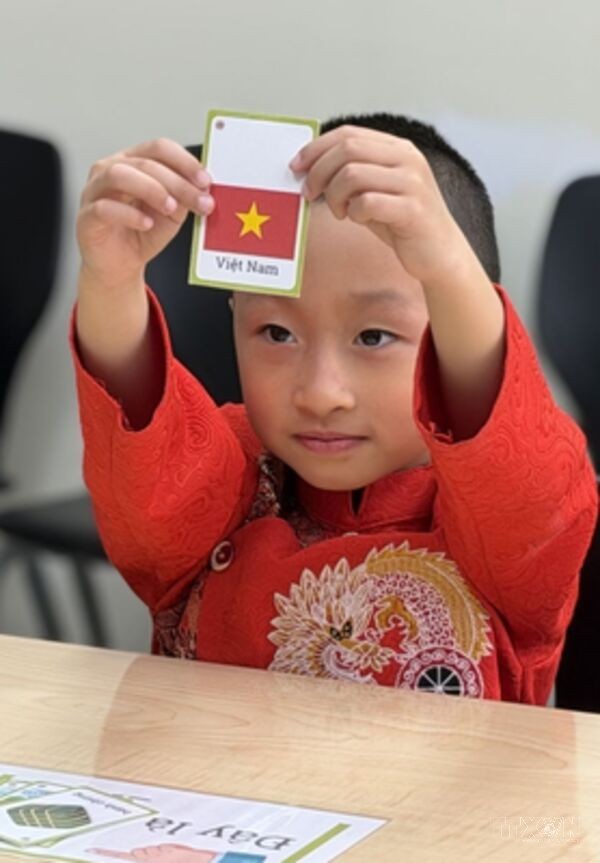
The diversity of candidates in terms of age, nationality and reasons for learning Vietnamese was a notable feature of the examination. The youngest was eight-year-old Kayano Emiko (Le Tra My), a Vietnamese national living in Japan, while the oldest was 69-year-old Fukumoto Takao, a Japanese national.
Vietnamese Consul General in Osaka Nguyen Truong Son stressed that the examination was a concrete step towards implementing Politburo Resolution No. 23-NQ/TW, dated August 2, 2026, on overseas Vietnamese affairs.
He affirmed that the Consulate General would continue to actively provide guidance, support and favourable conditions for the Vietnamese community in Japan to preserve, teach and use the Vietnamese language.
Le Thuong, a member of the Vietnamese examination council in Japan and Director of the Vietnam Studies Centre, said the successful organisation of the test demonstrated the role of the Vietnamese language in preserving national cultural identity and strengthening the great national unity bloc.
“We hope that, from this milestone in Osaka, the model will continue to expand to many countries, helping the Vietnamese language reach an increasingly wider international audience,” she said.
Dr Pham Thi Ngoc Quynh, Director of the Institute of International Education and Training at Hanoi National University of Education, said that in preparation for the first overseas computer-based Vietnamese proficiency examination, the university had spent considerable time completing its question bank, examination regulations, security procedures and software system. It had also worked closely with partners in Japan to review facilities, examination supervision arrangements and procedures for handling possible incidents.
The initiative is regarded as an important pilot in standardising and internationalising Vietnamese language assessment in accordance with national standards, she noted.
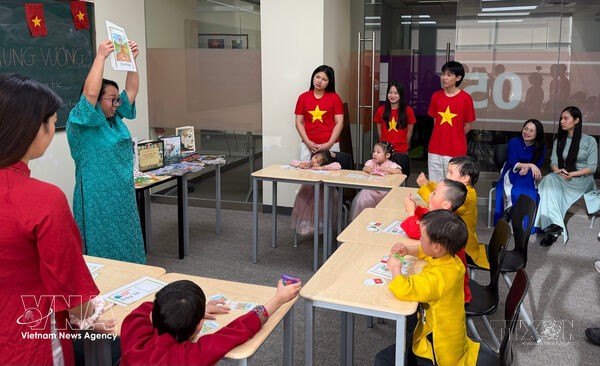
For Vietnamese communities overseas, Vietnamese is not merely a means of communication but also an important part of cultural identity and a bond connecting people with their homeland. For foreigners who have developed an affection for Vietnam, learning the language opens another door to a deeper understanding of the country's culture, history and people.
Yoshikawa Emiko, a second-year student at Osaka University, said she was learning Vietnamese so that she could communicate with her Vietnamese friends. She said she has been deeply impressed by the friendliness and kindness of Vietnamese people.
Imagawa Hiroshi, who works for an electricity company, began learning Vietnamese after being posted to Vietnam for three years under a programme run by the Japan International Cooperation Agency (JICA). He said the language is not particularly difficult for Japanese learners because of similarities in vocabulary. Pronunciation, however, remained a challenge for him.
Another candidate, Taniguchi Takuya, who engages in support services for international students, has been learning Vietnamese for nine years. Although he could not recall exactly what first prompted him to take up the language, he said his love for Vietnam – from its cuisine and landscapes to its culture – has motivated him to continue studying for almost a decade.
The cultural similarities between Vietnam and Japan, particularly the influence of Chinese-character culture on both countries, has also made Vietnamese feel more familiar and easier for him to remember, he said./.