 |
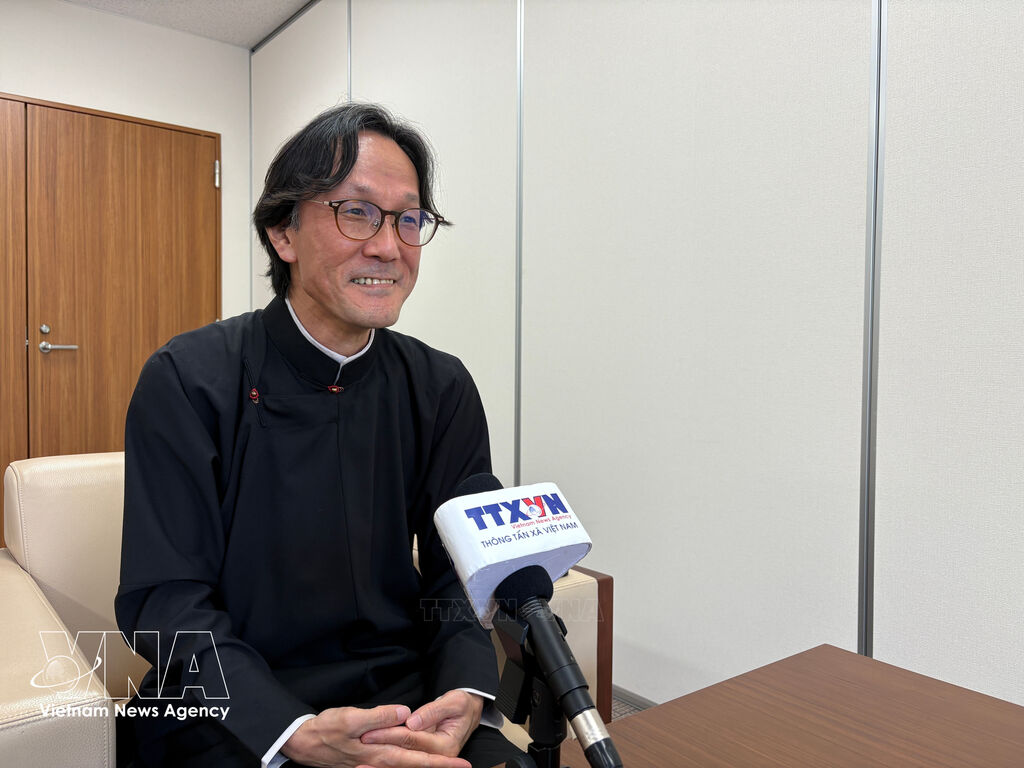
| Professor Masaaki Shimizu of Osaka University (Photo: VNA) |
Tokyo (VNA) – For young Vietnamese people born and raised in Japan, the Vietnamese language is more than a means of communicating with family. It is a vital link to their roots and a way to preserve their cultural identity, while helping them build bridges between the Vietnamese community and Japanese society.
Professor Masaaki Shimizu of Osaka University made the remarks in an interview with the Vietnam News Agency (VNA), highlighting how opportunities to use their mother tongue and experience Vietnamese culture in everyday life enable the young people to gain a deeper understanding of their roots and serve as a bridge between the two countries, helping to strengthen bilateral cultural ties.
Shimizu began learning Vietnamese in Osaka in 1985. He was initially attracted by its tonal system and grammatical structures, which differ considerably from Japanese. Through years of study and interactions with Vietnamese people, he gradually discovered similarities in the two cultures, including respect for older generations, strong family ties and concern for others.
These shared values are reflected in the way people address one another and choose words according to their relationships, he said.
According to the professor, the importance both cultures attach to personal relationships and family bonds can help Vietnamese people integrate into Japanese society and build closer connections with local communities. However, each culture expresses these values differently. Understanding one another's ways of thinking and behaviour while respecting cultural differences is therefore essential to building a multilingual and multicultural society.
Drawing on his experience organising cultural exchange activities in Osaka, Shimizu said comparisons of daily life, communication styles and family values could spark participants' curiosity and interest. Such activities offer Japanese people opportunities to learn more about Vietnam while viewing their own cultural values from a fresh perspective.
Food, music, traditional arts and everyday life are among the subjects that appeal to international audiences, he noted. For young people in particular, hands-on activities and direct cultural experiences can leave lasting impressions.
To maintain public interest, he suggested combining cultural introductions with opportunities to learn Vietnamese and interact with Vietnamese people.
Learning a language also means gaining insight into the worldview and ways of thinking of the community that speaks it, helping learners discover connections between Vietnamese culture and their own lives.
He stressed that cultural exchange should be a two-way process, allowing people from both countries to share experiences and learn from each other rather than simply introducing one culture to another.
The diversity of languages, regional identities and life experiences among Vietnamese people should also be reflected, as these differences are an important part of the richness of Vietnamese culture.
With more Vietnamese people living, studying and working in Japan, Shimizu considers education and language development for children of foreign backgrounds an important priority.
He said the Diversity and Community Engagement Research Centre (DERC) is implementing programmes in this field, including activities for children of Vietnamese origin descent.
While helping these children learn Japanese to integrate into schools and local society, it is equally important to preserve and develop their Vietnamese language skills and cultural experiences gained from their families and communities.
With proper support, these children can develop a stronger understanding of their identity and heritage and become future bridges between Vietnam and Japan, he said.
Shimizu expressed confidence that friendship and trust between the two countries' people will grow not only through large-scale cultural events but also through everyday meetings, conversations and exchanges.
Such close personal connections can help people from both countries understand each other better and turn linguistic and cultural differences into a source of strength for their communities./.