 |
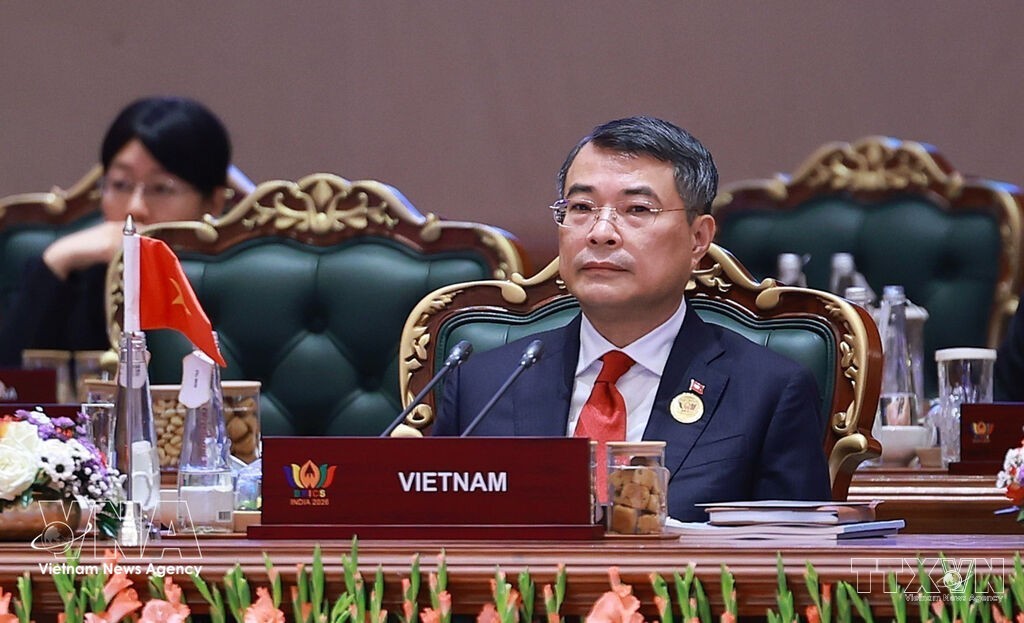
| Prime Minister Le Minh Hung attends the 18th BRICS Summit (Photo: VNA) |
New Delhi (VNA) – Vietnam supports and wants BRICS to work closely with regional, inter-regional and global multilateral mechanisms to contribute to peace, stability and cooperation while creating equal and sustainable development opportunities for all countries, said Prime Minister Le Minh Hung.
Attending the 18th BRICS Summit in New Delhi on September 13 in Vietnam's capacity as a partner country, PM Hung said at a session themed "Resilience, Innovation, Cooperation and Sustainability: Shaping the Future for Inclusive Global Growth" that Vietnam wants BRICS to take a bigger role in driving dialogue and cooperation, building and consolidating trust, finding solutions to global challenges and advancing reforms of the multilateral system to better serve the interests of developing countries.
Having highly evaluating the priorities of "Resilience, Innovation, Cooperation and Sustainability", the Vietnamese leader put forth three major orientations for BRICS to uphold its role going forward.
First, he suggested moving from reacting to volatility to proactively building resilience and self-reliance of economies by bolstering cooperation and supporting developing countries in building flexible policymaking, governance and strategic forecasting capacity; improving labour productivity, economic resilience and dynamism; and preventing crises in a timely manner while proactively responding to shocks, particularly in the economic and financial spheres and current cross-border challenges.
Second, PM Hung proposed moving from simply scaling up cooperation toward renewing traditional growth drivers while building new, inclusive and sustainable ones. That means tighter trade and investment policy coordination, open markets, leveraging existing financial mechanisms and pooling long-term capital at reasonable cost so developing countries get more equitable access to capital for digital transformation and green transition.
Third, he said it is necessary to turn science-technology and innovation cooperation opportunities into concrete projects through joint studies, workforce training, technology transfer, with a focus on high-impact fields like artificial intelligence, digital technology, smart agriculture and clean energy.
Vietnam's own development model centres on people, institutional reform, modern governance and science and technology, while ensuring harmony among economic growth, social equity and environmental protection, he said, affirming that Vietnam stands ready to work with BRICS in a spirit of responsibility, goodwill and substantive cooperation to create a peaceful, prosperous, sustainable and inclusive future for all countries and people.
PM Hung's speech was highly welcomed by the host country and leaders attending the summit.
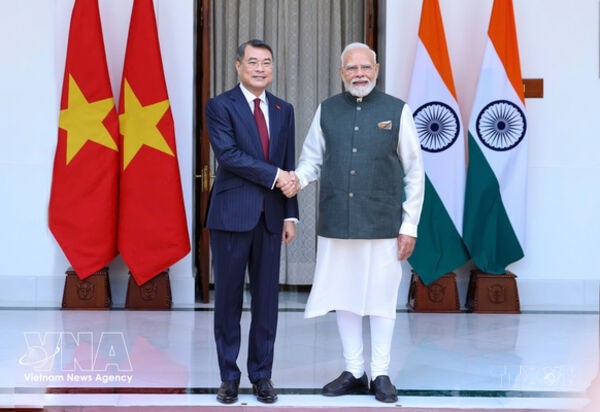
Indian PM Narendra Modi, this year's BRICS Chair, presided over the summit, which drew heads of state and government, senior leaders from BRICS members and country partners, and heads of international organisations. It stood as the most important event of India's 2026 BRICS chairmanship and marked 20 years since BRICS was founded.
Discussions spanned global and regional issues of common concern, including global governance reform, multilateral mechanisms, regional peace and stability, and sustainable, inclusive economic growth.
Leaders reaffirmed their determination to deepen cooperation across BRICS's three pillars of politics-security, economy-finance, and culture and people-to-people ties in pursuit of peace and a more representative, equitable global order. They agreed to expand cooperation in trade, investment, finance, sci-tech, energy security, agriculture, food security, just energy transition, environment protection, health care and people-to-people exchanges.
They also stressed the need for stable energy markets, uninterrupted supply from diversified sources, and stronger resilience and protection for critical energy infrastructure./.