 |
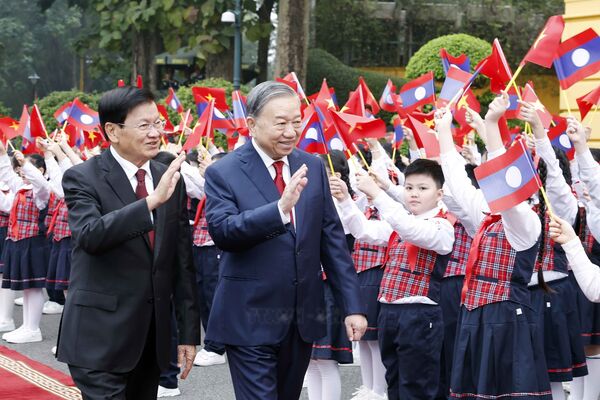
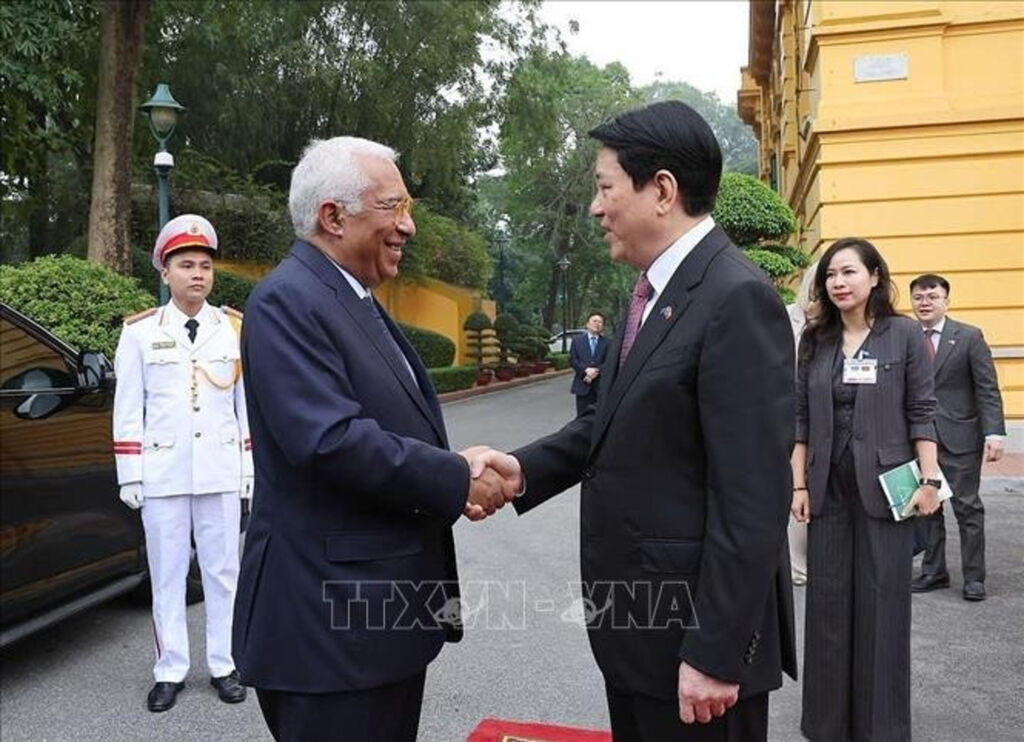
| State President Luong Cuong (R) hosts an official welcome ceremony in Hanoi on January 29 morning for President of the European Council (EC) António Costa (Photo: VNA) |
Hanoi (VNA) – State President Luong Cuong hosted an official welcome ceremony in Hanoi on January 29 morning for President of the European Council (EC) António Costa, who is on a two-day official visit to Vietnam.
The ceremony was attended by Minister of Agriculture and Environment Tran Duc Thang; Head of the Presidential Office Le Khanh Hai; Minister of Finance Nguyen Van Thang; Minister of Science and Technology Nguyen Manh Hung; Deputy Minister of National Defence, Senior Lieutenant General Nguyen Truong Thang; Deputy Minister of Public Security, Lieutenant General Dang Hong Duc; Deputy Minister of Foreign Affairs Le Thi Thu Hang; Deputy Minister of Industry and Trade Truong Thanh Hoai; and Vietnamese Ambassador to the EU Nguyen Van Thao.
President Costa’s official visit holds great importance to Vietnam–EU relations, particularly as it marks a visit by a senior EU leader to Vietnam shortly after the successful 14th National Congress of the Communist Party of Vietnam.
The European Union and Vietnam officially established diplomatic relations on November 28, 1990. Since then, their ties have grown positively, with frequent high-level meetings and exchanges, both bilaterally and on the sidelines of multilateral forums. The two sides coordinate closely in international organisations, particularly within the framework of ASEAN–EU, the Asia-Europe Meeting, and the UN.
The success of Vietnam’s foreign affairs has elevated Vietnam–Europe relations and expanded strategic cooperation opportunities across politics, economy, trade and investment, science, and technology, providing important resources to support Vietnam’s new development era.
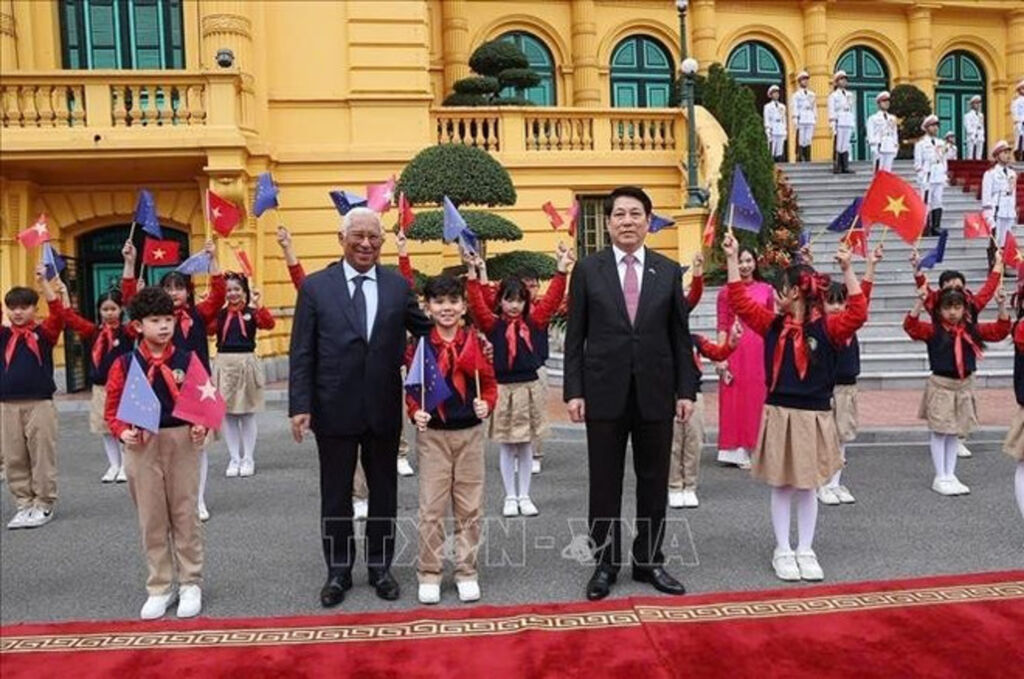 |
| State President Luong Cuong (R) hosts an official welcome ceremony in Hanoi on January 29 morning for President of the European Council (EC) António Costa (Photo: VNA) |
Vietnam and the EU signed the Partnership and Cooperation Agreement (PCA) in 2012, which came into effect on October 1, 2016, marking a major milestone in bilateral relations and providing a legal framework for a stage of deeper and broader cooperation. After a decade of steady engagement, the EU – Vietnam Free Trade Agreement (EVFTA) and the EU – Vietnam Investment Protection Agreement (EVIPA) were signed on June 30, 2019.
Effective from August 1, 2020, EVFTA - often described as a “highway” linking the two dynamic economies, has opened a new chapter in bilateral cooperation. Over the past five years, it has significantly boosted two-way trade, making Vietnam the EU’s largest trading partner in ASEAN, while the EU has become Vietnam’s fourth-biggest trade partner and sixth-largest investor. Bilateral trade has risen more than 40%, from 44.1 billion USD in 2020 to 64.6 billion USD in 2024 and 61 billion USD in the first ten months of 2025. The EU's investment in Vietnam has grown from 25.5 billion USD to nearly 35 billion USD.
Amid growing Vietnam–EU relations, EC President António Costa’s official visit to Vietnam carries significant importance, reflecting the EU’s recognition of Vietnam’s foreign policy and affirming the Southeast Asian nation’s increasing position and prestige in the international arena, particularly as a key partner of the EU in the Asia–Pacific region.
Following the welcome ceremony, State President Luong Cuong and EC President Costa held a private meeting before leading their high-ranking delegations in their formal talks to review cooperation in recent times and discuss future cooperation orientations. The two leaders are scheduled to jointly hold a press conference to report on their talks' outcomes./.