 |
| Vietnam continues to lead the region in both key areas with the average score for Reading being 323.5 points and Mathematics 334.6 points. (Photo: VNA) |
Hanoi (VNA) - The Association of Southeast Asian Nations (ASEAN) is poised to enter 2025–2026 with strong momentum in education benchmarking, as Vietnam’s Grade 5 students recorded the highest scores in Mathematics and Reading in the 2024 cycle of the Southeast Asia Primary Learning Metrics (SEA-PLM), according to results released on December 4 in Manila.
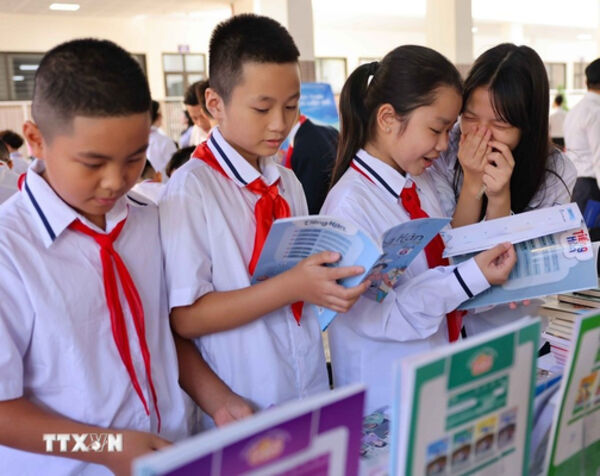
The 2024 SEA-PLM cycle involved Cambodia, Timor-Leste, Laos, Myanmar, Malaysia, the Philippines, and Vietnam. Around 6,000 Vietnamese Grade 5 students, along with their teachers and parents, across 152 primary schools nationwide participated in the survey.
Vietnam continued to lead the region in both key areas. The average Reading score was 323.5 points and Mathematics 334.6 points, maintaining the top positions despite slight declines from 2019. Some 66% of Vietnamese pupils reached advanced proficiency in Reading while the regional average was 40% and 88% in Mathematics with the regional average reaching 36%. Vietnam also recorded the highest proportion of students meeting minimum proficiency targets aligned with SDGs: 86% in Reading and 95% in Math.
Key regional findings from SEA-PLM 2019–2024 indicate persistent gaps: only half of ASEAN pupils meet the minimum Reading standard and just one-third meet the minimum Math level. The report calls for targeted investment in foundational learning, better support for disadvantaged students, and strategies to accelerate progress among low-performing groups.
Socio-economic conditions continue to shape students' performance, while early learning opportunities and adequate school resources contribute positively. Although teachers' capacity has improved, pedagogical skills remain an area for development. Concerns were also raised about declining education investment at a time when the region’s demographic dividend is narrowing.
Permanent Deputy Minister of Education and Training Pham Ngoc Thuong emphasised that the SEA-PLM dataset provides valuable evidence for planning reforms. As Vietnam advances digital transformation and deepens global integration, positive lessons from regional and international assessments will inform efforts to enhance teaching quality, student evaluation, and equitable access to high-quality education./.