 |
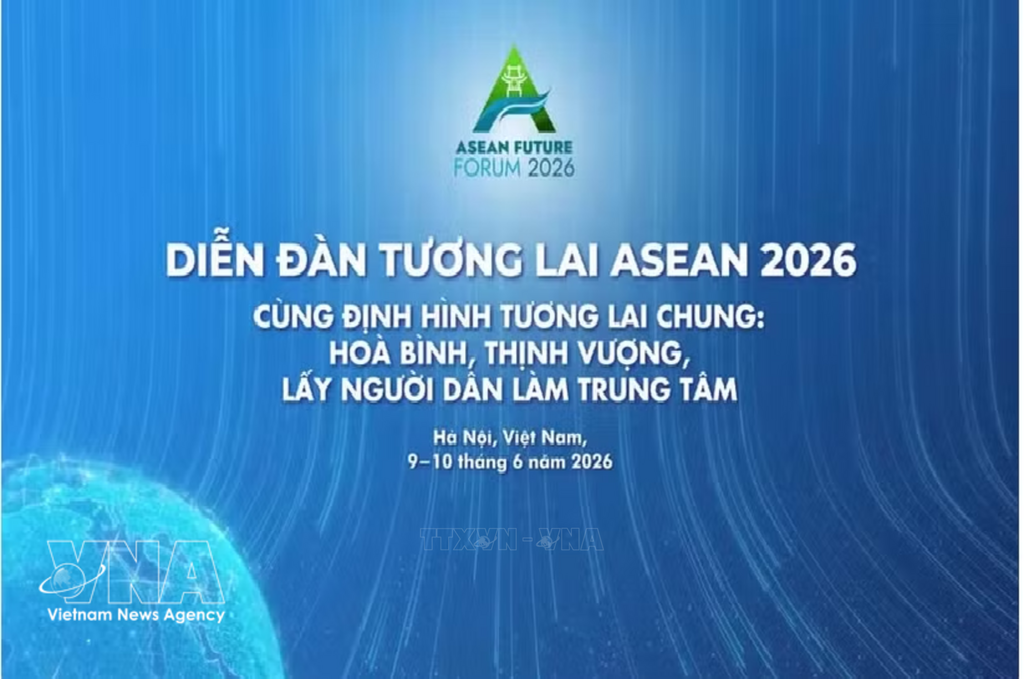
| Vietnam to host the third ASEAN Future Forum on June 9 and 10. (Photo: VNA) |
Hanoi (VNA) – Vietnam’s hosting of the third ASEAN Future Forum (AFF) on June 9–10 highlights the country’s rising international profile and its increasingly proactive role in shaping the bloc’s long-term vision for peace, prosperity and resilience amid a rapidly changing global landscape, towards the realisation of the ASEAN Community Vision 2045.
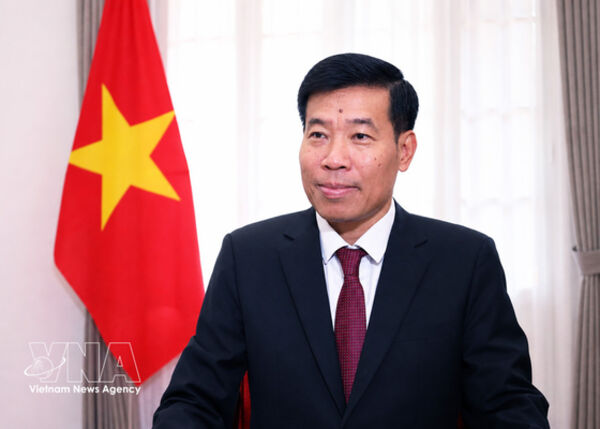
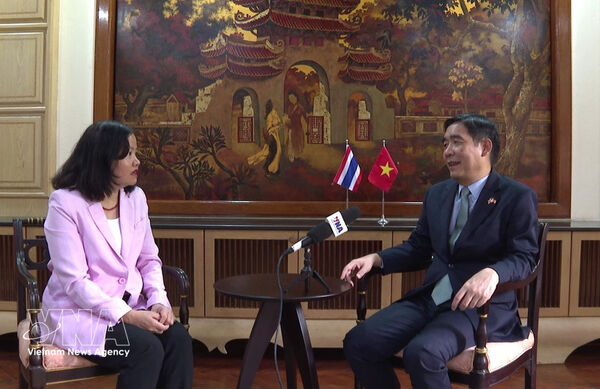
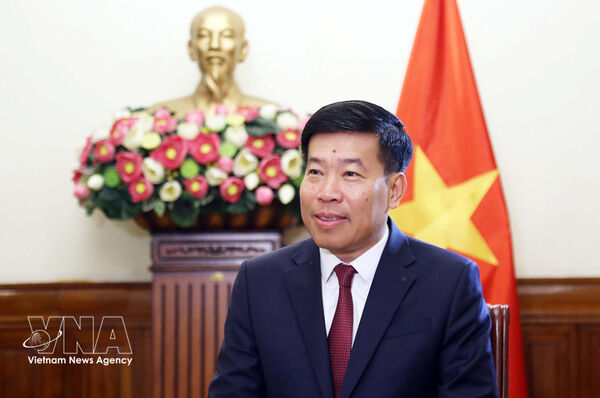
Diplomats of Laos, the Philippines, Thailand, Indonesia, Australia, and Timor-Leste have all described the forum as a timely and strategic initiative that provides a platform for forward-looking dialogue on the region’s future. They said the event reflects Vietnam’s increasingly active contribution to regional agenda formation while supporting ASEAN’s efforts to advance its Community Vision 2045.
Forming platform for strategic dialogue
Unlike traditional ASEAN meetings that focus primarily on current challenges, the AFF is designed to encourage discussions on the bloc’s long-term development and strategic direction.
Philippine Ambassador to Vietnam Francisco Noel R. Fernandez III said the forum is designed to discuss future issues, therefore, it complements ASEAN leaders’ talks by concentrating on future trends and opportunities. As ASEAN welcomes Timor-Leste as its 11th member, he noted, it is increasingly important for the bloc to seriously consider where tbe bloc aims to be in the next 10 to 20 years across its politics-security, socio-culture and economic pillars.
Timor-Leste Ambassador Joao Pereira described AFF as a high-level track 1.5 dialogue platform that brings together government officials, academics, businesses, media representatives and international organisations. Such a format, he said, encourages long-term mindset on regional issues ranging from peace and security to digital transformation and sustainable development.
For his part, Indonesian Ambassador Adam Mulawarman Tugio highlighted that core value of a Track 1.5 dialogue platform lies in its ability to facilitate forward-looking and exploratory discussions free from the constraints of formal diplomatic procedures. Challenging issues that might otherwise stall official negotiations, as well as differing perspectives on the dynamics of major-power competition, can be discussed more openly at the AFF, helping participants identify common ground and build consensus.
Building an united, resilient ASEAN
Against a backdrop of supply-chain disruptions, inflationary pressures and intensifying geopolitical competition, the diplomats stressed the importance of strengthening ASEAN’s resilience through closer cooperation.
Lao Ambassador Khamphao Ernthavanh welcomed this year’s theme “Shaping a Shared Future Together: Peace, Prosperity and People-Centred Development,” emphasising that no ASEAN members can effectively tackle today’s challenges on its own. Drawing on Laos’ experience as ASEAN Chair in 2024, she said open and inclusive dialogue remains essential for transforming common concerns into collective action.
As evidence of ASEAN’s strategic foresight, the Philippine Ambassador cited the energy crisis triggered by conflict in the Middle East. Although the bloc did not anticipated the closure of the Strait of Hormuz, ASEAN leaders had already established legal frameworks for sharing essential energy reserves and enhancing regional power-grid connectivity.
Regarding ASEAN’s economic resilience, Indonesian Ambassador Tugio candidly pointed out that intra-ASEAN trade currently accounts for only about 23% of the bloc’s total trade while economic integration with external partners is far deeper. He suggested that ASEAN better leverage the complementary strengths of its member states: Vietnam in electronics, Malaysia in semiconductors, Thailand in the automotive industry, Indonesia in natural resources, and Singapore in financial services.
According to the Indonesian diplomat, integrating regional production networks, improving the utilisation of the Regional Comprehensive Economic Partnership (RCEP) agreement, and advancing the ASEAN Digital Economy Framework Agreement (DEFA) are practical steps that deserve in-depth discussion at the AFF.
Putting people at centre and innovating dialogue networks
One of the key priorities of the AFF 2026 is to place people at the heart of development. Thai Ambassador Urawadee Sriphiromya stressed that ASEAN cannot achieve sustainable prosperity if its people are left behind.
A notable innovation of this year’s forum is the expansion of discussions to include political parties. The Thai ambassador welcomed the initiative, describing political parties as an essential bridge between citizens and policymakers in building the ASEAN Community.
Echoing this view, Tugio noted that ASEAN integration has traditionally been driven by governments and foreign ministries. Bringing political parties into the conversation, he said, acknowledges the reality that sustainable regional integration requires political support. Networks among political parties can help ensure continuity beyond the terms of individual governments and strengthen the connection between ASEAN’s work and domestic voters.
Representing ASEAN’s longest-standing dialogue partner, since 1974, Australian Ambassador Gillian Bird expressed hope that the forum will contribute to tangible improvements in people’s livelihoods. Australia remains committed to expanding trade, investment, and education cooperation to create more jobs across the region. She also highlighted the importance of digital transformation and fintech on the AFF agenda, expressing confidence that the DEFA will play a key role in shaping the bloc’s future economic landscape.
Meanwhile, Ernthavanh underscored the need to elevate Mekong subregional cooperation onto ASEAN’s agenda, transforming the subregion from a geographical space into a driver of regional cohesion. She added that combining “hard” connectivity through infrastructure development with “soft” connectivity through streamlined customs will further enhance the region’s competitiveness.
Sriphiromya said Vietnam’s hosting of the inaugural ASEAN City Leaders Conference reflects the country’s growing leadership role in advancing regional connectivity and sustainable development within the bloc, particularly as the region moves toward the ASEAN Community Vision 2045.
She noted that with its significant achievements in urban modernisation, digital governance, and sustainable development while preserving its cultural identity, Hanoi is well positioned to coordinate regional efforts and share its experience in digital transformation, AI governance, and urban planning.
Reinforcing Vietnam’s international position
Through the AFF 2026, Vietnam continues to demonstrate its credibility and commitment to fostering constructive dialogue.
Australian Ambassador Bird said she was pleased to see Vietnam playing an increasingly prominent role at both the regional and international levels, taking on greater leadership responsibilities. She stressed that the AFF is a clear example of that leadership.
She also highlighted ASEAN’s “unifying power” in bringing together its 11 members and engaging important partners to address peace issues through dialogue and consensus, helping prevent a world in which “might makes right”. She noted that Australia and Vietnam share a strong commitment to upholding a rules-based international order, including respect for the 1982 UN Convention on the Law of the Sea (UNCLOS).
Bilateral ties and cooperation between Vietnam and other ASEAN member states were also highlighted as key drivers of the bloc’s development. The Philippine Ambassador noted that the complementarity of the two economies offers enormous potential for cooperation, especially as Vietnam’s economic growth experience and the Philippines’ ambition to become a maritime hub create new avenues for partnership in the blue economy.
The Thai Ambassador affirmed that amid growing geopolitical uncertainty, Vietnam and Thailand will continue to work closely together to promote peace, safeguard maritime security, and address emerging non-traditional security threats such as cybercrime.
Meanwhile, the Indonesian Ambassador, for his part, said the Vietnam – Indonesia partnership, backed by the two countries’ significant economic ties, could serve as a model for advancing the ASEAN Community Vision 2045./.