 |
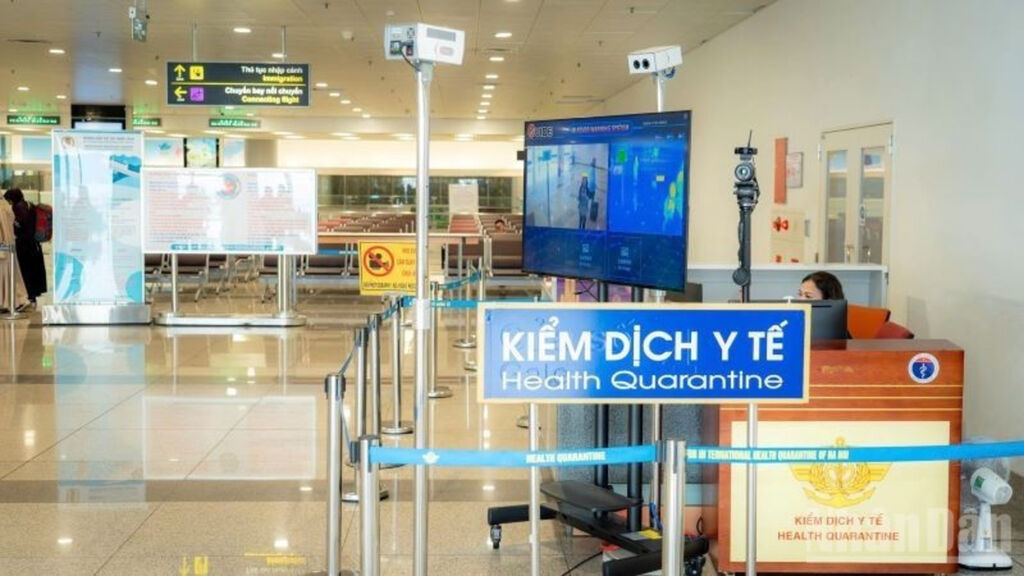
| Noi Bai International Airport has rolled out measures to tighten health controls and strictly monitor inbound passengers in an effort to prevent complicated developments of the Nipah virus outbreak. (Photo: nhandan.vn) |
Hanoi (VNA) – All passengers arriving at Noi Bai International Airport in Hanoi are currently undergoing automatic temperature screening immediately after landing, as part of measures to prevent the spread of the Nipah virus.
An airport representative said Noi Bai has tightened health controls around the clock, with close coordination between the International Health Quarantine unit and the airport’s emergency medical team helping detect abnormal signs early and ensuring the aviation gateway remains safe and smooth.
The airport has urgently rolled out enhanced health monitoring measures and strengthened procedures for inbound passengers in order to safeguard public health. Accordingly, screening has been intensified for travellers on incoming flights, particularly those arriving from areas considered to pose higher epidemiological risks.
International Health Quarantine authorities have installed two additional specialised temperature scanners along passenger flow routes in the arrival area. This has boosted inspection capacity and ensured that 100% of inbound passengers are closely monitored through the infrared scanning system.
As soon as passengers disembark and before completing immigration procedures, their body temperature is checked via automatic infrared scanners, alongside observation for clinical symptoms such as fever, cough or unusual fatigue.
Any suspected cases will be temporarily isolated, examined in coordination with the airport’s emergency medical force, and immediately transferred to designated hospitals for quarantine and treatment in line with health regulations, minimising the risk of community transmission.
Earlier, the Civil Aviation Authority of Vietnam (CAAV) issued a directive to aviation agencies and enterprises, calling for stricter inspections and tighter discipline in Nipah virus prevention and control at airports nationwide.
The authority requested relevant agencies to urgently and strictly implement epidemic prevention regulations, ensuring early detection and appropriate measures for infected or suspected cases entering Vietnam by air. Units were also urged to strengthen monitoring and maintain readiness in response measures at airports.
In addition, aviation organisations were instructed to actively coordinate with competent agencies under the Ministry of Health (MoH), as well as other ministries, sectors and local authorities, to promptly inspect and detect possible Nipah infections.
The CAAV also asked airport authorities to disseminate these requirements to all agencies and units operating at airports.
According to the MoH, the Nipah virus outbreak is classified as a Group A infectious disease and has emerged in West Bengal state of India.
Several airports in Asia, including those in Thailand, Nepal and Taiwan (China), have also stepped up disease control measures, tightening health surveillance and passenger screening, particularly for travellers arriving from West Bengal, where a highly fatal Nipah virus outbreak has been confirmed./.