 |
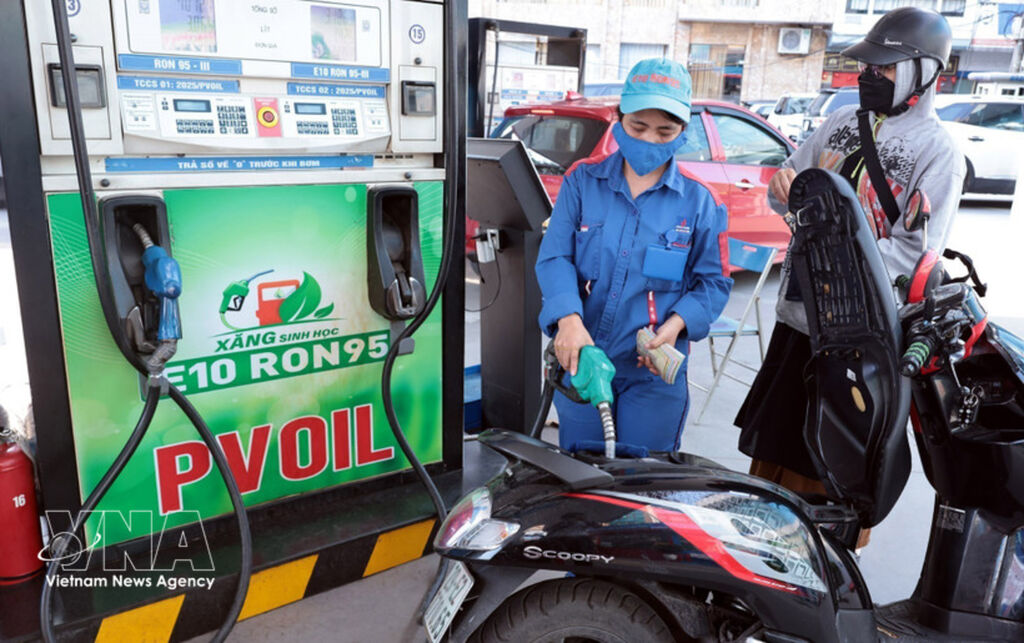
| A customer purchase E10 biofuel petrol at a PVOIL filling station on Thai Thinh street in Hanoi. (Photo: VNA) |
Hanoi (VNA) – Ahead of schedule, several major fuel distributors have begun rolling out E10 biofuel across their retail networks and are preparing to supply the market beyond their own systems.
From May 15, according to the Petrovietnam Oil Corporation (PVOIL), E10 biofuel will be sold across the company’s network of nearly 1,000 filling stations nationwide, around two weeks earlier than the national implementation schedule.
Meanwhile, PVOIL Sai Gon said it will cease sales of mineral-based RON 95-III petrol from the date, with E10 RON 95-III set to fully replace conventional RON 95-III across its retail system.
The move follows a pilot programme launched in Hanoi and Hai Phong in August 2025, which generated largely positive feedback from consumers while meeting technical standards and demonstrating stable performance across vehicle types.
Recent market surveys also show that filling stations operated by the Vietnam National Petroleum Group (Petrolimex) in Ho Chi Minh City have simultaneously begun publicising E10 prices, indicating the product’s broader rollout throughout the system.
Specifically, from midnight on May 13, Petrolimex officially introduced E10 RON 95-V biofuel across its nationwide network of filling stations, agents and franchised outlets at 24,630 VND (0.93 USD) per litre in Region 1 and 25,120 VND per litre in Region 2. E10 RON 95-III is being sold at 23,730 VND per litre and 24,200 VND per litre, respectively.
While Region 2 are identified as areas far from ports, main depots, and petroleum production facilities, Region 1 comprises the remaining areas.
Compared with conventional mineral-based petrol of the same grade, E10 prices are currently around 620–630 VND per litre lower.
A representative of Petrolimex Sai Gon said the firm has proactively prepared infrastructure and implementation plans in line with the Government’s transition roadmap for biofuel.
It has completed upgrades to blending capacity at the Nha Be petroleum depot, ensuring sufficient supply for the entire southern region during the transition from mineral-based petrol to biofuel products. Detailed conversion plans have also been prepared for all 138 Petrolimex Sai Gon filling stations in Ho Chi Minh City to ensure implementation remains on schedule.
Van Tan Phung, Chairman of the Dong Nai Petroleum JSC, confirmed that the company’s network of 18 retail stations and more than 30 agents will also begin selling E10 from May 15.
From May 15 to 30, the company will sell E10 alongside conventional petrol, he said. From June 1, mineral-based petrol will officially cease to be traded across the entire system in accordance with Government policy and the roadmap outlined in Circular No. 50 of the Ministry of Industry and Trade.
A representative from PVOIL expressed confidence that the corporation’s E10 blending system is now largely complete, and projected total production capacity to reach four million cubic metres annually by the end of this year. Expanding production capacity and diversifying supply sources, the company said, will help stabilise the market and ensure national energy security.
The Vietnam Automobile Manufacturers' Association (VAMA) stated that most vehicles in the market have already been designed to operate with E10 fuel. Similarly, the Vietnam Association of Motorcycle Manufacturers (VAMM) confirmed that motorcycles produced by member companies are compatible with E10.
Trinh Quang Khanh, General Secretary of the Vietnam Petroleum Association, said member companies currently possess blending capacity of around 965,000 cubic metres per month, sufficient to meet nationwide demand for biofuel.
However, he cautioned that biofuel petrol requires time for blending and cannot be supplied as immediately as conventional petrol. Without effective governance during the transition period, temporary supply bottlenecks could emerge despite the system’s adequate overall capacity.
The association has therefore proposed raising the regulated business cost allowance for E10 petrol above that of mineral-based petrol to avoid undermining business efficiency for fuel distributors.
While enterprises appear prepared for the transition, consumers are also showing growing interest in E10 ahead of its official nationwide implementation on June 1.
Hoang Hung, a resident of Tang Nhon Phu ward in Ho Chi Minh City, said he had previously used E5 petrol and noticed little difference compared with conventional RON 95-III fuel.
“If the station near my house sells E10 RON 95-III, I’ll use it immediately. I don’t really have any concerns. Convenience remains the most important factor when refuelling during daily travel,” he said.
Ngoc An, a resident of Hoa Hung ward, said her family will switch to biofuel once stations began selling it widely, though she believed lower prices will help consumers embrace environmentally friendly fuel more readily.
Le Trung Tinh, Chairman of the Ho Chi Minh City Passenger Automobile Transport Association, said biofuel not only offers lower prices but also contributes to reducing pollution and emissions in major urban centres.
He noted that E10 has already been widely adopted in many countries, with some markets moving towards E15 or E20 blends to further improve environmental performance. However, he observed, public communication efforts remain insufficient, leaving many consumers, particularly owners of older vehicles, hesitant about the transition.
Chairman of the Dong Nai Petroleum Association Van Tan Phung described the Government’s shift from mineral-based petrol to biofuel as a major policy turning point tied both to the economy and Vietnam’s international commitments to green transition.
Businesses and consumers naturally support this direction, he said, adding implementation should proceed alongside timely adjustments; if problems arise, they should be corrected within the first three months in order for this important policy to succeed.
Associate Professor Dr Nguyen Thuong Lang of the National Economics University stressed that E10 must maintain a meaningful price advantage over conventional petrol if it is to gain broad public acceptance, while businesses also need supportive policies to ensure rapid and effective implementation.
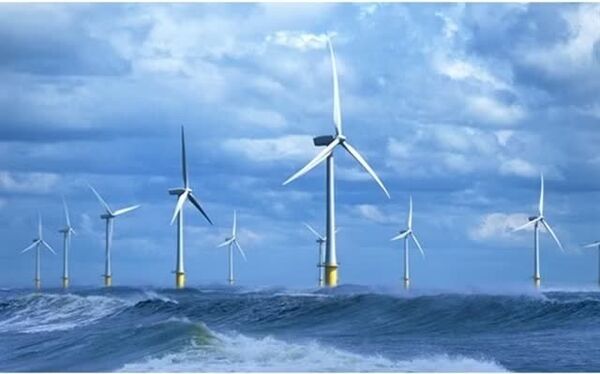
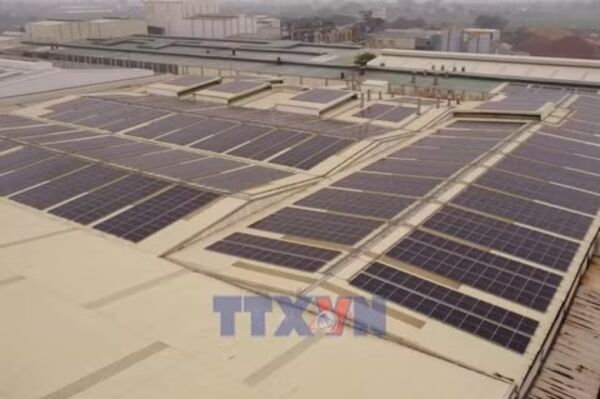
He argued that Vietnam is currently well positioned to accelerate the development of new energy sources such as wind power, solar energy, bioenergy, hydrogen and ammonia.
However, for biofuels, particularly E10, to develop successfully, stronger and more coordinated policies are needed, especially pricing mechanisms capable of creating a sufficiently attractive gap between E10 and mineral-based petrol.
“When the price difference becomes compelling enough, consumers will actively choose biofuel themselves, forming a new consumption habit and accelerating the overall transition,” he said./.