 |
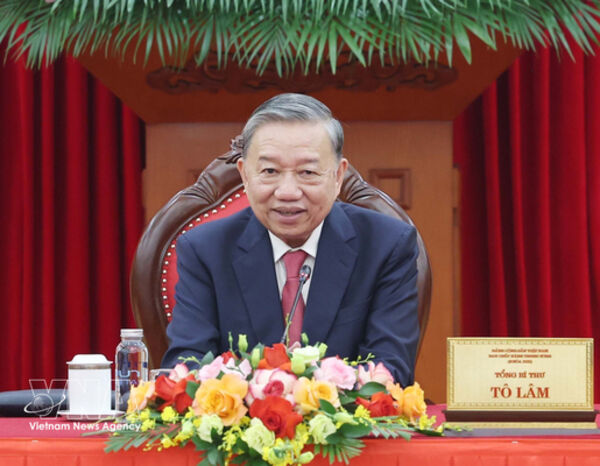
| Cho Gao dragon fruit of Dong Thap province granted collective trademark protection by the Intellectual Property Office of Vietnam (IPO). (Photo: VNA) |
Hanoi (VNA) - As global competition is increasingly shaped by knowledge and innovation, Vietnam is stepping up efforts to strengthen the protection and enforcement of intellectual property (IP) rights, not only to meet international integration requirements but also to transform knowledge into a key development resource.
Backed by a steadily refined legal framework and recent reforms accelerating digitalisation and efficiency, the country is positioning IP as a driver of innovation-led growth, in line with the Politburo’s Resolution 57 and global trends.
Moving closer to international standards
In recent years, Vietnam’s IP legal system has been developed along a clear and phased roadmap, ensuring continuity while adapting to new requirements. The 2005 Law on Intellectual Property, which took effect on July 1, 2006, marked a major milestone by establishing, for the first time, a relatively comprehensive legal framework for the establishment, protection, and enforcement of IP rights. This is widely regarded as a foundational step in the country’s international economic integration process.
 |
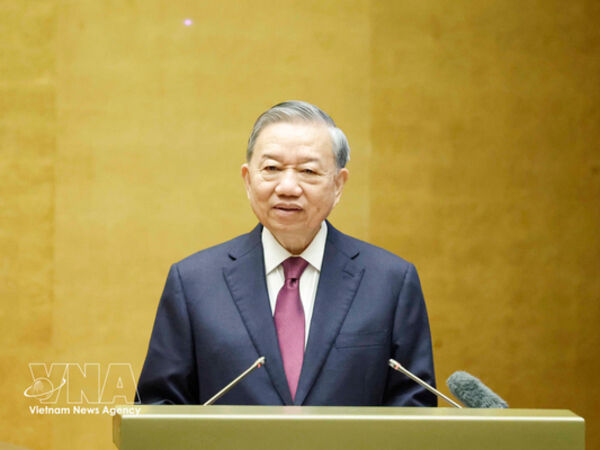
| The National Assembly passes the Law amending and supplementing a number of articles of the Law on Intellectual Property on December 10, 2025. (Photo: VNA) |
The law was subsequently amended in 2009, 2019, and 2022, consistently moving towards alignment with international standards while adapting to development realities in the country.
Most recently, on December 10, 2025, the National Assembly passed the Law amending and supplementing a number of articles of the Law on Intellectual Property (Law No. 131/2025/QH15), which took effect on April 1, 2026. The 2025 amendments place strong emphasis on streamlining administrative procedures and accelerating digital transformation in IP activities. Processing time for industrial property applications have been significantly reduced. Substantive examination of patent applications has been shortened from 18 months to 12 months; trademark applications from nine months to five months; industrial design applications from seven months to five months; and publication time has been cut from two months to one month.
Notably, the law introduces a fast-track examination mechanism for patent and trademark applications within three months under certain conditions - a mechanism currently adopted by few countries. At the same time, comprehensive digital transformation requirements have been set, including applying new technologies and artificial intelligence in application processing, simplifying procedures, and strengthening post-grant inspection. This represents an important step toward improving state management efficiency and meeting the growing demand for IP services.
Beyond procedural reforms, the 2025 amended law also expands the scope of protection to cover new subject matters, such as industrial designs of inseparable parts of products and non-physical products like graphical user interfaces and icons. Copyright protection has also been extended to encrypted programme-carrying cable signals.
For the first time, issues related to AI are clearly addressed in the law. The use of data for AI training is permitted, provided that it does not infringe upon the legitimate rights and interests of rights holders. At the same time, the law affirms that IP rights are granted only to creations made by humans, and applications will be rejected if the creator is determined not to be human. These provisions demonstrate Vietnam’s efforts to keep pace with global trends while addressing new challenges arising in the digital era.
Sound policies have produced tangible results. According to Luu Hoang Long, Director of the Intellectual Property Office of Vietnam (IPO), during the 2021–2025 period, Vietnam received more than 423,000 industrial property applications, up 26.5% compared to the previous period; processed over 436,000 applications, an increase of 69%; and granted more than 255,000 protection titles, up 55.4%. In 2025 alone, over 250,900 applications were processed and more than 83,300 titles being granted, effectively addressing the backlog that had persisted for many years.
At the same time, the number of patent applications filed by domestic organisations and individuals increased by 36%, while the number of granted patents surged by 134.2%, far exceeding the set targets. This indicates that the country’s innovative capacity is steadily improving and being transformed into valuable intellectual assets. Intellectual property has now become an integral link in the innovation value chain.
Policy framework on IP increasingly refined
During his visit to Vietnam from September 25–26, 2025, Director-General of the World Intellectual Property Organisation (WIPO) Daren Tang shared his views on IP in the current context. According to him, IP protection in the past mainly focused on registration and safeguarding rights, which is not sufficient.
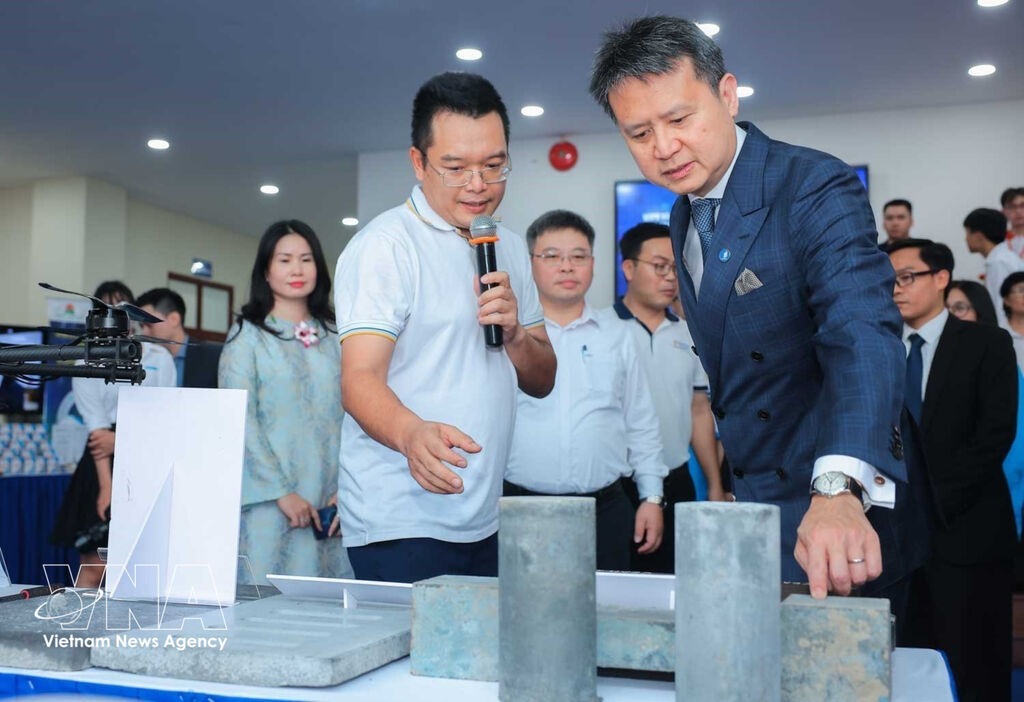 |
| Director-General of the World Intellectual Property Organisation (WIPO) Daren Tang (right) visits an exhibition booth showcasing scientific initiatives and achievements of Vietnam. (Photo: VNA) |
The key is to commercialise IP rights, turning inventions and ideas into products, services, and tangible economic value, he said, adding that this is also the approach that WIPO is pursuing in cooperation with Vietnam. He noted that WIPO aims to create pathways for ideas to reach the market, thus contributing to growth. Under this new approach, IP is no longer merely about regulations but becomes an ecosystem connecting universities, research institutes, and businesses, from startups to large corporations.
Tang also likened innovation to a river flowing from the mountains to the sea. The headwaters are research and development (R&D) activities in which Vietnam is investing. However, for this river to flow smoothly and harmoniously, a robust support system is needed to guide Vietnam’s ideas in the right direction, enabling them to become exemplars not only in the region but also globally. IP rights are not just a legal matter but will serve as a bridge and an integral part of the development ecosystem.
Thus, Vietnam is on the right track as the 2025 amended Law on Intellectual Property has begun to establish a policy framework for IP rights to become assets in civil, commercial, and investment transactions, while laying the groundwork for forming valuation and intermediary markets for intellectual assets.
It cannot be denied that, in the context of rapidly developing e-commerce and digital environments, IP infringements remain complex and increasingly sophisticated. However, this is a common challenge faced not only by Vietnam but also across the region and the world. What should be recognised is that Vietnam’s IP policy and institutional framework continues to improve, while enforcement and handling capacity has also been strengthened. The role of IP is shifting from protecting rights to creating value and commercialising IP assets.
In the current context, Vietnam’s approach to IP helps protect the legitimate rights and interests of stakeholders, and also lays a foundation for enhancing national competitiveness, moving toward an innovation-driven growth model aligned with global values./.