 |
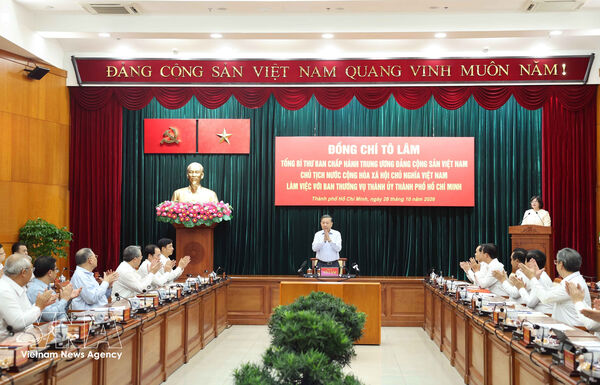
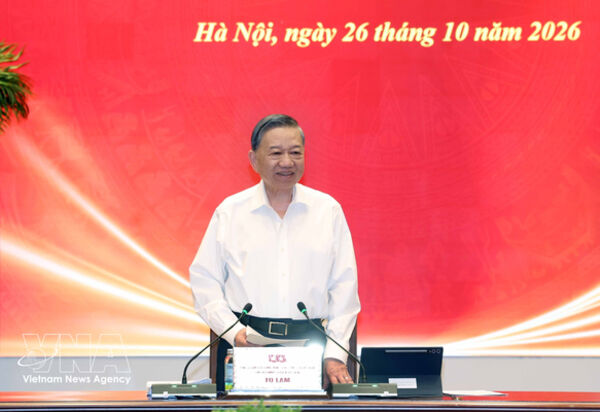
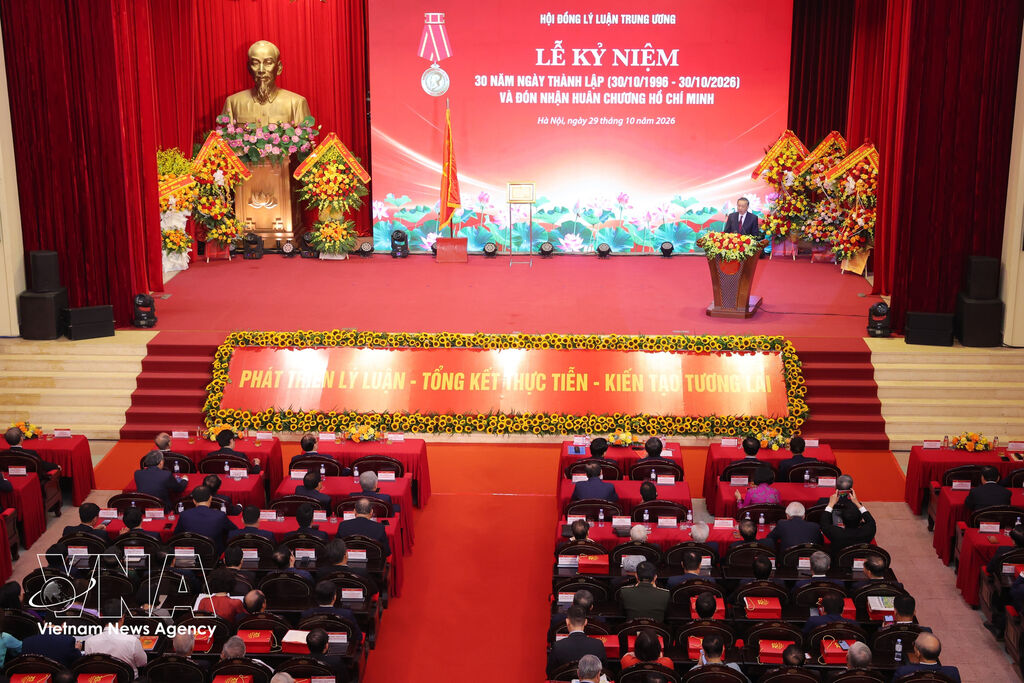
| General Secretary of the Communist Party of Vietnam Central Committee and President To Lam addresses a ceremony to mark the 30th anniversary of the Central Council for Theoretical Studies (CCTS)'s establishment on October 29, 2026. (Photo: VNA) |
Hanoi (VNA) – General Secretary of the Communist Party of Vietnam Central Committee and President To Lam has requested the Central Council for Theoretical Studies (CCTS) to reaffirm and elevate its pivotal role in theoretical research, practical reviews and the Party’s strategic advisory work, while proactively anticipating and identifying emerging issues.
The leader made the request while addressing a ceremony in Hanoi on October 29 to mark the 30th anniversary of the council’s establishment (October 30, 1996–2026).
He noted that Vietnam is implementing the Resolution of the 14th National Party Congress and striving to achieve its national development goals for 2030, 2045 and the following century. The council needs to grasp and thoroughly study the substance of these objectives, assess the limitations of theoretical work and clearly define its research and advisory responsibilities so that it could focus on addressing the issues involved, he said.
The council’s foremost task, he said, is to help strengthen the Party’s capacity to understand objective laws, choose development paths and lead the development of the Party and the country. Theory must enable the Party to proactively explore new possibilities, anticipate and identify risks at an early stage, and prepare the conditions for success. Strategic advice must provide a sound, scientifically grounded basis for selecting policy decisions and organising their implementation.
The council must closely follow developments in Vietnam and the world and select research topics based on the needs of leadership and development, while focusing on identifying systemic problems and distinguish whether their causes lie in perceptions, institutions or implementation, thereby recommending appropriate solutions.
Alongside immediate tasks, the council must remain committed to foundational and long-term research, General Secretary and President Lam underscored.
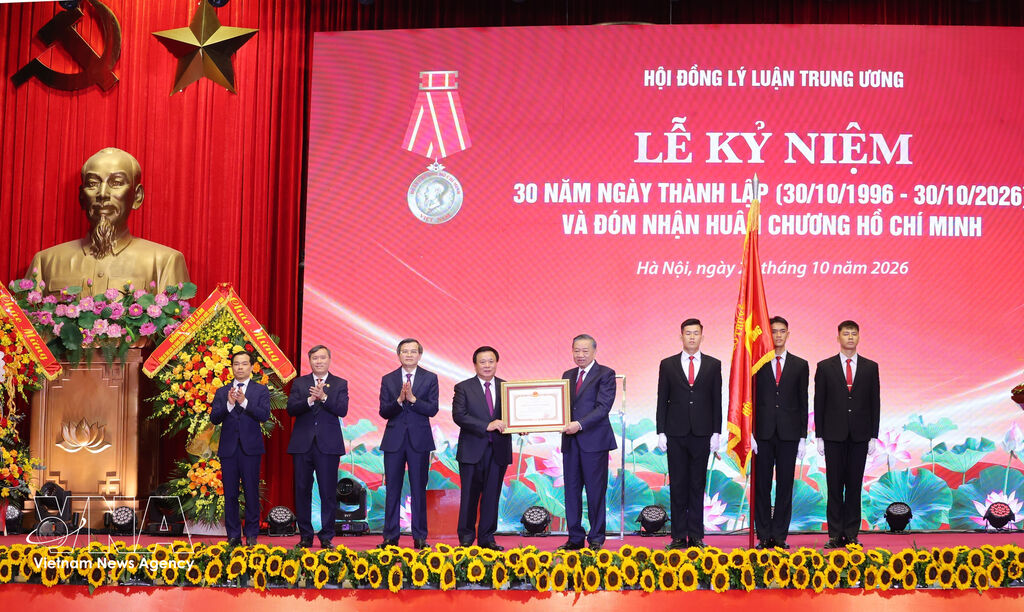 |
| General Secretary of the Communist Party of Vietnam Central Committee and President To Lam (fourth from right) presents the Ho Chi Minh Order to the Central Council for Theoretical Studies. (Photo: VNA) |
He called on the council to successfully conduct two major reviews, helping open up a new stage in theoretical development and the Party’s leadership vision. The findings must provide a robust scientific basis for preparing for the 15th National Party Congress, studying amendments and further development of the Party’s Platform, and revising and supplementing the Party Statutes.
The General Secretary and President called for focused research into foundational theoretical issues and new, urgent challenges facing the country and the contemporary world. A key priority is to further develop understanding of socialism and the model and path towards socialism in Vietnam, while deepening analysis of the relationship between a socialist-oriented market economy, a socialist rule-of-law State and socialist democracy under the Party’s leadership.
In response to technological change, the council needed to clarify the production relations suited to new, high-quality productive forces and promote mechanisms that will unlock the potential of the private sector.
The council should help standardise the system of theoretical concepts and categories, particularly new ones, clarifying their substance, scientific foundations and conditions for application to ensure consistent understanding and action.
It should renew research methodologies, greater democracy and scientific rigour, and strict academic integrity, while strengthening international cooperation and linking joint research with dialogue on major issues of the contemporary era, the leader stressed.
On the occasion, General Secretary and President Lam presented the Ho Chi Minh Order to the council in recognition of its particularly outstanding contributions to the revolutionary cause of the Party and the nation./.