 |
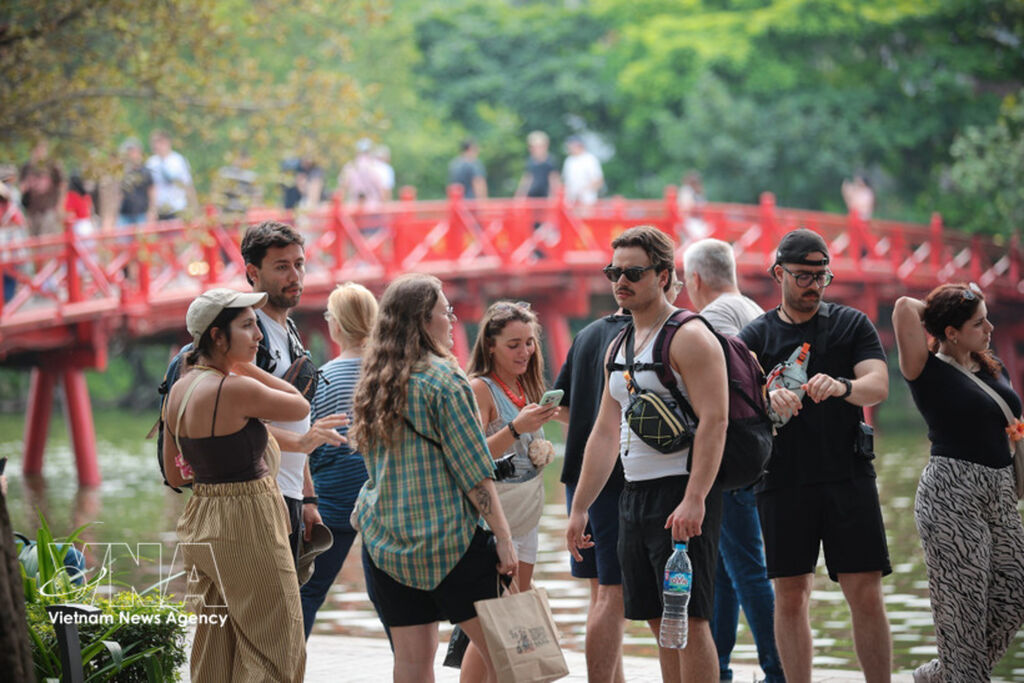
| Foreign tourists visit Hoan Kiem Lake in Hanoi downtown. (Photo: VNA) |
Hanoi (VNA) – Hanoi is emerging as an increasingly attractive destination for hotel and accommodation real estate investors thanks to its cultural, tourism, and service ecosystem that has been built up over many decades.
According to the Vietnam National Authority of Tourism (VNAT), the country welcomed 10.6 million international arrivals in the first five months of 2026, maintaining the strong recovery momentum of the tourism industry. Against this backdrop, Hanoi is regarded as one of the most promising markets for hospitality investment, thanks to rising visitor numbers and its ability to sustain demand.
While tourism growth remains an important indicator, long-term hotel investors increasingly focus on a destination’s capacity to generate stable accommodation demand over time.
Transport infrastructure plays a critical role in improving accessibility. However, experience from mature markets suggests that infrastructure usually offer initial advantage. Long-term appeal depends more on distinctive factors such as cultural identity, quality of life, public spaces and the overall service ecosystem.
According to the Savills Impacts Report, cities’ ability to attract long-term capital is increasingly linked to four key pillars including economic fundamentals, knowledge and technology development, environmental-social-governance (ESG) standards, and the quality of real estate markets and infrastructure.
For the hospitality sector, these factors help maintain stable demand and improve long-term asset performance. Hanoi stands out thanks to its diversified visitor base.
Nguyen Le Dung, Head of Investment Advisory at Savills Hanoi, said investors today look beyond location alone, placing greater emphasis on a project's connectivity to destinations and the quality of services and experiences available to guests.
As the country’s political, cultural and diplomatic centre, Hanoi attracts a broad spectrum of visitors, including leisure travellers, business visitors, MICE (Meetings, Incentives, Conferences and Exhibitions) tourists, diplomatic delegations and high-end travellers.
This diversity enables the city's hotel market to better withstand economic fluctuations than destinations dependent on a single customer segment.
At the same time, Hanoi is investing heavily in infrastructure and urban renewal under its long-term development plans. The Capital Master Plan to 2045, with a vision to 2065, identifies heritage preservation, public space expansion and effective use of natural landscapes as new growth drivers.
In particular, plans to develop the Red River landscape corridor are expected to create a new cultural, tourism and community axis, expanding visitor experiences while supporting future growth in hospitality, commercial and service activities.
In addition, the cultural identity factor is creating a hard-to-replace advantage for Hanoi. Globally, destinations that maintain high hotel and hospitality real estate values often combine favourable locations with comprehensive experience ecosystems.
Areas such as Ginza in Tokyo and the Huangpu River bank in Shanghai demonstrate how heritage, public spaces, commercial activities and cultural experiences can be integrated to create distinctive destinations. Their success lies in preserving and enhancing local identity while offering experiences that cannot easily be replicated elsewhere.
Hanoi possesses many similar strengths, including its centuries-old heritage system, the Old Quarter, a network of lakes, public cultural spaces and a well-established tourism services ecosystem. These assets help extend visitor stays, encourage repeat visits and support long-term operational performance and asset values.
Nguyen Anh Tuan, former Director of the Institute for Tourism Development Research, said that amid intensifying competition among destinations, long-term advantages increasingly depend on the ability to create unique experiences rather than simply expanding infrastructure or accommodation supply.
Today’s travellers are looking not only for a place to stay but also for opportunities to experience a destination’s lifestyle, culture and stories. When effectively preserved and promoted, these values become intangible assets that generate lasting appeal for investors, he said.
With its strong economic foundation, improving infrastructure, favourable living environment and deep cultural heritage, Hanoi is well positioned to attract long-term capital flows into the hotel and hospitality real estate market, particularly as investors increasingly seek assets capable of generating stable returns and sustainable cash flows./.