 |
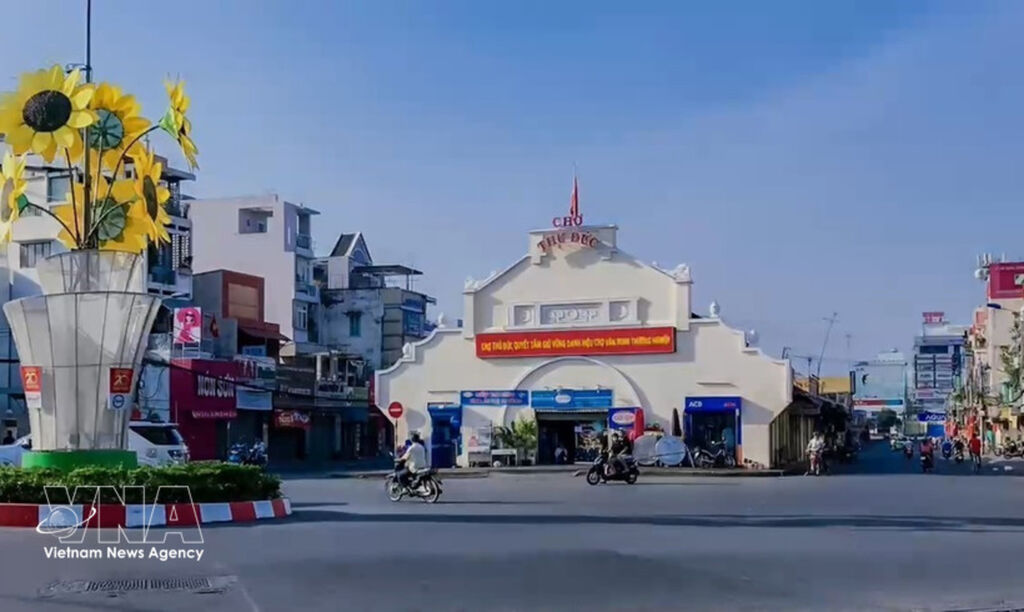
| Thu Duc ward in Ho Chi Minh City has become the first locality in Vietnam to measure residents’ quality of life and trust in local governance through a scientific set of happiness indicators. (Photo: VNA) |
Ho Chi Minh City (VNA) – Thu Duc ward in Ho Chi Minh City has become the first locality in Vietnam to measure residents’ quality of life and trust in local governance through a scientific set of happiness indicators.
The ward recently introduced the “Happy Thu Duc Ward” criteria framework, which evaluates residents’ well-being across three dimensions – material conditions, mental well-being and public awareness – through ten criteria and 50 detailed indicators.
The initiative is considered a pioneering step in local governance, aiming to place people’s satisfaction and quality of life at the centre of policy-making and development planning.
Traditionally regarded as an abstract and subjective concept, happiness has now been translated into measurable indicators closely linked to residents’ daily experiences and living conditions.
To develop the framework, the ward cooperated with the Ho Chi Minh City Institute for Development Studies in conducting extensive research based on international happiness measurement models combined with local sociological surveys.
The process involved public consultations, in-depth social surveys, seminars and expert discussions with scholars, researchers and local administrators.
Notably, the study collected more than 6,000 survey samples, an unusually large dataset for a ward-level administrative unit, ensuring high statistical reliability and practical value.
Mai Huu Quyet, Secretary of the Party Committee of Thu Duc ward, said the framework was not built on subjective administrative thinking but stemmed from the actual needs and aspirations of residents across all 52 residential quarters in the ward.
Initial survey results showed encouraging outcomes. Residents rated their own happiness level at an average of 8.41 out of 10, while the average score across the 50 indicators reached 7.07 points. The highest-rated category was awareness and social trust, scoring 7.74 points.
According to experts, the results reflect people’s optimism and confidence in the development prospects of Thu Duc ward, Ho Chi Minh City and the country as a whole.
Nguyen Thi Hau, General Secretary of the Ho Chi Minh City Historical Science Association, described the project as a notable effort to apply a people-centred approach to urban governance.
She noted that incorporating factors such as mental well-being, social trust, community cohesion and residents’ sense of happiness into local development assessments represented a positive shift beyond traditional economic and infrastructure indicators.
More importantly, the framework enables authorities to identify deeper urban issues, including psychological pressure, social connection, sense of belonging and hidden stress emerging during rapid urbanisation.
vnanet-potal-tp-ho-chi-minh-phuong-dau-tien-luong-hoa-chat-luong-cuoc-song-cua-nguoi-dan-8775222.jpg
The Thu Duc Ward Public Administrative Service Centre is the first unit in Ho Chi Minh City to use robots to assist public service users. (Photo: VNA)
Quyet said each neighbourhood facing weaknesses in certain indicators would receive targeted support and intervention measures.
One of the most significant values of the framework is the establishment of a “bottom-up” feedback mechanism. Instead of imposing administrative targets from above, the system allows authorities to better understand residents’ actual needs and priorities.
Pham Binh An, Deputy Director of the Ho Chi Minh City Institute for Development Studies, said the survey results showed strong public optimism despite ongoing economic challenges.
He added that the success of the pilot model could pave the way for the development of a city-level happiness index in the future. However, he stressed that indicators should be flexibly adapted to different localities rather than uniformly applied across the city.
According to local officials, residents actively participated in the survey campaign, openly sharing both positive feedback and concerns related to public parks, schools and community facilities.
The initiative has also changed public perceptions. Many residents initially viewed the survey as a routine administrative exercise. However, they later became more engaged after local officials directly explained its purpose and encouraged honest feedback.
With the slogan “Thu Duc – Happiness – Compassion – Development,” the ward aims to affirm that happiness should not remain a symbolic slogan but become a measurable and continuously improved aspect of everyday life./.