 |
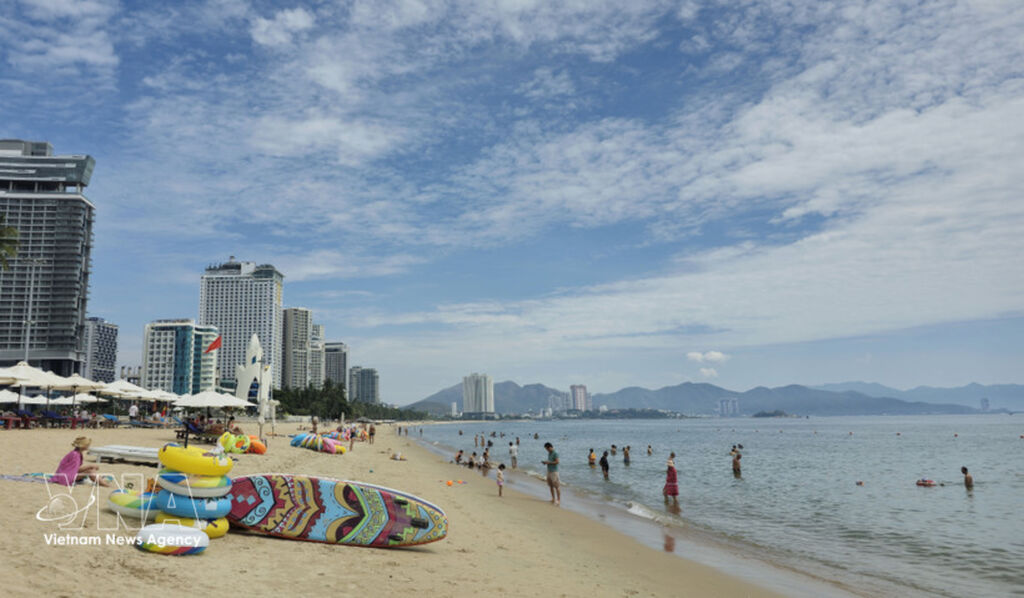
| Nha Trang beach in Khanh Hoa is a magnet for tourists. (Photo: VNA) |
Khanh Hoa (VNA) – Expanding its development space through administrative boundary mergers, the south-central coastal province of Khanh Hoa is reshaping its tourism identity with a broader ecosystem of experiences and an ambition to emerge as a leading international destination for leisure and discovery.
Rather than relying solely on natural advantages, the province is shifting towards a more integrated development model linking tourism, trade and investment to create new growth momentum.
Breathing new life into cultural heritage
Resolution No. 80-NQ/TW issued by the Politburo earlier this year identified culture as a key internal driver for sustainable development. In Khanh Hoa, that orientation is being translated into efforts to turn culture into the core of tourism development.
Deputy Director of the provincial Department of Culture, Sports and Tourism Cung Quynh Anh said heritage values are no longer preserved in static spaces alone, but are being revitalised through immersive experiences that allow visitors to engage more deeply with local history and traditions.
The Po Klong Garai Towers, a prominent symbol of Cham civilisation, exemplifies this approach. Built between the late 13th and early 14th centuries to worship King Po Klong Garai, the complex has stood for more than 700 years and was recognised as a special national relic site in 2016.
Today, the site attracts visitors with Cham art performances, Bau Truc pottery-making, My Nghiep brocade weaving and traditional dances staged during weekends and festivals.
The province also boasts a rich cultural map featuring landmarks such as Po Nagar Towers and Hoa Lai Towers, alongside UNESCO-recognised intangible heritages including bai choi singing, don ca tai tu music and Cham pottery craftsmanship.
Major festivals such as Kate, Rija Nagar, the Nha Trang Sea Festival, the Grape and Wine Festival and the Whale Worship Festival are helping create a vibrant cultural atmosphere where visitors can both observe and participate in local traditions.
According to Chairman of the provincial Tourism Association Pham Minh Nhut, with nearly 500km of coastline, hundreds of islands and scenic bays including Van Phong, Cam Ranh and Vinh Hy, Khanh Hoa possesses one of Vietnam’s richest marine tourism ecosystems.
Following the merger with Ninh Thuan, the province’s ecological landscape has expanded further with Nui Chua and Phuoc Binh national parks, forests, streams, waterfalls, specialised agricultural zones and renewable energy projects.
The combination of marine, forest, cultural and agricultural resources is opening up opportunities for the province to diversify tourism products, from luxury resorts and eco-tourism to wellness, agricultural and community-based tourism.
Building an international tourism hub
Under its new growth strategy, Khanh Hoa no longer views tourism as a standalone sector, but as part of a broader triangle linking tourism, trade and investment to fuel economic development.
In the first four months of 2026, the province welcomed around 3.5 million overnight visitors, up more than 24% year-on-year, including about 1.4 million international arrivals. Tourism revenue was estimated at over 27.4 trillion VND (1.04 billion USD), nearly 35% higher than the same period last year.
The figures highlight not only strong recovery but also improving growth quality, with visitors increasingly seeking cultural exploration, wellness services, eco-experiences and major events alongside beach holidays.
Khanh Hoa has also intensified investment, trade and tourism promotion activities in high-potential markets such as India, the Middle East, the Republic of Korea and Japan, while expanding international flight networks and tapping into the growing Halal tourism segment.
For the 2026-2030 period, the province aims to become an international marine tourism hub, rank among Vietnam’s top five tourism destinations and establish itself as a leading destination in Southeast Asia. By 2030, it targets 33 million visitors, tourism revenue of 9 billion USD and a 20% contribution to GRDP.
Looking ahead to 2045, Khanh Hoa envisions becoming one of Asia’s premier destinations with a high-end and sustainable tourism ecosystem.
Vice Chairman of the provincial People’s Committee Nguyen Long Bien said the province is focusing on digital transformation, green growth, modern destination management and the development of distinctive tourism products to achieve these ambitions.
With a comprehensive development strategy, Khanh Hoa is steadily evolving from a traditional beach resort destination into a “destination of opportunity” capable of attracting both tourists and investment flows, creating fresh momentum for long-term growth./.