 |
| Fresh fruit products of Vietnam are introduced to German customers. (Photo: VNA) |
Hanoi (VNA) - The Ministry of Agriculture and Environment (MAE)'s national agricultural traceability system has officially come into operation, creating a unified nationwide database to enhance transparency, strengthen competitiveness and expand export opportunities for Vietnamese agricultural products.
The platform currently contains data on more than 18,500 products across 181 product categories from 170 enterprises in 24 of Vietnam's 34 provinces and cities. However, experts say the system's real value lies not in the number of QR codes generated, but in the quality and timeliness of the data behind each product.
Hanoi has been among the pioneers in this field, launching its electronic traceability system for agricultural, forestry and fishery products in 2018. Since the national platform became operational, the city has synchronised data from 2,823 production and trading establishments and more than 10,100 agricultural, forestry and fishery products.
According to Ta Van Tuong, Deputy Director of the Hanoi Department of Agriculture and Environment, data integration has improved transparency, enabled real-time monitoring of production activities and strengthened food safety oversight across nearly 1,500 supply chains delivering products to the capital from other localities.
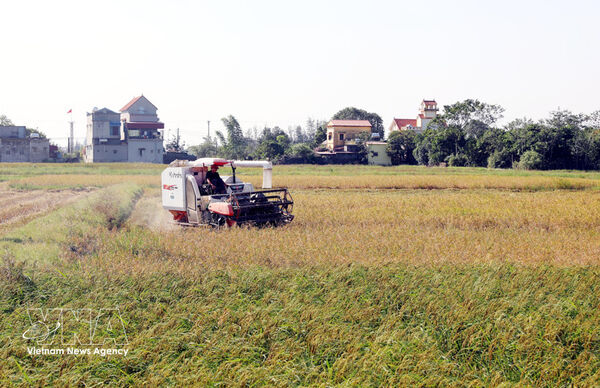
Experts say the foundation of an effective traceability system is a comprehensive and regularly updated database of cultivation areas. This remains a major challenge for Vietnam, where agricultural production is largely carried out by millions of smallholder farmers on fragmented landholdings.
To Xuan Phuc, an expert from Forest Trends, said cultivation-area databases offer benefits beyond product traceability. They provide an important basis for policymaking, monitoring land use, protecting forests, ensuring production safety and attracting investment into raw material production areas. He noted that many coffee companies are willing to pay for access to comprehensive and up-to-date cultivation-area data.
Experts have also called for mechanisms that allow enterprises to share data with regulators, helping avoid duplication in data collection while identifying overlaps between production zones or with forestry land.
The need to build comprehensive databases is becoming increasingly urgent as more export markets make traceability mandatory. Under the European Union Deforestation Regulation (EUDR), from December 30, 2026, coffee, rubber and timber exported to the EU must be traceable to individual production plots.
Phuc urged MAE to promptly issue a list of products subject to mandatory traceability requirements and require businesses to share cultivation-area data with local authorities to establish a unified national database.
According to Chairman and CEO of Vinh Hiep Co., Ltd Thai Nhu Hiep, the biggest challenge is no longer investment in technology, factories or logistics, but maintaining farmers' long-term participation in linked production chains by building trust and ensuring shared benefits.
From a regulatory perspective, Tuong proposed expanding the national platform to incorporate public administrative services, allowing businesses to update production information, report changes and submit reports online. Real-time updates would create a database that is "accurate, complete, clean and live", providing a solid foundation for meaningful digital transformation.
Experts also recommended introducing a mandatory roadmap for traceability across selected product groups, both to strengthen regulatory oversight and to protect transparent producers by enhancing their credibility and competitiveness.
According to Deputy Prime Minister Ho Quoc Dung, achieving Vietnam's target of more than 74 billion USD in agricultural, forestry and fishery exports in 2026 will require stronger traceability systems, initially focusing on key export commodities, high-value products and major markets such as the EU, the US and China./.