 |
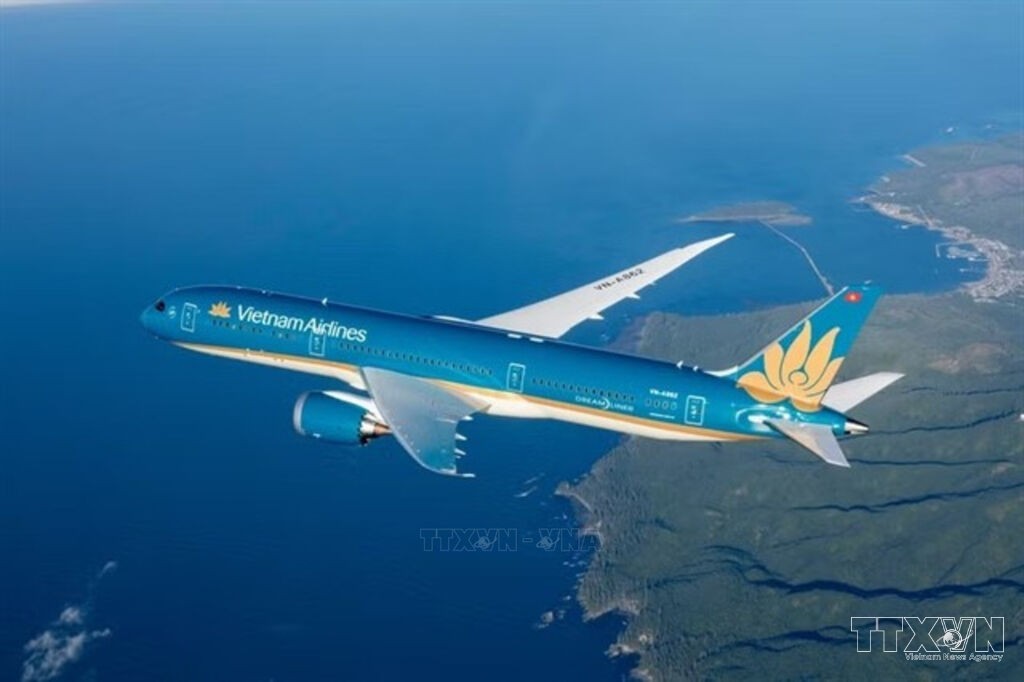
| Vietnam Airlines is still dominating the aviation market. (Photo courtesy of the company) |
Hanoi (VNS/VNA) - The aviation market is attracting a new wave of investors and airlines as passenger and cargo demand expands, but intensifying competition is putting financial strength, operating efficiency and resilience to unexpected cost shocks increasingly under the spotlight.
Boeing's Commercial Market Outlook identifies Vietnam as one of the region's fastest-growing aviation markets.
In the first half of 2026, the market handled 45.49 million passengers and 813,200 tonnes of cargo, up 9.8% and 16.4% year-on-year, respectively, according to the Civil Aviation Authority of Vietnam.
That growth potential has drawn major private groups into both airline operations and aviation infrastructure.
T&T Group became a strategic shareholder in Vietravel Airlines, while Sun Group established Sun PhuQuoc Airways, developing an airline model linked with its tourism and resort ecosystem.
Crystal Bay has established Crystal Bay Airlines with charter capital of 300 billion VND (11.5 million USD), while Dong Nai-based LOTHA Airlines entered the sector with 10 billion VND.
Infrastructure is attracting large-scale investment as well. Masterise Group established Masterise Airport Company in August 2025 with charter capital of 29.3 trillion VND.
Despite the newcomers, the domestic market remains highly concentrated. According to an early-2026 report by Saigon-Hanoi Securities, Vietnam Airlines and Vietjet together account for around 85-90% of the domestic aviation market.
Meanwhile, Bamboo Airways, Pacific Airlines and Vietravel Airlines have been undergoing restructuring involving finances, fleets and route networks.
Bamboo Airways has reduced domestic and international services, with its fleet falling to three aircraft from 44 during its peak period.
The challenges facing carriers have intensified this year as fuel prices, foreign exchange movements and aircraft shortages put pressure on operating costs.
Jet A1 prices imported from Singapore at one point exceeded 230 USD per barrel in the second quarter following the escalation of conflict in the Middle East in early March.
Although prices subsequently eased to around 160-170 USD, they remained significantly above assumptions used by many airlines in their annual business plans.
Vietjet reported consolidated second-quarter revenue of nearly 30.5 trillion VND, up 71% year-on-year, while profit before tax dropped 47% to 349 billion VND.
The airline subsequently lowered its 2026 consolidated revenue target from 101.4 trillion VND to 86.8 trillion VND and its profit before tax target from 3 trillion VND to 2.4 trillion VND.
For the first half, Vietjet recorded consolidated revenue of over 51.5 trillion VND, up 44%, while profit after tax increased 6% to 1.3 trillion VND.
Vietnam Airlines faced similar cost pressures. Second-quarter consolidated revenue rose more than 36% to nearly 38.4 trillion VND, but the cost of goods sold surged 59% to more than 36.6 trillion VND.
Gross profit consequently fell by more than 3.2 trillion VND to around 1.7 trillion VND, contributing to a consolidated after-tax loss of approximately 600 billion VND, its first quarterly loss since early 2024.
Tran Van Huu, head of Finance and Accounting and chief accountant at Vietnam Airlines, said fuel prices alone could have increased the carrier's second-quarter costs by more than 7 trillion VND.
Mitigation measures helped reduce the adverse impact by around 5 trillion VND.
Foreign exchange represents another challenge because roughly 60% of airline costs are foreign currency-related, including aircraft leases, spare parts and maintenance.
Vietnam Airlines estimates that a 1% increase in the exchange rate could add about 300 billion VND to its costs. The exchange-rate impact in 2026 is projected at around 500 billion VND.
Aircraft availability is adding further pressure. Global supply-chain disruptions and engine problems, including Pratt & Whitney engine recalls, have removed aircraft from service and tightened supply.
Vietnam Airlines Chairman Do Ngoc Hoa said at the airline's 2026 annual general meeting that aircraft shortages could persist for several years.
Aircraft ordered now from manufacturers such as Boeing or Airbus may not be delivered until 2033-2034, he said.
Nevertheless, the industry targets double-digit growth in 2026, with approximately 95 million passengers and more than 1.6 million tonnes of cargo expected to be transported, representing increases of 13% and 15%, respectively./.