 |
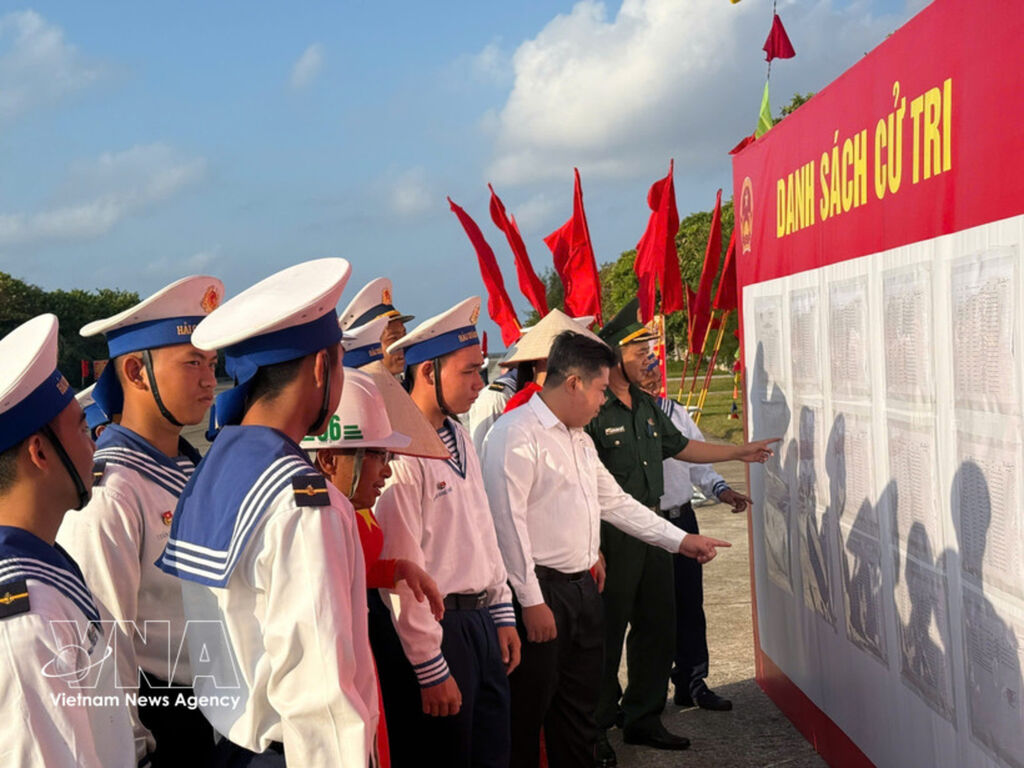
| Voters on Truong Sa are following information regarding the election of deputies to the 16th National Assembly and People's Councils at all levels for the 2026-2031 term (Photo: VNA) |
Hanoi (VNA) – Ensuring that State power truly belongs to the people, with the leadership of the Communist Party of Vietnam serving as the decisive factor, remains the guiding principle for organising the election of deputies to the 16th National Assembly (NA) and People’s Councils at all levels for the 2026–2031 tenure.
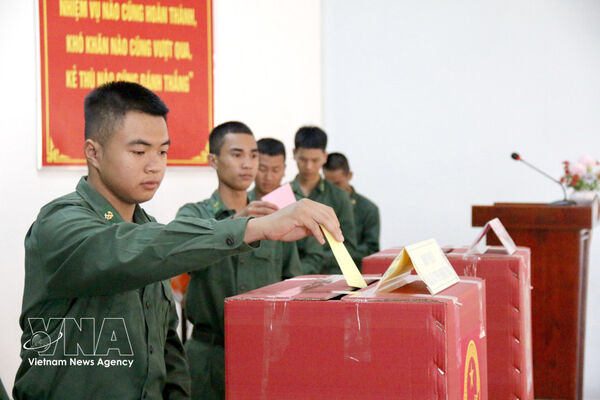
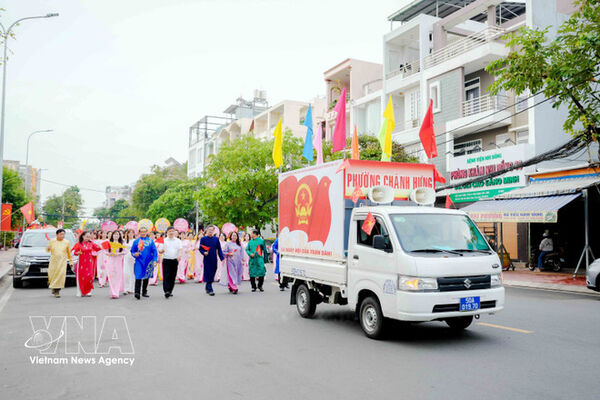
The election, scheduled for March 15, is regarded as a major political event and a central task of the country in 2026, requiring thorough preparation to guarantee that it is democratic, lawful, safe and cost-effective, and truly a nationwide festival of the people.
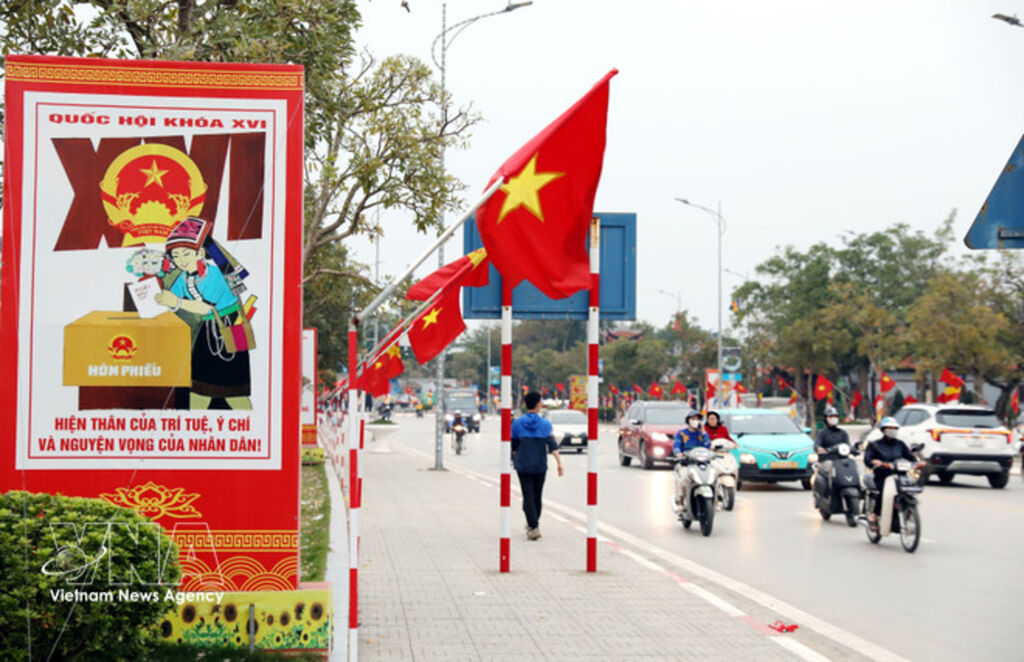 |
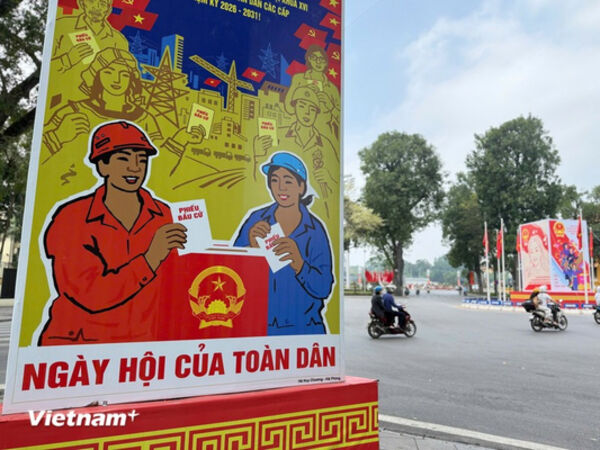
| Banners and national flags along streets in Lang Son province (Photo: VNA) |
Personnel work – the most crucial stage
Over the past 80 years since Vietnam’s first general election on January 6, 1946, the NA has continuously developed under the leadership of the Party, accompanying the nation’s development and serving as an institution that upholds socialist democracy and ensures that State power belongs to the people. In this process, the Party’s leadership has been not only a constitutional principle but also the decisive factor ensuring the success of elections.
Preparations for the upcoming election have been carried out early and comprehensively. On May 16, 2025, the Politburo issued Directive No. 46-CT/TW on leading the election, providing overall direction for the preparation and organisation of the election.
Addressing a national conference on election preparations on November 15, 2025, Party General Secretary To Lam said the 2026–2031 term will be crucial for achieving Vietnam’s two strategic centennial goals. He stressed that candidate selection must prioritise capable and responsible individuals with innovative mindset who dare to act, take responsibility, and contribute to policymaking for national and local development.
To further ensure the quality and effectiveness of preparations, on February 23, the Politburo and the Secretariat issued Conclusion No. 03-KL/TW to continue implementing Directive 46, calling on for Party committees and organisations at all levels to strengthen leadership over personnel preparations, ensure democracy under the Party’s unified direction in cadre work, and elect enough qualified deputies while increasing the proportion of full-time legislators.
According to Ta Thi Yen, Vice Chairwoman of the NA’s Committee for Deputy Affairs and Deputy Chief of the Standing Office of the National Election Council, the quality of candidate pools has improved, and the surplus ratio of candidates meets the required standards. Election-related bodies have been established on time, ensuring stability and continuity.
Statistics show that for the 16th NA, 864 candidates are running for 500 seats, representing a ratio of 1.73 candidates per seat, including five self-nominated candidates.
Meanwhile, the official list for People’s Councils includes 4,217 candidates, 10 fewer than after the third consultative conference, equivalent to 1.65 candidates for each seat to be elected. The total number of candidates on the official list running for seats in commune-level People’s Councils stands at 120,873, down by 369 compared with the results of the third consultative conference, representing a ratio of 1.66 candidates for each seat to be filled.
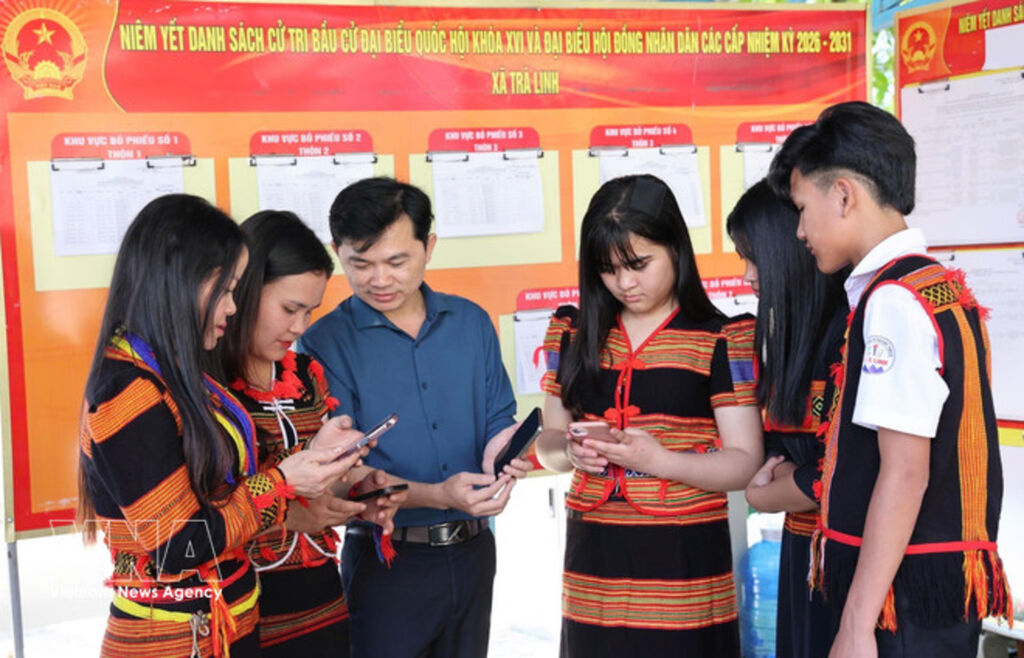 |
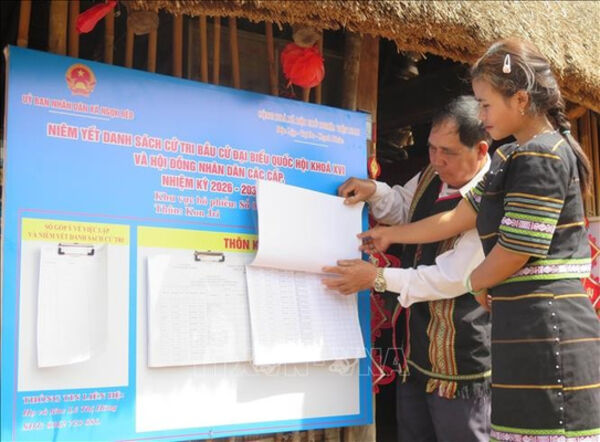
| Xo Dang ethnic minority people in Tra Linh commune, Da Nang city, watch video clips and infographics on their phones guiding the voting process (Photo: VNA) |
“People as the root” – the centre of all policies
The development orientation for 2026–2030, set out in the Resolution of the 14th National Party Congress, highlights promoting the people’s central role, socialist democracy, the strength of the people and the great national unity bloc. It reaffirms the principle that “the people are the root,” viewing them as both the driving force and the centre of the Doi moi (renewal) process, national development and defence.
Accordingly, all Party and State policies must stem from the legitimate needs and interests of the people, with respect for human and citizens’ rights, while public happiness and satisfaction serve as the ultimate measure of governance.
The upcoming election comes as Vietnam has achieved historic gains after nearly four decades of Doi Moi across socio-economic sectors. It also coincides with efforts to streamline the political system, reorganise administrative boundaries, and implement a two-tier local administration model to make governance leaner, stronger, and more effective in the country’s new development phase.
Held shortly after the 14th National Party Congress, the election serves as a concrete step to implement the Congress’s resolutions, particularly in relation to personnel work. It is also an important opportunity for voters to exercise their democratic rights by selecting capable and worthy representatives who will reflect their will, aspirations and mastery in the NA and People’s Councils in the coming term.
In recent weeks, candidates across the country have been engaging with voters in their respective constituencies to present their action programmes and campaign for election. Through these meetings, most voters have expressed confidence and expectations that the elected representatives will effectively convey their voices in the country’s representative bodies.
At both in-person and online voter meetings, candidates have introduced action programmes closely linked with local realities and issues of concern to voters. Most candidates pledge to stay close to the grassroots level, listen to public opinions, and promptly convey the aspirations and concerns of the people to the National Assembly, People’s Councils and competent authorities.
Key issues highlighted in many programmes include improving the effectiveness of State governance, investing in infrastructure development, accelerating digital transformation, building an effective two-tier local government model, improving living standards, and ensuring social security. Many candidates have also emphasised the need to address both local concerns and national issues in policymaking.
Candidates have demonstrated a strong sense of responsibility, committing that if elected they will fulfil their role as people’s representatives effectively. They pledge to maintain close ties with voters, regularly listen to and gather public opinions, and faithfully convey these concerns to the NA, ministries, sectors and local authorities, while also performing their supervisory duties.
According to Le Huu Tri, Vice Chairman of the provincial Election Committee, law-making today requires deputies not only to vote on legislation but also to understand policies and legislative techniques, assess multi-dimensional impacts of laws, analyse data, learn from international practices, detect legal gaps, and offer practical policy recommendations.
Meanwhile, Pham Anh Tuan, Chairman of the Gia Lai provincial People’s Committee, said the province is moving from an administrative model to a a service-oriented and development-facilitating government better serves the people. In this process, People’s Councils play a key role in deciding major policies, supervising implementation, and reviewing mechanisms to ensure they remain aligned with reality.
From the first general election in 1946 to the present, Vietnam has successfully organised 15 NA elections. Each election has marked an important milestone associated with different historical stages and revolutionary tasks of the nation. Throughout these eight decades, the Party’s consistent and unified leadership in organising and implementing elections has proven to be the decisive factor ensuring their success and reinforcing the principle that State power belongs to the people./.