 |
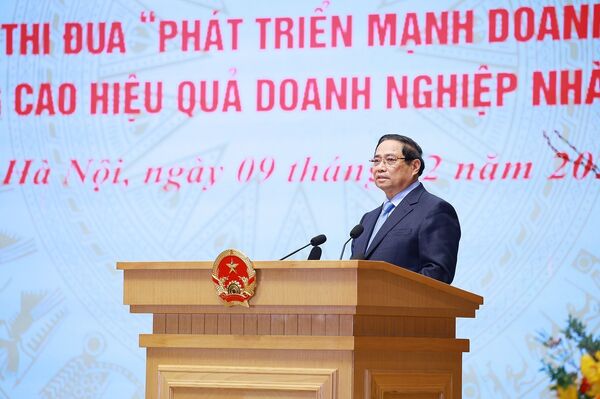
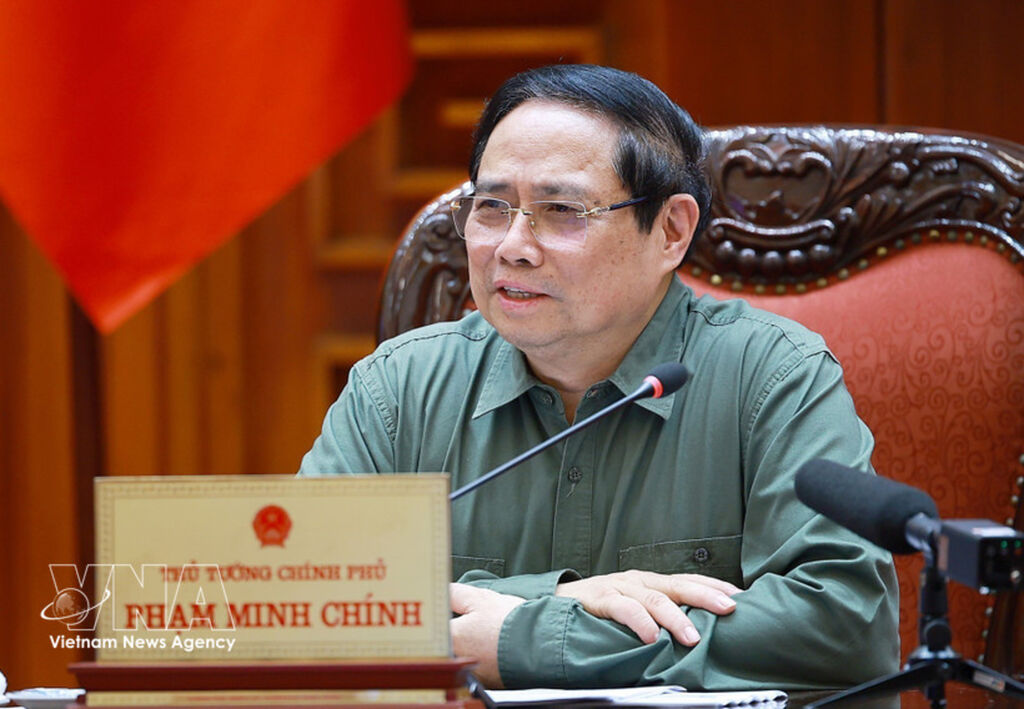
| Prime Minister Pham Minh Chinh speaks at the meeting between standing Government members and representatives of ministries, agencies and Phu Tho province (Photo: VNA) |
Hanoi (VNA) – Prime Minister Pham Minh Chinh on February 14 chaired a meeting between standing Government members and representatives of ministries, agencies and Phu Tho province to address structural damage of the Lo river bridge, directing both urgent remedy measures and the construction of a new bridge to meet rising development demands.
According to provincial authorities, the bridge project, approved in 2008 with total investment of 320 billion VND (12.3 million USD), was put into operation in November 2015 and completed its warranty period in early 2018. Recent inspections found no abnormalities in the bridge’s beams or piers; however, core concrete samples from several pier foundations and bored piles failed to meet design standards. The foundations of several piers no longer satisfy load-bearing requirements under current technical regulations, posing potential safety risks.
Phu Tho has adjusted traffic arrangements across the bridge and proposed two options: repairing and reinforcing the existing structure or investing in a new bridge. At the meeting, participants agreed on the need for immediate repairs while endorsing in principle the construction of a new bridge.
PM Chinh welcomed the prompt response of ministries and local authorities but noted that solutions to date remained tentative and lacked a clear, feasible roadmap to fully address public travel needs.
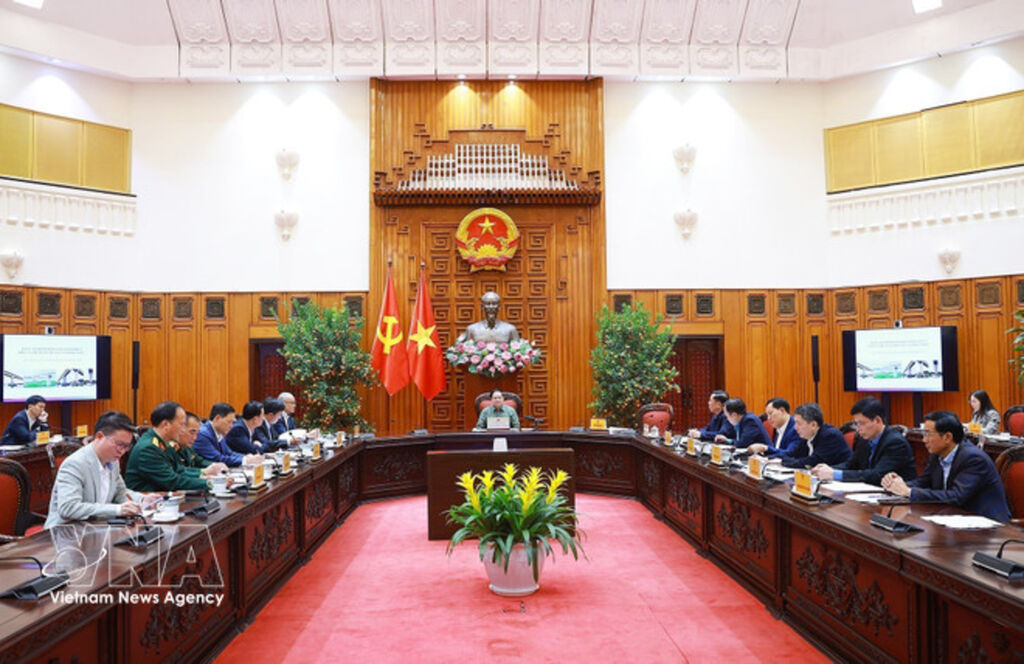 |
| An overview of the meeting between standing Government members and representatives of ministries, agencies and Phu Tho province (Photo: VNA) |
He ordered that the cause of the damage be investigated and concluded within February, with any violations to be handled strictly in accordance with Party regulations and State law. Stressing both immediate and long-term imperatives, he directed that authorities pursue a dual-track approach: repairing the existing bridge to ensure safety while simultaneously investing in a new structure capable of opening up new socio-economic development space and safeguarding national defence and security, particularly in the context of the recent merger of the three provinces of Phu Tho, Vinh Phuc and Hoa Binh, and evolving development requirements.
As an interim solution, the Prime Minister requested consideration of installing a temporary pontoon bridge, if necessary, to facilitate travel.
Calling for strategic foresight, he instructed that the new Lo river bridge be built in line with approved planning and at a scale comparable to the new Phong Chau bridge, with completion targeted within one year so that residents may cross the new bridge by the Lunar New Year 2027. Phu Tho province will serve as project investor, with military units participating in and supporting implementation.
On financing, he assigned the province responsibility for site clearance and access roads, while the central budget will support construction costs using contingency funds carried over from 2025. He underscored that negative practices, corruption and wastefulness must be strictly prevented./.