 |
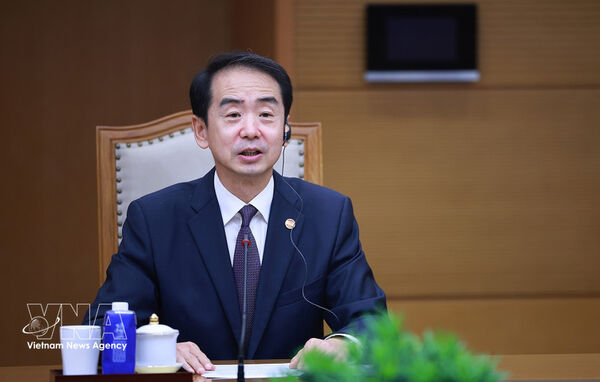
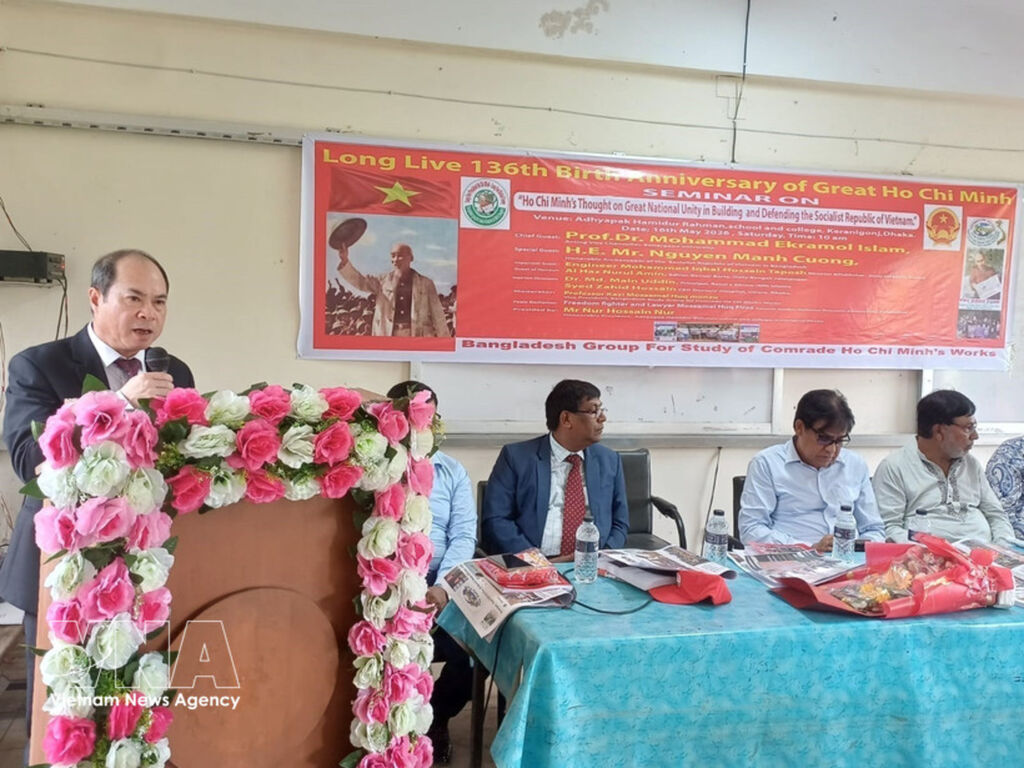
| Vietnamese Ambassador to Bangladesh Nguyen Manh Cuong speaks at the seminar. (Photo: VNA) |
Hanoi (VNA) – The Vietnamese Embassy in Bangladesh, in coordination with a research group on President Ho Chi Minh, recently organised a seminar on the late leader's thought on great national unity in the cause of Vietnam’s national construction and defence, on the occasion of his 136th birth anniversary (May 19, 1890-2026).
The event, held in the capital city of Dhaka, was attended by Ambassador Nguyen Manh Cuong, along with professors, scholars, university lecturers and a large number of students interested in the life and legacy of President Ho Chi Minh.
At the seminar, participants reflected on the immense contributions of President Ho Chi Minh, a national liberation hero and world cultural figure, to Vietnam’s struggle for independence and national reunification, as well as to global movements for national liberation. Discussions focused on clarifying his ideology of great national unity in the cause of safeguarding and developing the nation, and examining the contemporary relevance and applicability of his thought in Bangladesh and other parts of the world today.
In his opening remarks, Dr. M Jahangir Khan, head of the research group, stressed that President Ho Chi Minh was not only a visionary leader of the Vietnamese nation, but also a symbol of peace, national independence and international solidarity. He introduced historical images and documents highlighting the late Vietnamese leader’s revolutionary journey in countries such as Thailand and China during his quest for national salvation.
Bangladeshi scholars noted that his ideology of national unity continues to carry profound significance amid growing global challenges, including conflicts, social divisions and economic instability. Delegates agreed that his message of solidarity, consensus and placing national interests above sectional differences remains a valuable lesson for many developing nations.
Recalling President Ho Chi Minh’s famous saying, “Solidarity, solidarity, great solidarity. Success, success, great success,” Ambassador Cuong emphasised that the ideology of unity had been one of the key foundations enabling Vietnam to overcome the most difficult periods in its history. He affirmed that the value of solidarity remains highly relevant to Vietnam’s current national development efforts, stressing that it creates strength and represents not only the gathering of forces, but also harmony in goals, interests and aspirations for national progress.
The seminar also featured documentary screenings on the late President’s life and revolutionary career, helping Bangladeshi participants gain deeper insight into his enduring legacy, and further strengthening mutual understanding and the traditional friendship between the two nations./.