Resolution No. 23 opens new avenues for Vietnamese community in US to contribute to homeland
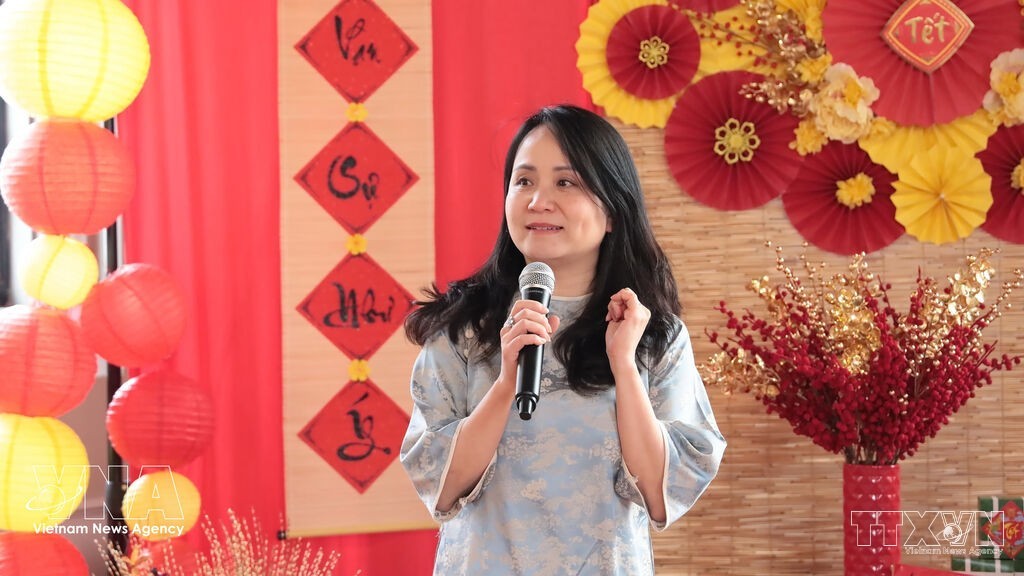
Le Thi Kim Anh, an international expert in public finance and governance digitalisation working in New York, described this resolution as a significant step forward in the Party and State’s approach to the more than 6.5 million Vietnamese living, studying and working around the world.
Le Thi Kim Anh, an international expert in public finance and governance digitalisation working in New York, describes Resolution No. 23-NQ/TW as a significant step forward in the Party and State’s approach to the more than 6.5 million Vietnamese living, studying and working around the world. (Photo: VNA)

New York (VNA) – The Politburo’s issuance of Resolution No. 23-NQ/TW on August 2, 2026, on overseas Vietnamese (OV) affairs marks not only a continuation of the Party’s consistent policy of strengthening national unity, but also opens a new chapter in effectively harnessing the resources of Vietnamese communities abroad for national development and defence.

Speaking to a Vietnam News Agency correspondent in New York, Le Thi Kim Anh, an international expert in public finance and governance digitalisation working in New York, described this resolution as a significant step forward in the Party and State’s approach to the more than 6.5 million Vietnamese living, studying and working around the world.

She said the resolution reaffirms that overseas Vietnamese are an integral part of the Vietnamese nation while highlighting their role as an important strategic resource for national development. This approach is particularly relevant as knowledge, technology, data, innovation and international networks are increasingly decisive to competitiveness.

According to Anh, the new resolution reflects a stronger shift in approach. While previous efforts focused largely on mobilising, supporting and strengthening the community’s ties with the homeland, Resolution No. 23 emphasises creating mechanisms for OVs to participate in and make substantive, organised and effective contributions to national development.

She noted that this direction is especially important as Vietnam accelerates digital transformation, science and technology development, innovation, green growth and deeper integration into global value chains. Fields such as artificial intelligence, semiconductors, biotechnology, renewable energy, green finance, the circular economy, digital healthcare and high-quality education require highly skilled human resources, modern management expertise and strong international connections.

The Vietnamese community in developed countries, particularly the US, has considerable potential in these areas. Many Vietnamese-origin scientists, engineers, technology experts, doctors, lawyers, financial professionals, entrepreneurs and managers are currently working at leading universities, research institutes, technology corporations, financial institutions and international organisations.

However, she stressed that goodwill and expertise can only translate into concrete results through clear, professional and sustainable mechanisms. Many overseas Vietnamese experts still do not know where to start, which agency to contact or how their proposals and initiatives would be received and implemented.

She therefore called for substantive and transparent channels of connection, designated focal points and updated databases of OV experts and entrepreneurs by field, location and expertise. With clear demands and effective coordination mechanisms, their contributions could extend beyond consultation to research, training, technology transfer, management support, investment promotion, market development and policymaking.

The expert said that Resolution No. 23 is thus not only a reaffirmation of the role of OVs in national unity, but also an invitation and commitment to create new avenues for their contributions. Their attachment to the homeland can be transformed into knowledge, technology, investment, initiatives and international connections, helping Vietnam advance faster and more sustainably in the new era./.
See Also

Vietnamese language preserved across globe

In the new context, Politburo Resolution No. 23-NQ/TW, dated August 2, 2026, continues to place the preservation of the Vietnamese language within the strategic vision of mobilising resources from the Vietnamese community abroad and promoting Vietnamese cultural values around the world.

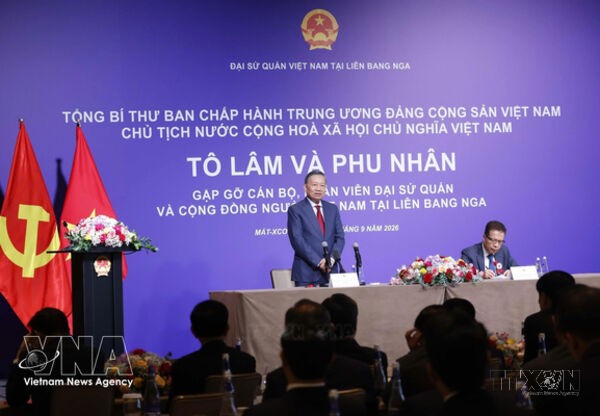
General Secretary and President To Lam meets Vietnamese community in Russia

In particular, the Politburo recently issued Resolution No. 23-NQ/TW on overseas Vietnamese affairs, General Secretary and President To Lam, emphasising that in the time ahead, the Party and State will continue to improve institutions, and adopt comprehensive, open and breakthrough mechanisms and policies to connect with, attract and effectively mobilise the resources of overseas Vietnamese, particularly intellectuals, experts, entrepreneurs, scientists and young people.

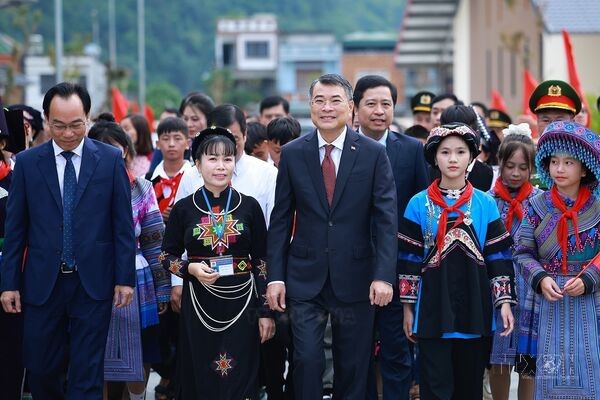
PM urges substantive education reform in 2026–2027 school year

The 2026–2027 academic year must generate substantive reform from within every school and classroom, involving every teacher, student and the entire education sector, Prime Minister Le Minh Hung said on September 5 at the opening ceremony for the new school year at the Muong Khuong Inter-level Boarding School in Muong Khuong commune, the northern mountainous province of Lao Cai.

Caring for education today means investing in nation's future

Every new school year brings back the profound message President Ho Chi Minh delivered at the first school opening ceremony of independent Vietnam – that the future of the nation depends greatly on the education and efforts of its younger generation. His vision remains relevant today: caring for children’s education is an investment in the nation’s future, as every student who has the opportunity to learn, grow and develop can help shape the country of tomorrow.

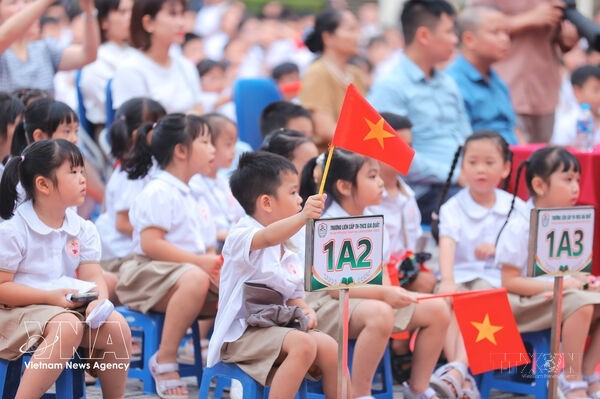
Millions of Vietnamese students start new school year

Millions of students across Vietnam began the new school year today, September 5. The 2026-2027 academic year is expected to bring major changes, with a focus on school governance, teaching methods and assessment. The Government has also called for efforts to address teacher shortages and surpluses, narrow gaps in access to education, and ensure school safety.

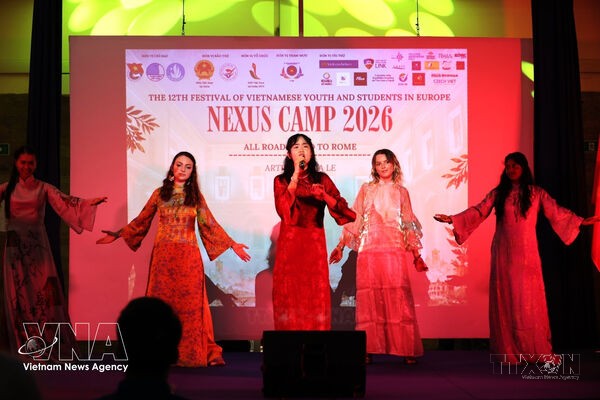
Vietnamese youth camp in Europe promotes connections among Vietnamese abroad

Beyond providing a platform for networking and cultural exchange, the camp offers a multidimensional academic and cultural space that strengthens community bonds, nurtures national pride and raises young people’s sense of responsibility towards their homeland amid globalisation and the international circulation of knowledge.

OVs can become substantive economic bridges between Vietnam, Japan: expert

Tran Trung Kien, Secretary General of the Vietnam-Japan Economic Cooperation Promotion Association (VJECPA) noted that Japan has many strengths that match Vietnam’s development needs, particularly in technology, manufacturing, supporting industries, automation, high-tech agriculture, healthcare, elderly care, education and training, digital transformation, green industry and the circular economy.

Vu Lan for young people: Love is more than a one-day affair

In modern life, however, the way young people express filial devotion has also changed, as not everyone has the time or means to prepare elaborate offerings or take part in every traditional ritual. For many young people, what matters more is understanding the meaning behind those rituals.