 |
| Boasting some of the finest beaches on the planet, such as Kem Beach, Phu Quoc is rapidly becoming a phenomenon among travelers from the Republic of Korea. (Photo: Fabl Belek) |
Hanoi (VNA) - Once the default choice for the Republic of Korea (RoK)'s families, Guam and Saipan are steadily losing ground to a rising star in Southeast Asia. Recent reports by The Korea Herald and Korea JoongAng Daily analyse Phu Quoc as an emerging tourism phenomenon. The island's success is attributed not only to competitive costs but also to activities that are redefining the multi-generational vacation experience.
For decades, Guam and Saipan were the automatic selections for Korean families planning a beach getaway. Short flight times, child-friendly accommodations, and established tourism ecosystems helped these two US territories maintain a steady appeal.
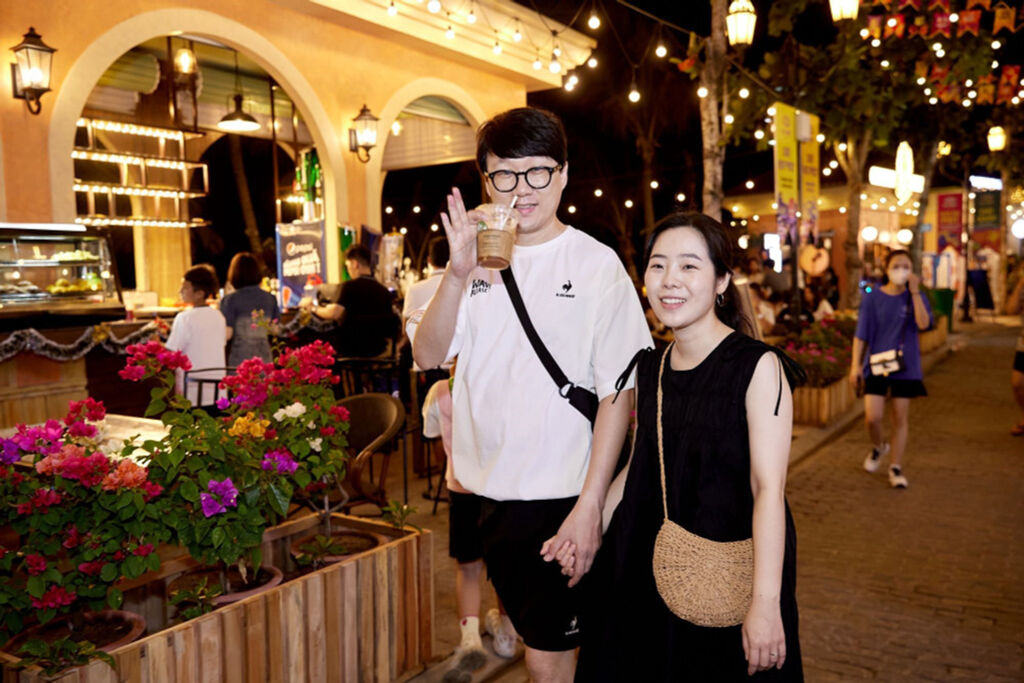 |
| Korean tourists share bright smiles while exploring the diverse international culinary scene at the Vui-Fest Bazaar in Sunset Town. (Photo: Sun Group) |
However, according to the latest observations from The Korea Herald, this long-standing order is shifting. Fluctuations in exchange rates, rising fuel surcharges, and high airfares have made traditional destinations less attractive, particularly for family groups who are highly sensitive to the total cost of a trip.
Vietnam has emerged as the preferred alternative, with Phu Quoc serving as the focal point of this migration. In the most recent year, approximately 4.3 million RoK tourists visited Vietnam, accounting for nearly 20% of all international arrivals. While the majority previously congregated in Da Nang, once playfully dubbed the "Gyeonggi Province of Vietnam",
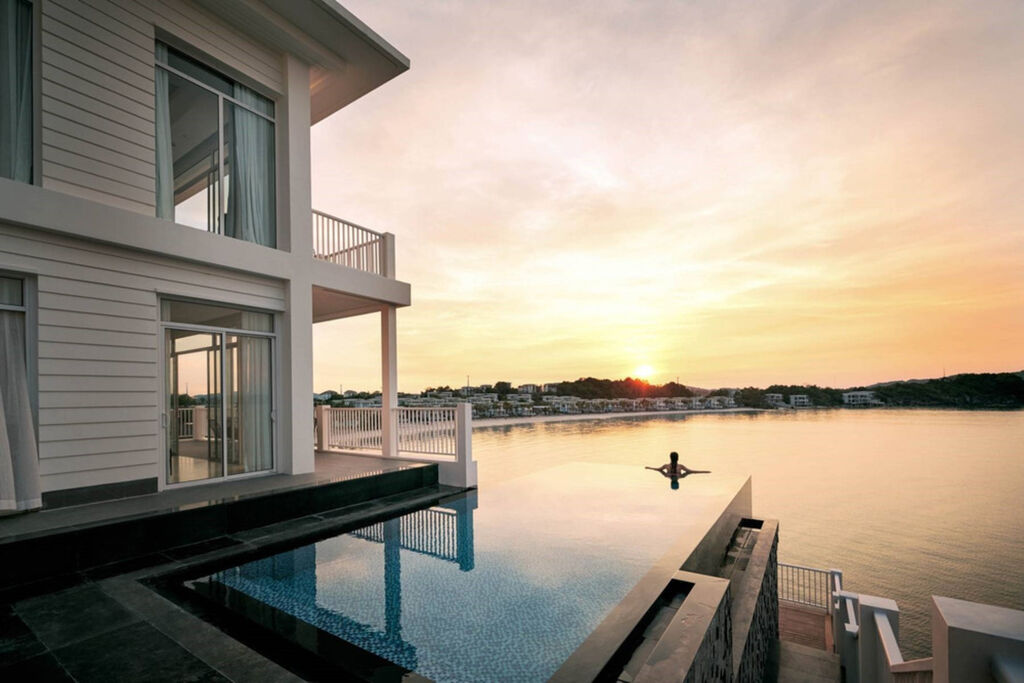 |
| Premier Village Phu Quoc Resort is a premier selection for Korean travelers, offering secluded villas that ensure maximum privacy and peace for family vacations. (Photo: Sun Group) |
Korea JoongAng Daily notes that the center of gravity is shifting south, where Phu Quoc is becoming increasingly prominent on the Korean travel map.
Beyond the raw numbers, this presence is felt in everyday details. From K-pop melodies echoing in seaside restaurants to signage systems where Korean is prioritised right after Vietnamese, Phu Quoc is localising the visitor experience to feel as familiar as possible for Korean guests.
The primary driver of this shift is cost. In an interview with The Korea Herald, Choi Hyun-ho—a traveler accompanied by a three-generation family—noted that round-trip airfare to Phu Quoc for six people cost approximately 2 million KRW (roughly 1,350 USD). This is significantly lower than the costs associated with Guam or Saipan. Beyond transportation, on-site expenses offer a distinct advantage. Services such as hotel babysitting are priced reasonably, greatly reducing the pressure on parents traveling with young children.
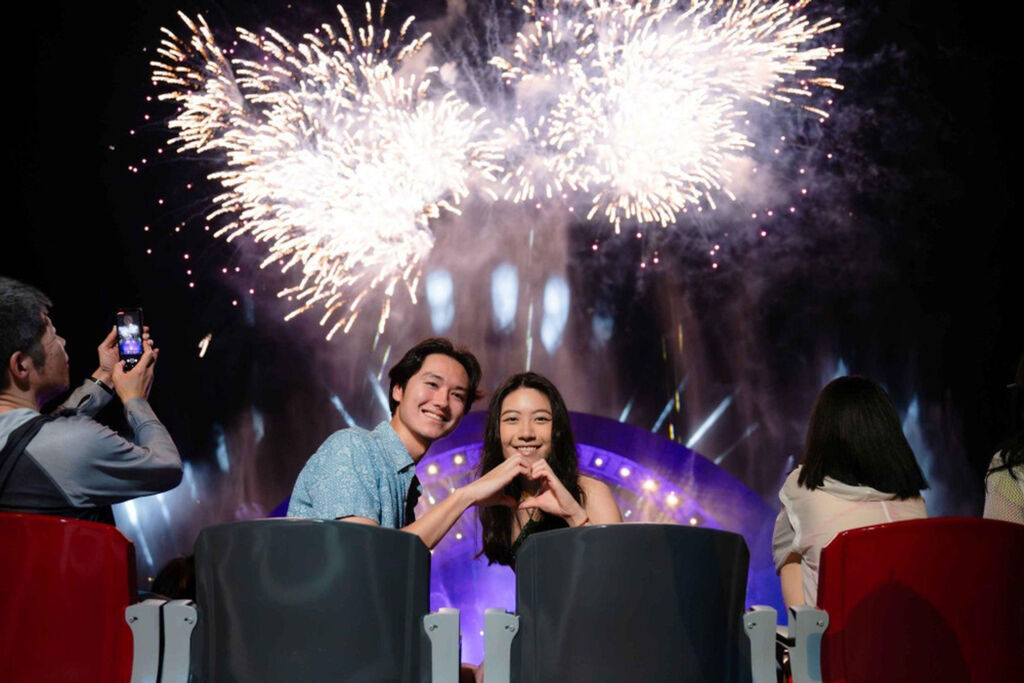 |
| Korean tourists are particularly fond of the island's signature nightly fireworks shows. (Photo: Sun Group) |
Price, however, is not the only factor. The Korea Herald analyzes that Phu Quoc’s true differentiator lies in how the destination designs experiences for multi-generational travel, a trend that is booming in the RoK.
Resorts here do more than just provide a room. They are built as distinct living spaces where multiple generations can live together while maintaining privacy. A prime example is Premier Village Phu Quoc Resort, which features hundreds of private pool villas secluded at Ong Doi Cape. Resort staff told RoK media that over 70% of their guests are Korean, a group that places a high premium on tranquility and seclusion compared to downtown hotels.
Simultaneously, hotels are investing heavily in the "kid-centric" experience, which is a decisive factor for families. JW Marriott Phu Quoc Emerald Bay Resort is a standout example, designed with the theme of a fictional 19th-century university. The space is not just aesthetically pleasing but creates a sense of constant discovery for children, from themed classrooms to a spa inspired by Alice in Wonderland.
On a broader scale, Phu Quoc is evolving into a closed-loop entertainment ecosystem developed by Sun Group in the southern part of the island. Here, visitors can enjoy a full itinerary from dawn until late at night without the need for long-distance travel.
One of the highlights mentioned by both major publications is the world’s longest three-wire sea-crossing cable car, connecting Sunset Town to Hon Thom Island. The nearly 8km journey provides a rare panoramic view of the Phu Quoc seascape. Furthermore, the journey concludes at the Sun World Hon Thom entertainment complex, featuring the Aquatopia Water Park and large-scale attractions. Travelers can enjoy world-class thrill rides without facing the long queues typical of theme parks in Seoul.
As night falls, the entertainment continues with multimedia spectacles such as Kiss of the Sea and Symphony of the Sea, topped off with nightly fireworks.
 |
| Phu Quoc masterfully brings forward the emotions of its guests through an endless cycle of unique and breathtaking experiences. (Photo: Sun Group) |
According to Korea JoongAng Daily, it is this ability to fill a traveler's schedule with continuous, high-quality experiences that sets Phu Quoc apart from more traditional, passive resort destinations.
Looking beyond the present, RoK media outlets are also paying close attention to Phu Quoc’s long-term vision. The preparation of infrastructure for APEC 2027, alongside a series of large-scale hotel projects, demonstrates an ambition to elevate the destination's quality. Notably, these new developments are not merely functional accommodations; they are positioned as cultural icons with designs inspired by the island's indigenous characteristics. This approach, according to The Korea Herald, allows Phu Quoc to upgrade its scale while adding significant depth to the travel experience.
From the perspective of the Korean media, the rise of Phu Quoc is no coincidence. It is the result of successfully addressing multiple factors: cost, convenience, quality of experience, and alignment with modern tastes.
In an era where family travel increasingly demands higher levels of convenience and personalisation, Phu Quoc is demonstrating rapid adaptability and a clear strategy. If current trends persist, this island will no longer be viewed merely as an "alternative" to Guam or Saipan, but as the new gold standard for RoK family vacations in the years to come./.