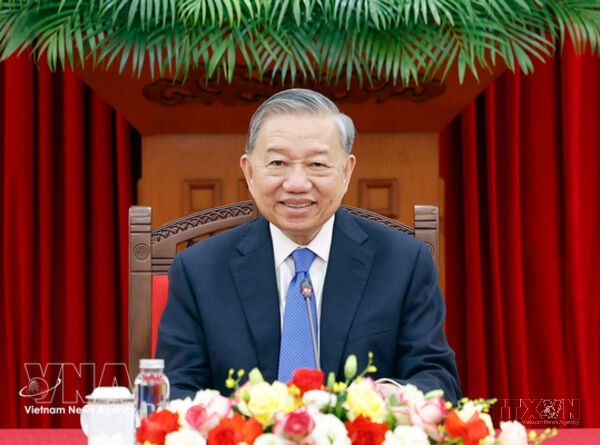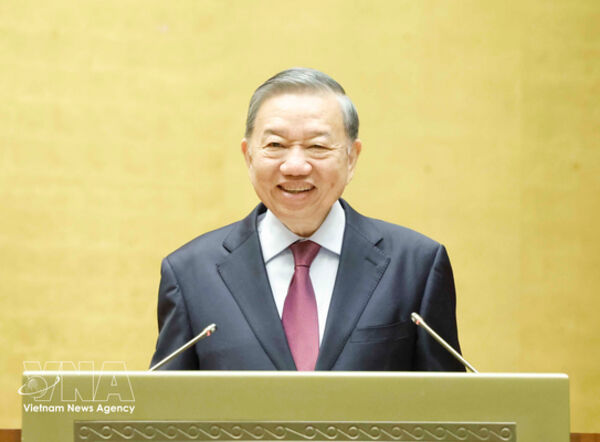
The jury unanimously voted on July 24 to confer the prestigious award on the Vietnamese leader, citing his role in "strengthening peace and cooperation among nations."
The CPV and CPC have maintained direct interactions, particularly in relation to their respective theories of reform and the formulation of many current policies, enabling them to learn from each other’s experience.
The Politburo has decided to establish the Central Steering Committee for Foreign Affairs and International Integration, chaired by General Secretary of the Communist Party of Vietnam Central Committee and State President To Lam, under Decision No. 198-QD/TW dated June 10, 2026, with a total of 37 members.
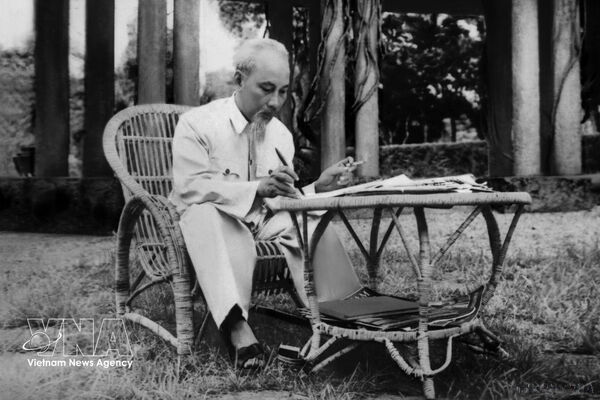
In an article written on the occasion of President Ho Chi Minh’s 136th birth anniversary (May 19, 1890 – 2026), the top Vietnamese leader affirmed that “Ho Chi Minh Thought serves as a guiding light along our development path.”
The Party and State leader underscored the necessity for decisive, coordinated and effective actions to translate the Party’s resolutions into concrete results throughout the political system and society.
The trip will mark the first state visit by To Lam in his capacity as the top leader of the Party and the State of Vietnam, coming exactly one year after the Chinese leader’s state visit to Vietnam and representing the third trip between the two top leaders within less than two years.
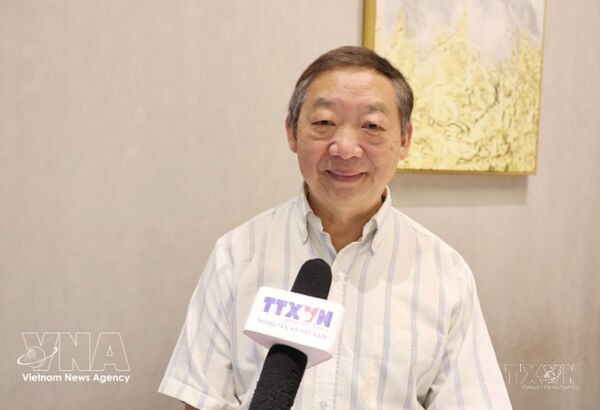
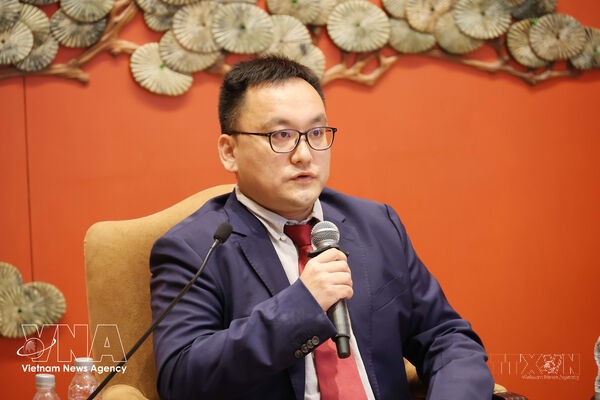
On the visit’s key agenda, Professor Qu Qiang of the Minzu University of China highlighted the need to effectively implement common perceptions and overarching directions reached by senior leaders, particularly the “six major orientations” guiding bilateral ties, including more substantive cooperation, stronger security, closer coordination, and higher political trust.
The regulation, adopted at the second plenum of the 14th Party Central Committee and issued as Regulation No. 19-QD/TW on April 8, 2026, marks the first comprehensive and systematic framework governing political and ideological work in the Party. It reflects a new step in theoretical mindset and strong political resolve to enhance Party building as well as the Party's leadership and combat capacity.
The official visit to Cambodia by Politburo member and Permanent member of the Communist Party of Vietnam (CPV) Central Committee’s Secretariat Tran Cam Tu has been described by Cambodian officials as carrying profound political and diplomatic significance, helping reinforce the traditional ties between the two Parties and countries.
The Party, State, and people of Vietnam, Laos, and Cambodia will continue the exchange of visits and delegations at all levels, especially at the high-level and via Party and State channels, to enhance understanding, strengthen trust, improve cooperation effectiveness, and jointly address emerging issues.
During the two-day trip, Politburo member and Permanent member of the Communist Party of Vietnam (CPV) Central Committee’s Secretariat Tran Cam Tu conducted more than 20 activities in Laos and Cambodia. He held discussions with high-ranking leaders of both countries on major orientations to further promote comprehensive cooperation.
A series of Russian news agencies and television channels on April 7 widely reported on the decision, which they said reflects an important shift in Vietnam’s governance model toward greater consolidation of leadership and improved policy execution capacity.
According to the Lao official, Tran Cam Tu's decision to choose Laos as the first destination following the National Congresses of the LPRP and CPV, parliamentary sessions and the formation of new governments in both countries reflects the high level of political trust, the great friendship, special solidarity and mutual respect between the two nations. It also demonstrates the priority both sides consistently accord to the Laos–Vietnam special relationship.
The Swiss-Viet Economic Forum (SVEF) believes that with its new leadership team, Vietnam will advance international cooperation frameworks, including strategic partnerships with partners such as Switzerland, thereby facilitating the more effective flow of capital, knowledge and technology.
The outcomes of the plenum will form the “legal corridors,” “operational rules,” “disciplinary principles,” and “standards of conduct” necessary to bring the 14th National Party Congress’s Resolution into life and advance the country’s long-term strategic goals toward 2030 and 2045.
The meeting is also scheduled to consider personnel affairs for State agencies for the 2026–2031 term and provide opinions on the five-year socio-economic development plan, national financial plan and medium-term public investment plan for 2026–2031, along with other key national issues.
The trip is an occasion for the two Parties and countries to continue affirming their great special solidarity, faithful attachment, and unwavering bond — a relationship that has been tested and continuously nurtured throughout history.
Dasun Wijesekara, a representative of the Media Unit of the Janatha Vimukthi Peramuna (JVP-People's Liberation Front) of Sri Lanka described the 14th National Congress of the Communist Party of Vietnam as an event of exceptional scale, noting that organising such a programme is far from easy and reflects the Party’s vitality and strong organisational capacity.
The articles underscored a set of strategic solutions rooted in renewed thinking, designed to steer the country into an era of peace, independence, democracy, prosperity, civilisation, and happiness under continued socialist orientation.
Liga Hispano and Elsoot identified a central and foundational highlight of the Congress documents as the consistent affirmation that “the people are the centre, the subject, the goal, the driving force and the resource of development.”