 |
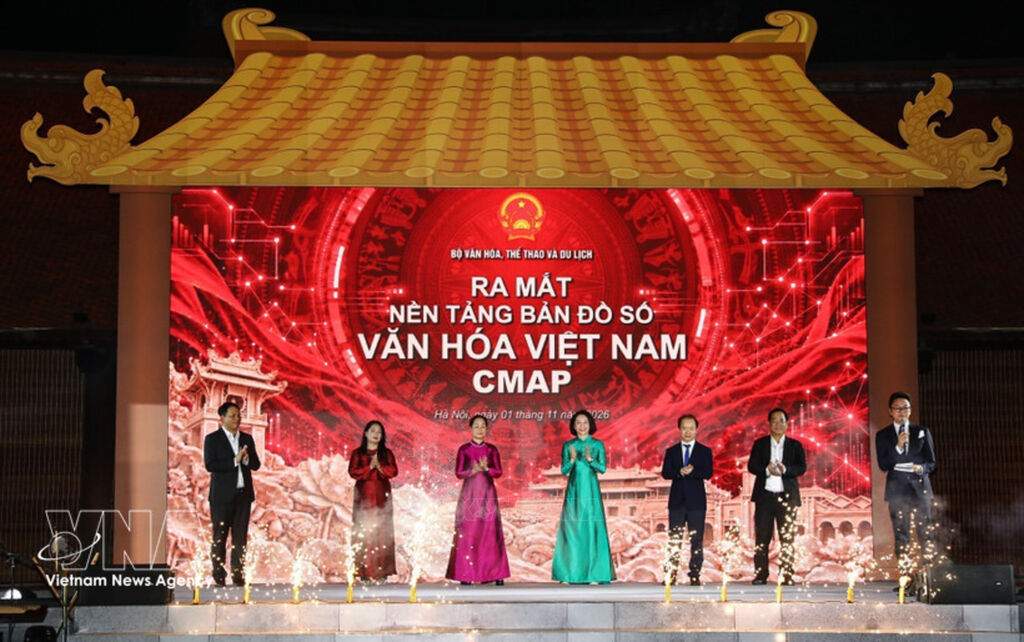
| The Vietnam Cultural Digital Map (CMAP) is launched at https://cmap.vn. (Photo: VNA) |
Hanoi (VNA) – Across generations, Vietnam’s cultural values have been preserved, passed down and enriched, becoming a firm spiritual foundation for the country’s development. Amid rapid digital transformation, technology is creating new ways to bring cultural heritage into everyday life and make it more accessible to the public.
This is also a practical way to promote the role of culture and people in the country’s sustainable development, in line with the spirit of Politburo Resolution No. 80-NQ/TW on the development of Vietnamese culture.
Bridging the digital heritage gap
Vietnam boasts a rich cultural heritage, with more than 40,000 historical and cultural relic sites and scenic landscapes, nearly 70,000 items of intangible cultural heritage, including 38 recognised by UNESCO. This invaluable resource embodies the nation’s history, identity and soul.
However, much of this heritage has yet to be digitised or connected within a shared data system, placing considerable constraints on efforts to preserve these values in the digital environment. The General Secretary of the Communist Party of Vietnam Central Committee and President To Lam highlighted the gap at the second meeting of the Central Steering Committee for the Development of Vietnamese Culture on July 13. It needs to be narrowed so that cultural capital can become a source of soft power and a new driving force for national development.
To realise this direction, the Ministry of Culture, Sports and Tourism has launched the Vietnam Cultural Digital Map (CMAP). As of noon on November 1, CMAP listed 391 events taking place across all 34 provinces and cities. Cultural institutions under the ministry have also announced 33 events in response to Vietnam Culture Day, held in conjunction with the Great National Unity Festival 2026.
More than just a search tool, CMAP serves as a bridge connecting cultural institutions and heritage sites with the public and visitors. It will help improve the management and promotion of cultural activities while giving people greater opportunities to independently discover, experience and enjoy cultural values in modern life.
Associate Professor and Dr Bui Hoai Son, Deputy Chairman of the Party Central Committee’s Commission for Publicity, said the launch of CMAP is a practical and meaningful milestone for the development of the country’s culture. It offered a way to bring culture closer to the public and turn it into a resource for development.
The platform also demonstrated how Resolution No. 57-NQ/TW on breakthroughs in science and technology development, innovation and digital transformation could be combined with Resolution No. 80-NQ/TW on Vietnamese culture development to create fresh momentum for cultural development in the coming period.
Bringing heritage closer to the public
In many localities, digital platforms and databases are gradually changing the way heritage is preserved and presented. Artefacts once accessible only in exhibition spaces, as well as historical stories associated with particular places, can now be brought to life through 2D and 3D images, virtual reality, artificial intelligence (AI) and other interactive digital formats.
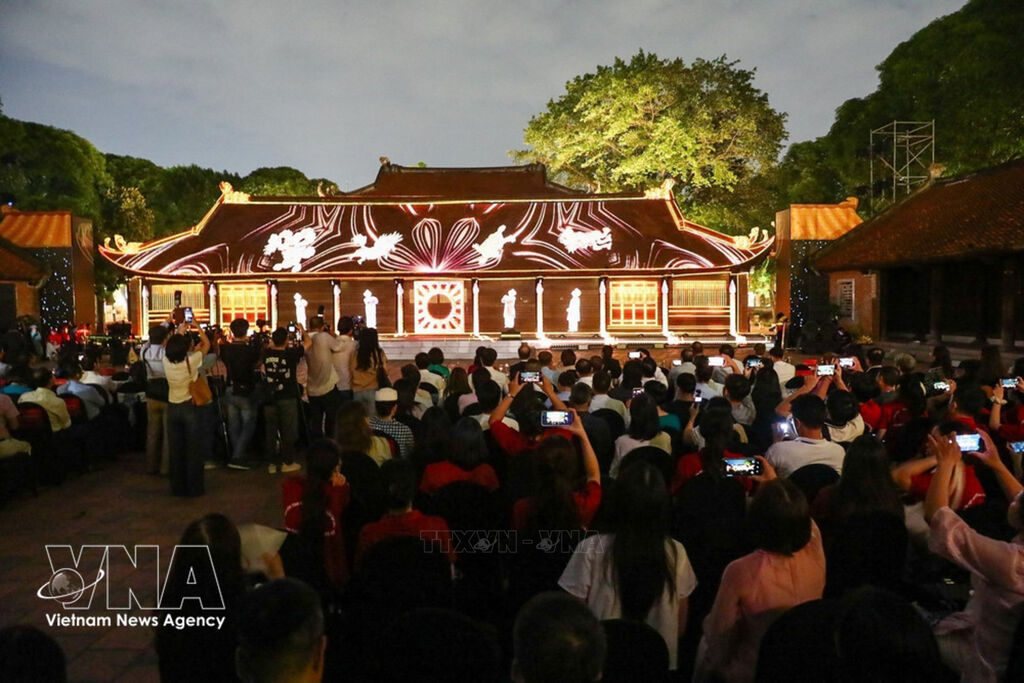 |
| Visitors explore and experience an digital art programme which integrates performance technology with the heritage setting of the Quoc Tu Giam (Photo: VNA) |
Located on the banks of the Han River, the Da Nang Museum of Cham Sculpture displays a large and unique collection of sculptures from the ancient Champa Kingdom. The museum currently holds nearly 2,000 artefacts, around 500 of which are regularly displayed. Through its digital space, visitors can explore the distinctive features of Cham culture with just a touch. The 3D tours, multilingual audio guides, QR codes and AI applications not only make information more accessible but also offer new perspectives, helping the public gain a deeper understanding of Cham history, art and cultural life through each artefact.
Tran Huyen Khanh Ngoc, a visitor from Ho Chi Minh City, said she is impressed by the museum’s use of technology during her first visit. Upon entering, visitors can scan QR codes and use the Audio Guide application to listen to commentary and learn about the artefacts on display. This enables visitors to follow their own paths, explore at their own pace, and focus on areas of personal interest without needing a tour guide.
With more than 5,000 relic sites, the northern province of Ninh Binh is gradually building a digital database of cultural heritage to enable more scientific and effective management, storage and utilisation of these sites' values.
According to Tran Ngoc Nam, Secretary of the provincial Youth Union, the digitisation projects, together with the installation of free Wi-Fi hotspots in Nam Dinh and Thien Truong wards, have created more opportunities for residents and visitors to access heritage conveniently.
Nam Hoa Lu ward is home to 24 historical and cultural relic sites, including six national-level sites. Young people in the locality have undertaken digitisation at several representative destinations, including Thai Vi temple, Bich Dong pagoda, the Dao family ancestral house and Dong Hoi temple. The projects integrate a range of features, from QR codes and bilingual Vietnamese-English content to images, videos and automated AI-powered commentary./.