 |
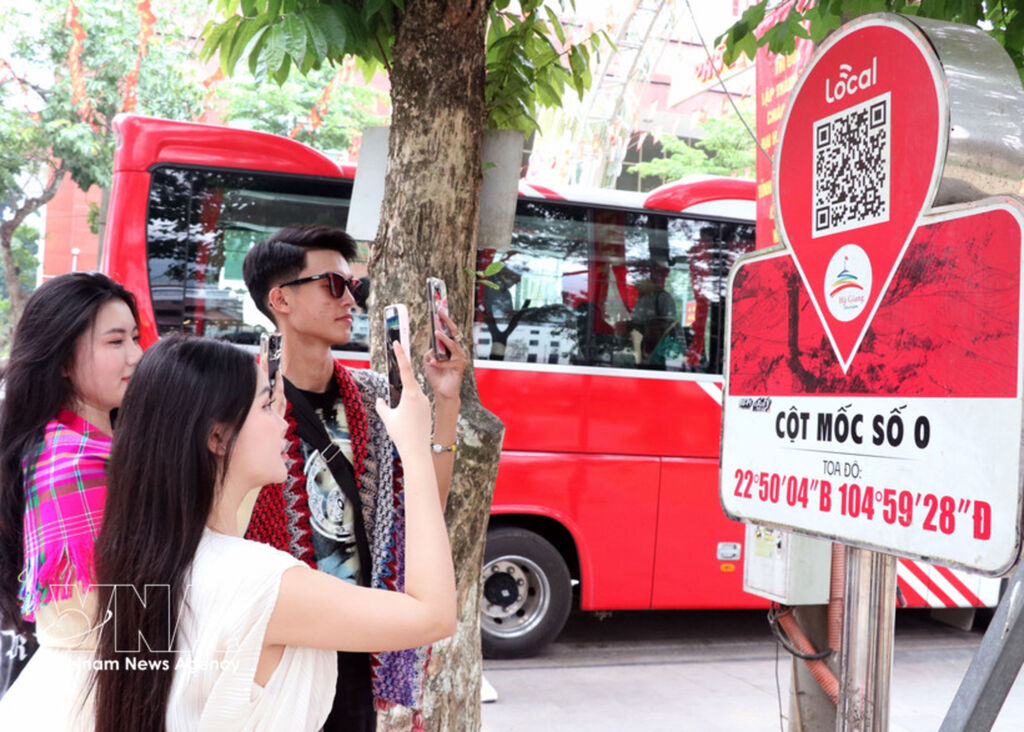
| Visitors scan QR codes at Km0 Ha Giang to access tourism information. (Photo: VNA) |
Tuyen Quang (VNA) – In recent years, tourism in the northern mountainous province of Tuyen Quang has sustained positive growth, with digital transformation under Resolution 57-NQ/TW steadily taking root in practice and emerging as a key driver of the sector’s development.
Notably, beyond state agencies and businesses, local residents have begun adopting digital tools to promote destinations and operate tourism services, contributing to higher incomes and local economic growth.
Last year, Tuyen Quang welcomed over 3.9 million visitors, and is aiming to attract around 4.1 million arrivals, including around 600,000 foreigners, this year. Tourism continues to be identified as a key economic sector, with development oriented toward sustainability, green growth, and enhanced competitiveness through digitalisation.
To effectively implement Resolution 57, the provincial Department of Culture, Sports and Tourism has been systematising and digitising data on cultural heritage and tourist destinations, making it accessible via the province’s tourism information portal.
Tourist sites, businesses, and service providers have introduced QR codes linked to destination information, positioning, healthcare, accommodation, and dining services, enabling visitors to access information conveniently.
According to Nguyen Thi Hoai, Deputy Director of the department, digital transformation is driving profound changes at the grassroots level, with locals actively using social media, QR codes, and online platforms to promote and operate tourism services.
Sterre Albrecht from Amsterdam, the Netherlands, shared that scanning QR codes at popular sites allowed her to easily access information and better understand local culture.
In tourism-oriented communes such as Thanh Thuy and Na Hang, particularly in the Dong Van Karst Plateau area, digital transformation has evolved from a management tool into a new mode of production for community-based tourism. Local residents are gradually shifting from traditional practices to proactively engaging with the market through digital platforms.
Ma Doan Khanh, Vice Chairman of the People’s Committee of Lung Cu commune, observed that digital tools have significantly changed how local people conduct tourism. Many households now use smartphones, social media, and QR codes to promote services and showcase indigenous culture, helping attract more visitors and boost incomes while bringing local destinations closer to domestic and international tourists.
Service providers, including restaurants and homestays, increasingly use smartphones to produce and share photos and videos online, directly reaching potential customers. QR codes are widely applied to introduce menus, services, and local products such as brocade, corn wine, and agricultural goods. Many households have also joined online booking platforms, expanding their market reach and enhancing business autonomy.
In practice, digital transformation under Resolution 57 has not only improved tourism management and business efficiency but also helped promote the culture and people of Tuyen Quang to a wider audience, gradually shaping a smart, modern, and sustainable tourism ecosystem./.