 |
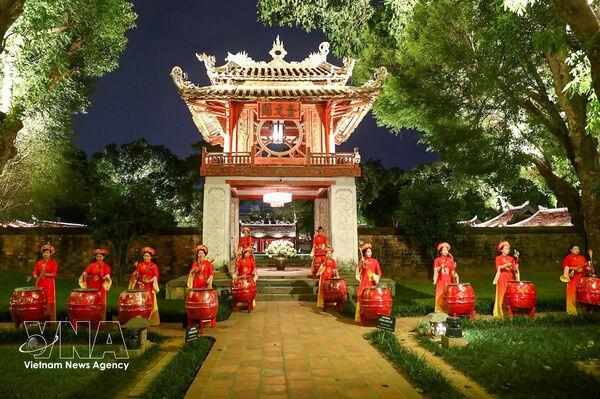
| The Temple of Literature – Quoc Tu Giam is stepping up the application of digital technology to improve the management, preservation and promotion of its historical and cultural values. (Photo: VNA) |
Paris (VNA) – Nearly 1,000 years after its establishment, the Temple of Literature - Quoc Tu Giam remains a prominent symbol of Vietnam’s respect for knowledge, talent and the tradition of learning, according to French historian Philippe Le Failler of the French School of Asian Studies (EFEO).
Speaking to a Vietnam News Agency correspondent in France on the occasion of the 950th anniversary of Quoc Tu Giam, Le Failler said that the Temple of Literature in Thang Long held a special position in Vietnam’s history as it combined a place of worship dedicated to Confucius with Quoc Tu Giam, the country’s first national university.
He noted that the complex has endured numerous historical upheavals, yet generations of Hanoi residents have made efforts to preserve it. Despite periods of neglect and damage, the site has undergone repeated restoration while retaining its original character. Even after Hanoi ceased to be the capital in the 19th century, preservation continued, with the construction of Khue Van Cac (the pavilion of the constellation of literature) adding to its distinctive appearance.
The historian said the monument’s symbolic significance has extended far beyond its original religious and educational functions, making it one of the clearest examples of Hanoi residents’ attachment to the city’s thousand-year history.
Highlighting the 82 doctoral stelae, recognised by UNESCO under its Memory of the World Programme, Le Failler described them as invaluable historical records of Vietnam’s education system, imperial examinations and state administration under the feudal dynasties.
Each stele commemorates an examination and reflects the close relationship between education, talent selection and governance. The inscriptions also provide insights into the prominent role of intellectuals, many of whom became distinguished officials and historical figures.
Le Failler also emphasised the importance of modern technology in preserving and promoting the heritage site. Digital archives and 3D scanning enable researchers to document the entire complex and examine even the smallest details of the stelae, while supporting more effective conservation.
For visitors, digital technology offers new ways to explore history through 3D re-enactment, documentaries and thematic exhibitions.
Looking ahead, he stressed the importance of passing the site's values on to younger generations. Many Hanoi residents have maintained a lifelong connection with the monument, visiting it as schoolchildren, praying for success in examinations and returning later to celebrate their academic achievements.
According to Le Failler, this continuity demonstrates the enduring vitality of the Temple of Literature – Quoc Tu Giam. Although society and education have changed considerably, respect for learning, talent and academic achievement remains deeply rooted in Vietnamese society./.