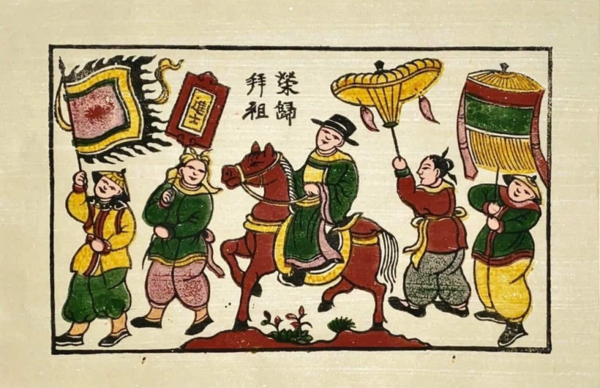
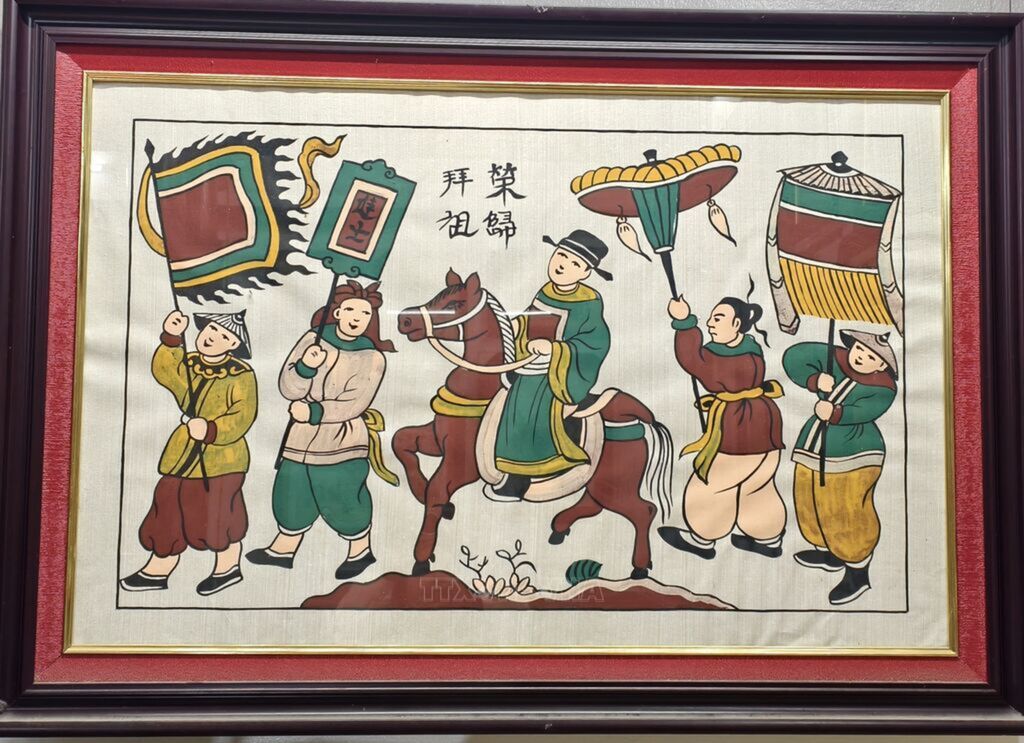
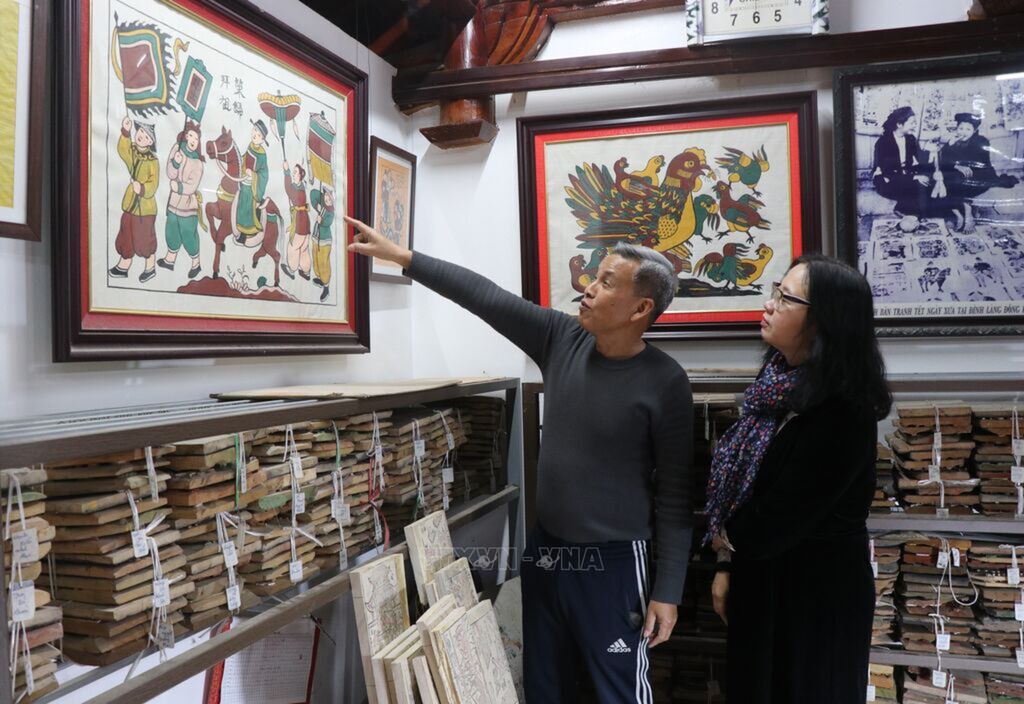
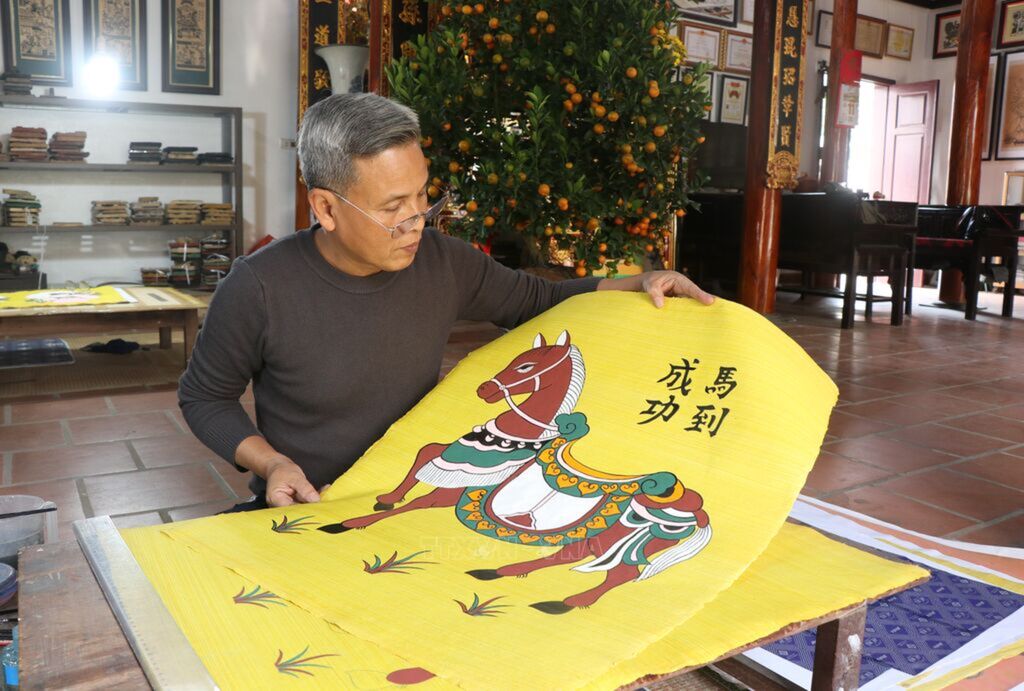
A Dong Ho folk painting named "Vinh Quy Bai To" (returning home to pay tribute to ancestors after getting an academic honour), featuring a horse. VNA Photo: Thanh Thương
The Dong Ho painting "Vinh Quy Bai To" (Returning Home in Glory) expresses the wish for advancement, academic success, and upholds the tradition of studiousness and scholarly achievement. VNA Photo: Thanh Thương
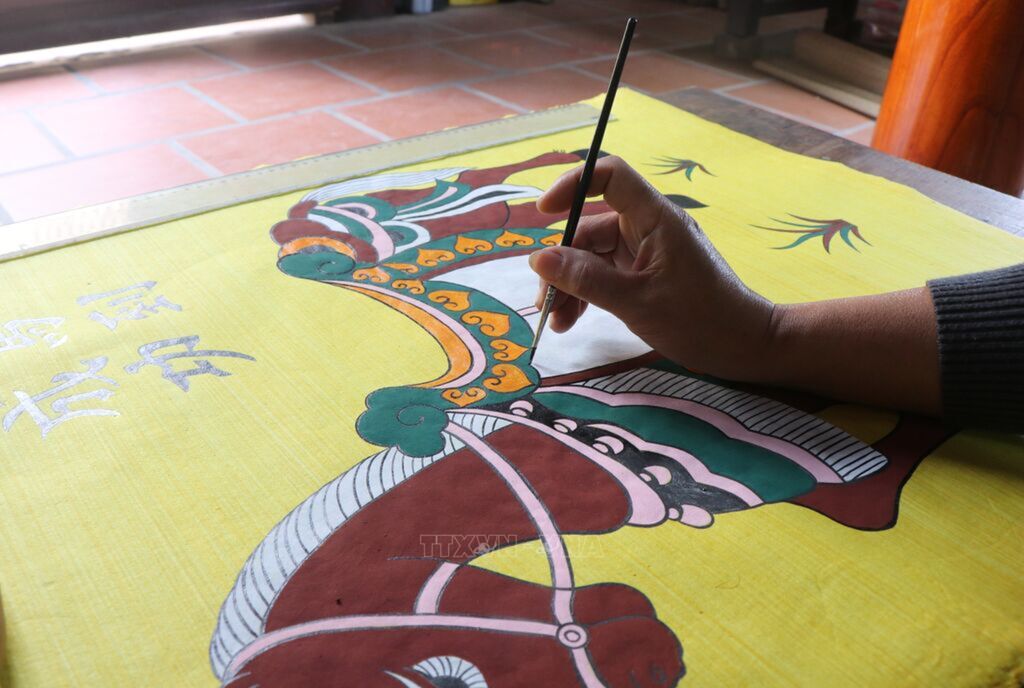
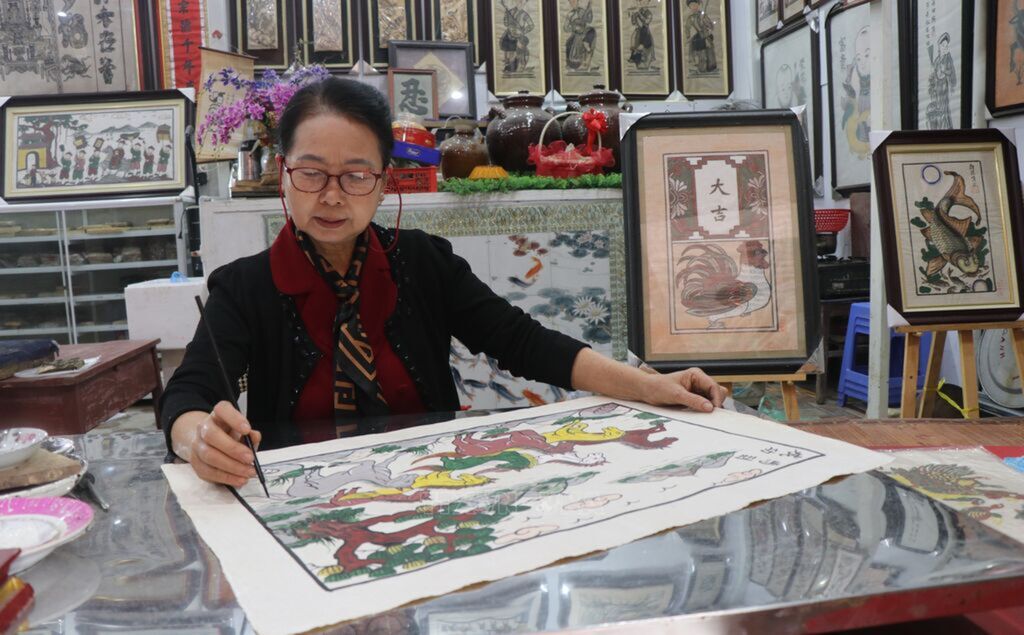
An artisan in Dong Ho village creates folk paintings with the theme of horses for Tet (Lunar New Year). VNA Photo: Thanh Thương
The Image of Horse in the Lives of Vietnamese People
Horses have long been a familiar part of Vietnamese culture, accompanying people from daily life and farming to the battlefield, and often appearing alongside images of generals, deities, honour, and scholarly achievement. As such, horses embody both intimacy and a sense of the sacred, symbolising nobility as much as closeness. Horses are known for their endurance, intelligence, and loyalty, yet they are associated with impatience, arrogance, and unruliness. It is precisely this complexity that has allowed the image of horses to permeate Vietnamese life in a natural and deeply rooted way, enriching the nation’s spiritual and cultural landscape. VNA Photo: Thanh Thương