 |
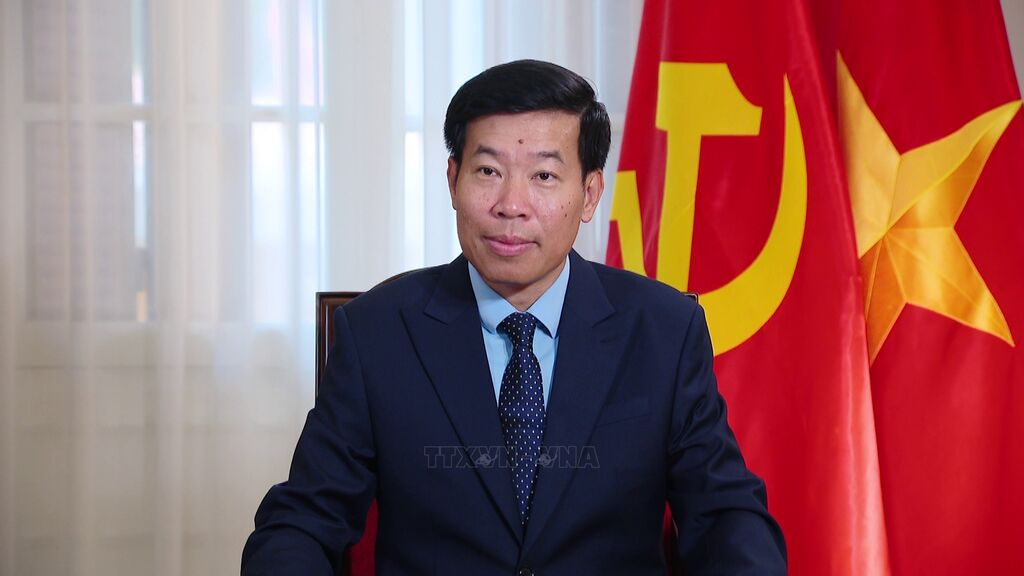
| Deputy Foreign Minister Nguyen Manh Cuong (Photo: VNA) |
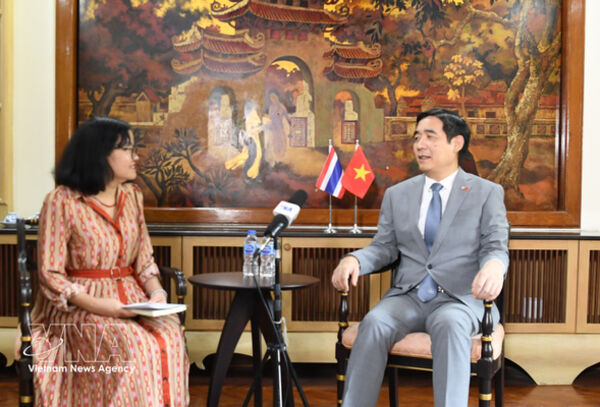
Hanoi (VNA) – Building on a strong foundation of friendship, high political trust and vast cooperation potential, the upcoming official visit to Thailand by General Secretary of the Communist Party of Vietnam (CPV) and State President To Lam is expected to create fresh momentum for advancing bilateral relations to new heights in the coming years, Deputy Foreign Minister Nguyen Manh Cuong told the press ahead of the trip.
According to Cuong, Vietnam and Thailand are close neighbours that share many common interests in maintaining peace, stability, cooperation and development in the region. Nearly five decades after the establishment of diplomatic relations, ties between the two countries have continued to strengthen and expand across all areas, becoming one of the most dynamic and effective partnerships in the Association of Southeast Asian Nations (ASEAN).
The two countries elevated their relationship to a comprehensive strategic partnership in 2025, reflecting a very high level of political trust and a shared determination by their leaders to deepen bilateral relations in a more substantive and effective manner in the new phase of development.
The two sides maintain regular high-level visits and exchanges, as well as cooperation mechanisms and strategic dialogues across a wide range of sectors. Notably, the joint cabinet meeting mechanism at the prime ministerial level remains a distinctive feature of bilateral relations.
Thailand is currently Vietnam’s largest trading partner in ASEAN, with two-way trade surpassing 22 billion USD in 2025. It is also one of the largest ASEAN investors in Vietnam, with major projects in energy, manufacturing, retail, logistics and infrastructure. Both countries have significant potential for cooperation in supply chain development, transport connectivity, logistics and Mekong subregional collaboration. Given their strategic geographic positions, Vietnam and Thailand are well placed to serve as key connectivity hubs in mainland Southeast Asia.
The two sides also work closely together in combating transnational crime, drug trafficking, human trafficking, cybercrime and other non-traditional security challenges. Cooperation in culture, education, tourism and people-to-people exchanges has also flourished.
There are currently around 20 pairs of twinned provinces and cities between the two countries. Meanwhile, the Vietnamese community in Thailand continues to serve as an important bridge of friendship between the two countries' people.
The deputy foreign minister noted that this will be General Secretary and President Lam’s first visit to an ASEAN country in his new capacity and comes shortly after the two nations upgraded their ties to a comprehensive strategic partnership.
The visit underscores Vietnam’s strong commitment to its relationship with Thailand and to Southeast Asia as a whole. It will also provide an opportunity for the two countries’ senior leaders to hold in-depth discussions on major orientations for effectively implementing the new cooperation framework.
One of the key expectations is the further strengthening and deepening of political trust. Amid rapidly evolving and increasingly complex regional and global developments, enhanced strategic exchanges, closer coordination of positions and sustained high-level contacts are of particular importance. These will provide a solid foundation for expanding cooperation across all fields.
Economically, the trip is expected to open up new opportunities in trade, investment, logistics and supply chain connectivity. Both countries also possess considerable potential for collaboration in emerging sectors such as digital transformation, the green economy, the circular economy, renewable energy, innovation and industrial transformation – all areas that align with their respective development strategies.
The visit is also expected to further promote regional connectivity, particularly within ASEAN and the Mekong subregion. Vietnam and Thailand both play important roles in advancing ASEAN economic integration and enhancing infrastructure links, trade and people-to-people exchanges across the region.
In addition, cooperation in culture, tourism and people-to-people exchanges is set to expand further. Greater air connectivity, tourism cooperation, youth and student exchanges, and local-level partnerships will help strengthen the social foundations of bilateral relations.
The two sides are also expected to continue close coordination at regional and international forums, particularly within ASEAN, contributing to peace, stability, cooperation and development in the region./.