 |
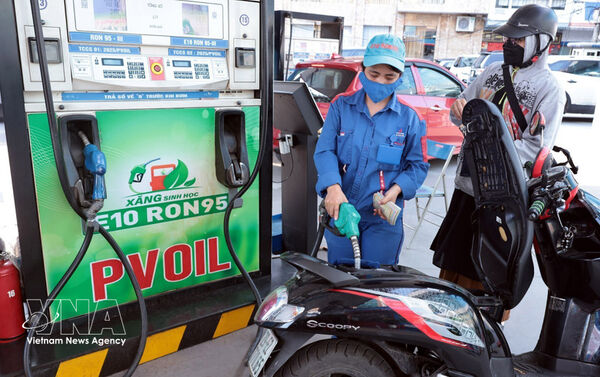
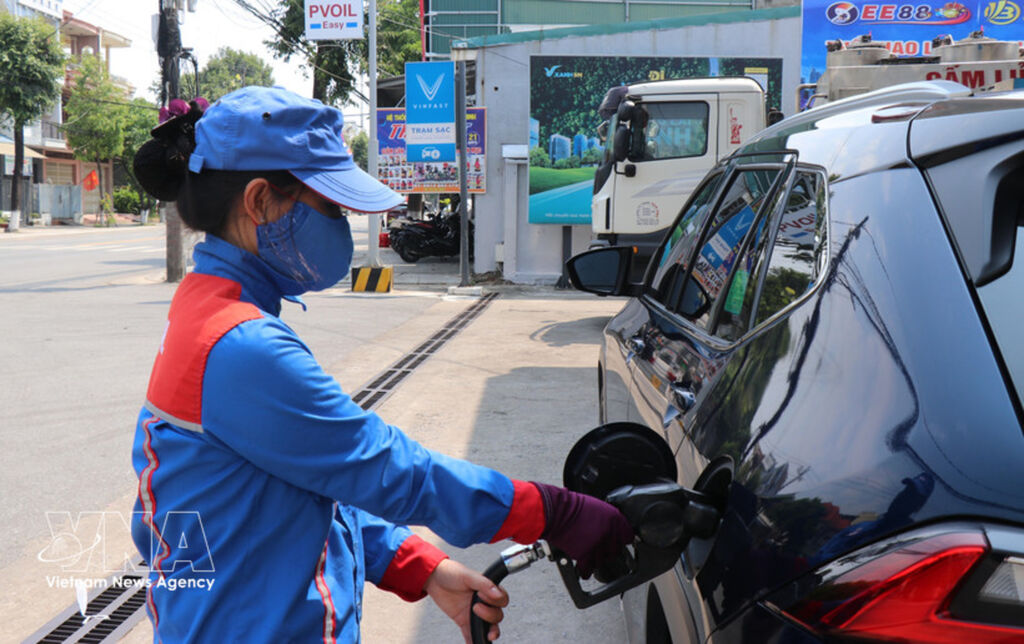
| A worker pumps E10 petrol into a vehicle at Tran Phu filling station in Nghia Lo ward, Quang Ngai province. (Photo: VNA) |
Hanoi (VNA) – E10 petrol is compatible with more than 90% of vehicles currently in circulation, requires no engine modifications and can significantly reduce polluting emissions, according to a draft Government resolution aimed at removing bottlenecks and accelerating the rollout of the biofuel.
Under the draft, built by the Ministry of Industry and Trade (MoIT) and now open for feedback, E5 petrol once accounted for around 40% of the market but has since fallen to 15–20% due to the narrow price gap with mineral petrol and lingering consumer concerns. The ministry said stronger policies, clearer price incentives and expanded public communications campaigns are needed to boost biofuel consumption.
Technically, E100 ethanol contains around 34.7% oxygen and has a high octane rating of about 108 RON, enabling more efficient combustion. Studies also show that E10 can reduce carbon monoxide (CO) emissions by 20–30% and hydrocarbon (HC) emissions by 10–20% compared to conventional petrol.
The MoIT estimated that monthly demand for E100 ethanol used in blending E5 and E10 petrol currently stands at 92,000–100,000 cubic metres, while domestic output is only about 25,000 cubic metres per month. If existing plants expand capacity and several suspended projects resume operations, total supply could rise to around 44,000 cubic metres monthly, still insufficient to meet demand.
Vietnam is currently home to six E100 ethanol plants with a combined designed capacity of 500,000–600,000 cubic metres per year, but actual utilisation rates remain at just 30–40%. As a result, the country is expected to continue importing about 75,000 cubic metres of E100 ethanol per month for at least another year to support biofuel blending.
Regarding infrastructure, as of late March, 12 out of 26 major fuel distributors had invested in biofuel blending stations. Another nine companies are awaiting licences for projects with a combined capacity of more than 260,000 cubic metres per month. Once approved, total nationwide E10 blending capacity is expected to exceed 1.15 million cubic metres monthly.
The draft also noted that switching from RON95 mineral petrol to E10 RON95 will not require additional storage tanks though businesses will need to upgrade existing systems to suit the characteristics of biofuels.
During the transition, companies may either fully drain and clean storage systems before introducing E10 to ensure compliance with fuel standards, or directly blend E10 into tanks containing around 20% mineral petrol to save time and costs. However, the latter option could result in ethanol content falling below standards during the first 15 days.
According to the MoIT, Vietnam already has a foundation for E10 deployment, including a nationwide E5 distribution network, existing blending systems invested in by several fuel distributors, and pilot E10 sales launched in a number of localities since August 2025. However, broader implementation will still require further efforts to address bottlenecks related to infrastructure, ethanol supply, pricing and support policies./.