 |
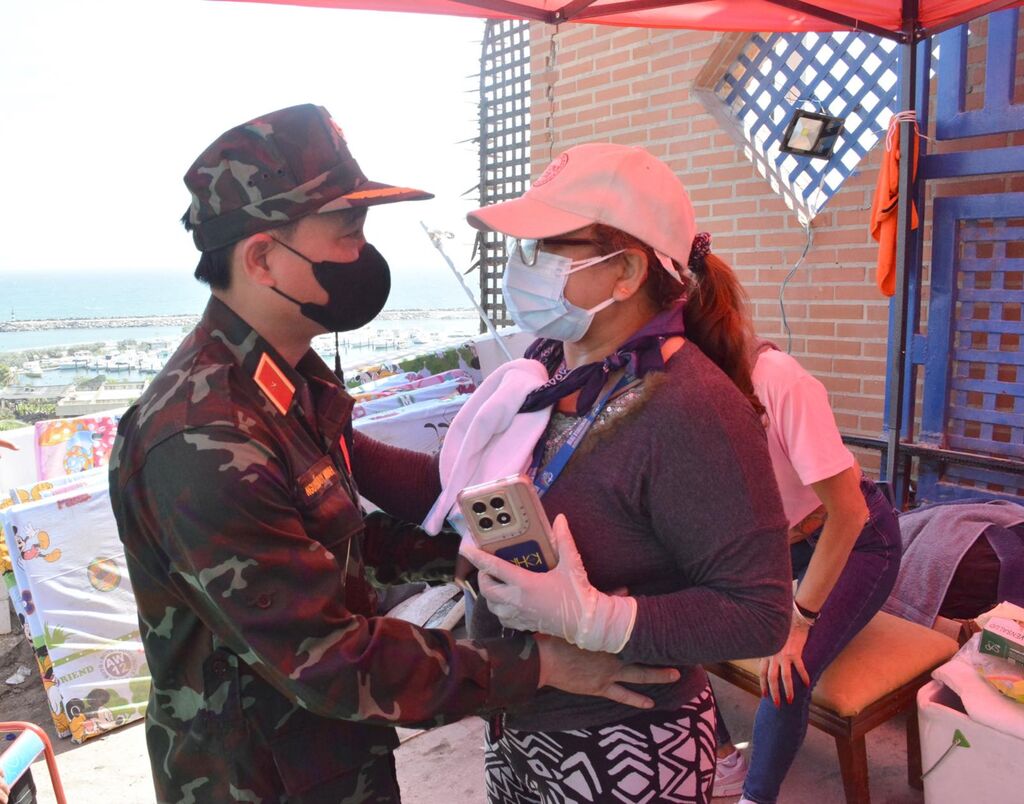
| Maria Elena thanks the Vietnamese search-and-rescue team for finding her daughter's body under the rubble following the double earthquakes. (Source: Ministry of National Defence) |
Caracas (VNA) – A week after devastating earthquakes struck Venezuela, as hopes of finding survivors fade, Vietnamese rescuers continue racing against time in the ruins of a collapsed five-storey apartment building in Playa Grande, La Guaira state.
While reporting from the disaster site, Venezuela's national broadcaster lingered on a poignant scene: Maria Elena, a Venezuelan mother with tear-swollen eyes hollowed by days of grief, clinging tightly to the hand of Maj. Gen. Pham Van Ty, Deputy Director of the Rescue and Salvage Department under the General Staff of the Vietnam People’s Army (VPA) and head of the mission.
She spoke no Vietnamese. He spoke little Spanish. Yet the tears streaming down the face of a mother who had lost her child became a language that required no interpreter.
Her 16-year-old daughter, Camila, was believed to be trapped beneath thousands of tonnes of concrete. Moments before the building collapsed, Camila managed to make one brief phone call to her mother. Then the signal disappeared.
For five days, Maria remained at the site, watching excavators roar in vain through the rubble.
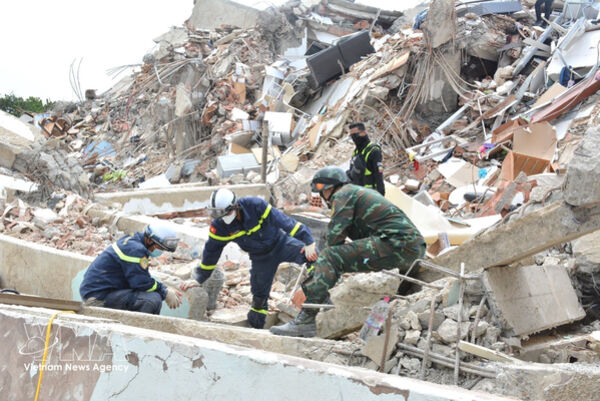
Everything changed when Vietnam's joint rescue mission arrived, equipped with advanced acoustic life-detection devices and highly trained search dogs. Working with Search Team No. 3, comprising engineers from the VPA and firefighters from Vietnam's fire and rescue police, the rescuers faced one of the mission's most daunting tasks: locating a victim whose signs of life had long vanished.
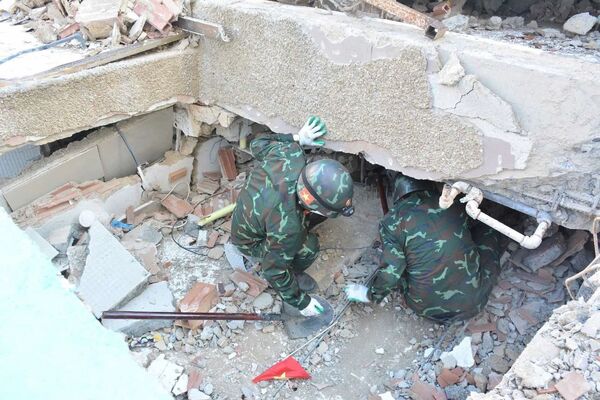
The Vietnamese rescuers crawled through gaps barely wide enough for a single person, fully aware that damaged concrete slabs above them could collapse at any moment as aftershocks continued to shake the area.
"Max! Over here!"
The command echoed across the ruins as a search dog from Vietnam's Border Guard barked repeatedly, clawing at a deep crack beneath the fractured base of a load-bearing column.
A snake camera was carefully threaded into the narrow opening.
On the team leader's small monitor, the corner of a light-blue T-shirt came into view.
Standing behind the safety cordon, Maria seemed to sense what had happened. She sank to her knees, clutching her chest. It was the same shirt Camila had been wearing on the morning of the earthquakes.
The recovery operation unfolded in profound silence.
The Vietnamese rescuers chose not to use heavy machinery. Instead, they relied on their hands and small shovels, gently removing each broken brick and fragment of concrete, as though fearful of causing any further harm to the young girl.
Sweat mixed with dust streamed down their faces, soaking the green uniforms bearing Vietnam's red flag with its golden star.
When Camila's body was finally recovered intact from beneath the cold rubble, silence once again settled over the disaster site.
Maria rushed forward and embraced her daughter as heart-rending cries echoed through the devastated neighbourhood.
Moments later, through her tears, she turned toward the Vietnamese rescuers.
Without a word of resentment toward fate, she dropped to her knees, grasped the bloodied, scarred hands of a Vietnamese military engineer and repeatedly whispered through sobs: "Gracias, Vietnam!... Gracias..." ("Thank you, Vietnam!")
After seven days of disappearance and five days of unimaginable anguish, a grieving mother finally found a measure of peace — the chance to see her daughter one last time and lay her to rest with dignity.
That evening, a local news outlet published an article, saying Venezuelans would never forget the image of the Vietnamese rescuers, who had travelled thousands of kilometres, risking their own lives not in pursuit of glory, but to recover fragments of hope and bring comfort to families devastated by tragedy.
Amid the darkness left by the earthquakes, the compassion and international solidarity shown by Vietnam's military soldiers and public security officers became a beacon of humanity, writing one of the disaster's most moving final chapters at the epicentre in La Guaira./.