 |
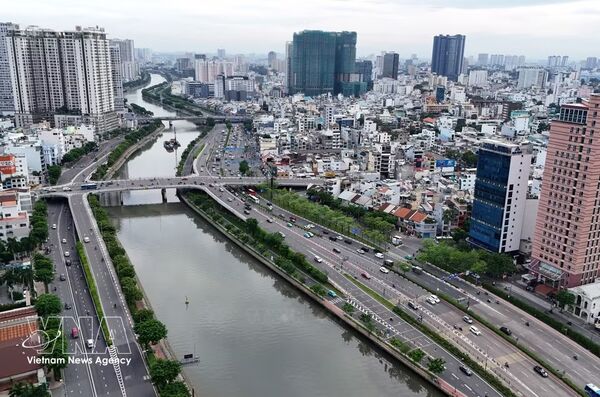
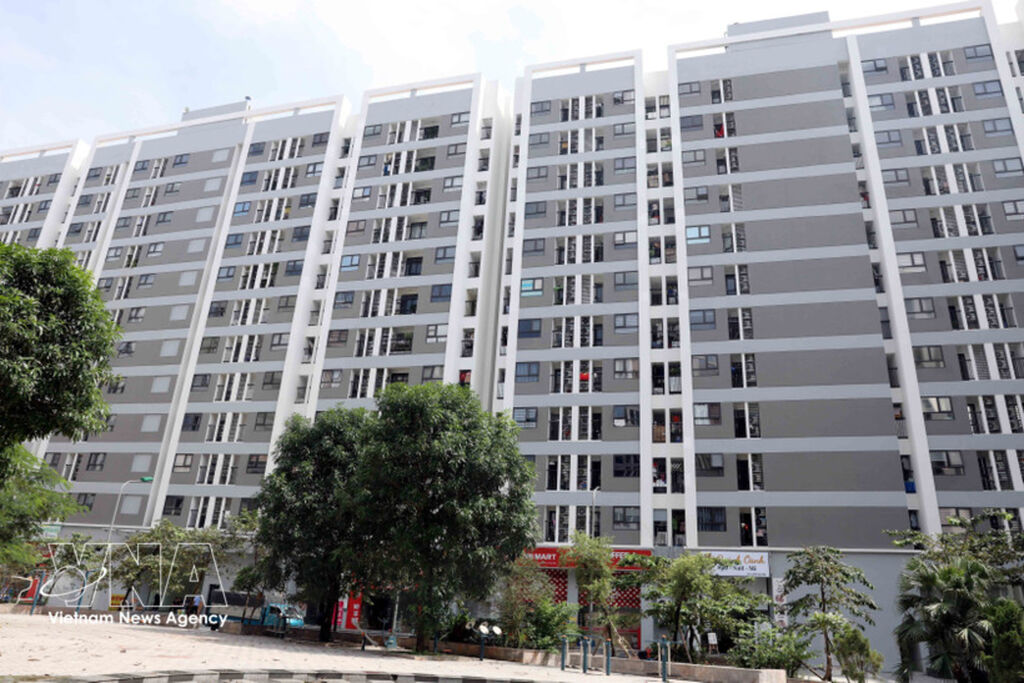
| Vietnam is set to make long-term rental housing a key pillar of its social welfare strategy through 2030 - Illustrative image (Photo: VNA) |
Hanoi (VNA) - Vietnam is set to make long-term rental housing a key pillar of its social welfare strategy through 2030, as soaring home prices, an imbalanced housing supply and declining affordability prompt a policy shift from homeownership towards expanding rental options for workers and low-income households.
This information was announced by Ha Quang Hung, Deputy Director of the Department of Housing Management and Real Estate Market under the Ministry of Construction, at a press briefing held on the afternoon of June 18.
He said beside the goal of developing 1 million social housing units, the formation of a long-term rental housing market with the participation of both the State and the private sector is expected to be an important direction to meet real demand.
Although Vietnam's housing market has shown positive signs, particularly in social housing, Hung said supply remains heavily skewed towards high-end properties, while affordable homes continue to fall short of demand. The market also remains dominated by homes built for sale, with long-term rental housing still underdeveloped.
He said that rapidly rising property prices in major cities have made homeownership increasingly unattainable for workers, civil servants, and young people. Meanwhile, existing incentives have also proved insufficient to attract businesses and long-term investors to the rental housing segment.
Against this backdrop, the Party and State have adopted a new housing strategy that places commercial, social and rental housing on equal footing. Long-term rental housing is now identified as a strategic priority to serve workers, civil servants, public employees and members of the armed forces, he noted.
Future housing development will be integrated into urban planning, land-use strategies, industrial park development and public transport infrastructure. Transit-oriented development (TOD) areas, industrial zones, economic zones and major economic corridors have been identified as priority locations for rental housing projects.
Under the new approach, the State will play a facilitating role through planning, financial and credit policies while leveraging public resources to encourage greater private-sector participation.
The Ministry of Construction is working with relevant ministries to revise the Housing Law, the Real Estate Business Law and related regulations, with the amendments expected to be submitted to the National Assembly in October 2026.
The proposed policy framework will classify housing into four categories - commercial housing, rental housing, official residences and policy housing. Rental housing will receive priority support through incentives on land access, finance, taxation and credit to attract private capital and long-term investment funds.
Hung said that alongside the orientation of developing rental housing, the programme to build 1 million social housing units continues to gather pace.
In recent years, the policy framework for social housing and worker accommodation in industrial zones has been gradually improved in a more coherent and flexible direction, with various incentives related to land, taxation, credit, and infrastructure investment.
In 2025, the country completed more than 103,000 social housing units, exceeding the set target. In the first five months of this year, an additional 40 projects were launched, with 34,383 units. Cumulatively, around 720,000 social housing units are currently under development nationwide, equivalent to 72% of the goal of building 1 million units by 2030. More than 180,000 units have already been completed, improving living conditions for hundreds of thousands of households.
The accelerated development of social housing, along with the gradual formation of a long-term rental housing market, is expected to create a more diversified housing ecosystem that meets the needs of various groups, contributing to developing a more sustainable social welfare policy in the time to come./.