 |
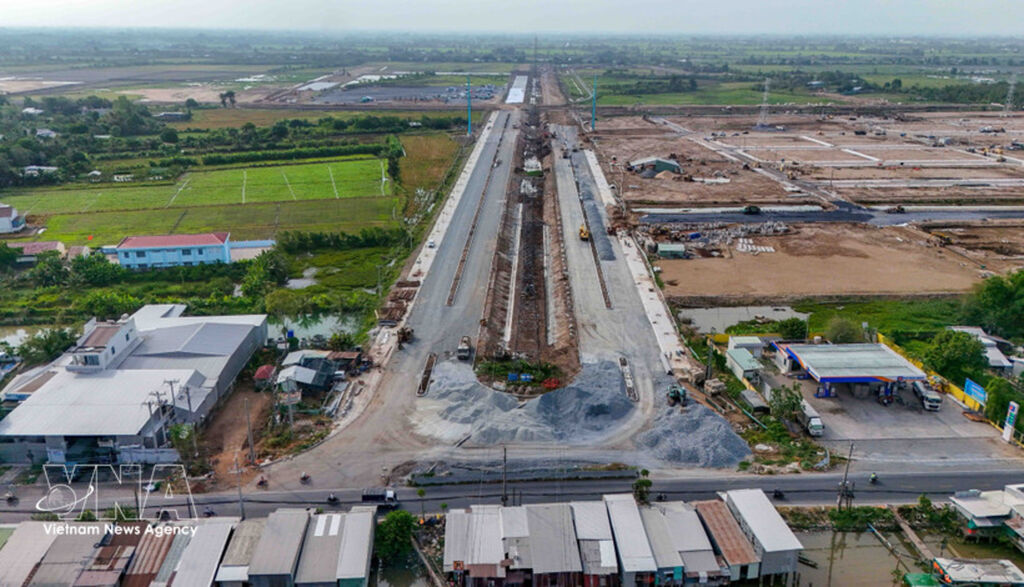
| The road to the VSIP Can Tho Industrial Park connecting with National Highway 80 is under construction. (Photo; VNA) |
Hanoi (VNA) – Vietnam is renewing its foreign investment strategy under the Politburo’s Resolution 10-NQ/TW, steering it toward hi-tech FDI in electronics, semiconductors, artificial intelligence, big data, Internet of Things, biotechnology, advanced healthcare and modern logistics, while demanding deeper localisation of supply chains, a strategic shift that raises the bar for the quality of capital it will now accept.
Strong registrations, disbursements
The first months of 2026 have brought a flurry of dealmaking. Ho Chi Minh City, and Nghe An, Ha Tinh, Phu Tho and Thai Nguyen provinces have all sped up the issuance of investment certificates, policy approvals and memorandums of understanding with a range of foreign backers.
The Ministry of Finance’s Foreign Investment Agency reported that total registered FDI neared 25 billion USD in the first five months of this year, a jump of almost 35% from a year earlier, with new project registrations driving the bulk of the expansion.
The period saw more than 1,570 new FDI projects worth close to 15 billion USD. Manufacturing and processing continued to dominate, absorbing 70.4% of all registered capital. Capital contributions and share acquisitions by foreign investors surged 46.7% to almost 4.2 billion USD.
Disbursement, the truest measure of FDI’s health, hit an estimated 9.75 billion USD, up 9.6% year-on-year and the highest five-month figure in half a decade.
Ho Chi Minh City remains the biggest draw. Hoang Vu Thanh, Director of the municipal Department of Finance, said registered FDI had already surpassed 6.6 billion USD by June 1, equal to 60% of the city’s full-year goal.
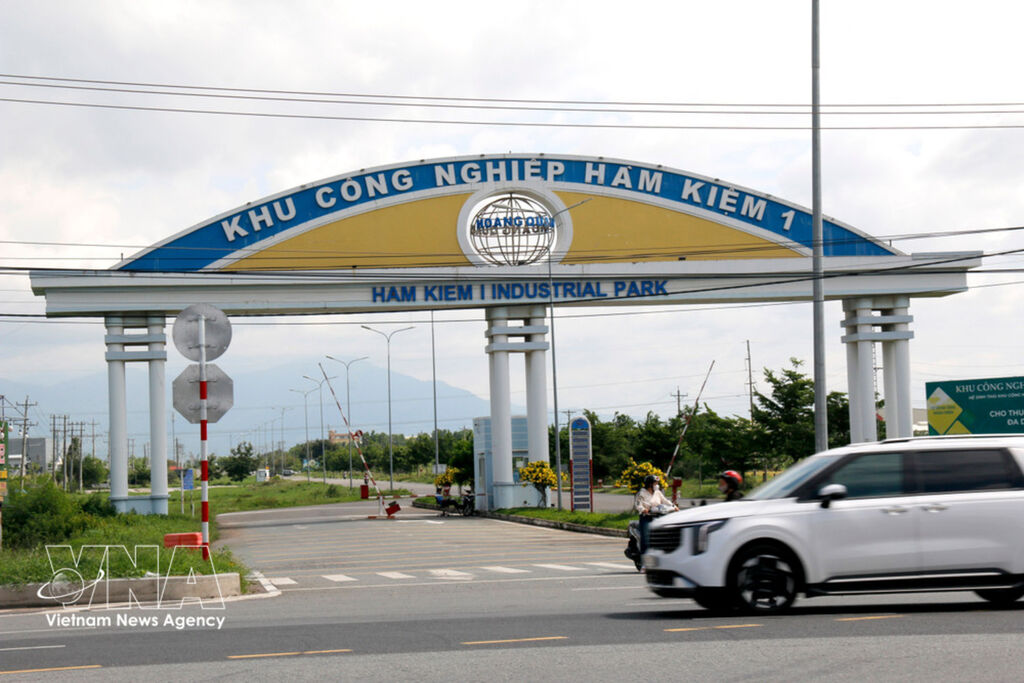 |
| The entrance to Ham Kiem I Industrial Park in Lam Dong province (Photo: VNA) |
Four mega projects under active review, including a 2.1 billion USD AI data centre in Tan Phu Trung Industrial Park, a smart complex at Thu Thiem New Urban Area with an additional 1.2 billion USD, Nha Be Metrocity GS project with another 2.2 billion USD, and 4.9-billion-USD Can Gio International Transshipment Port, could add 10.4 billion USD. If all go ahead, the city’s total FDI for 2026 would reach roughly 17 billion USD, or 154% of the yearly target.
Courting quality capital
As the draft Law on Special Urban Areas takes shape, Ho Chi Minh City is pushing new mechanisms to sharpen its edge. One will lock land prices for a two-year period, a signal of commitment that gives long-haul FDI projects more certainty over input costs and a stable platform for scaling up.
The pivot to high-tech industries is also redrawing the financial landscape. Truong Hoang Cong Duy, Business Director at Yuanta Securities Vietnam, said FDI enterprises now generate intense banking demand from the very earliest stages of a project, spanning credit, parent-company capital transfers, letters of credit for equipment imports, contractor payments, foreign-exchange transactions, guarantees, and cash flow management. Lenders, in response, are racing to switch to comprehensive service packages tailored to these clients.
Nguyen Hong Chung, Standing Vice Chairman of the Vietnam Industrial Park Finance Association, warned that the way investors are assessed is changing. Officials now care about technology, governance standards, commitments to knowledge transfer and integration with the domestic economy, not just investment size. The most generous incentives will be reserved for those who can show they will genuinely contribute to R&D, technology handovers and the buildout of local supply chains, he said./.