 |
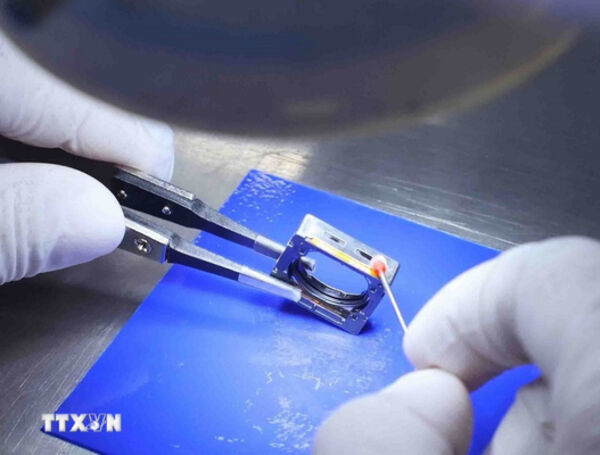
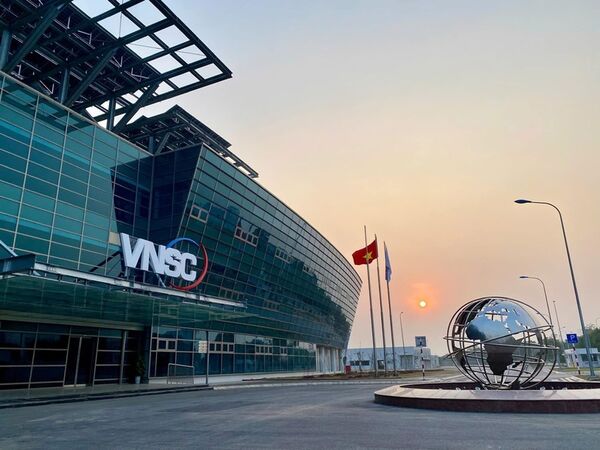
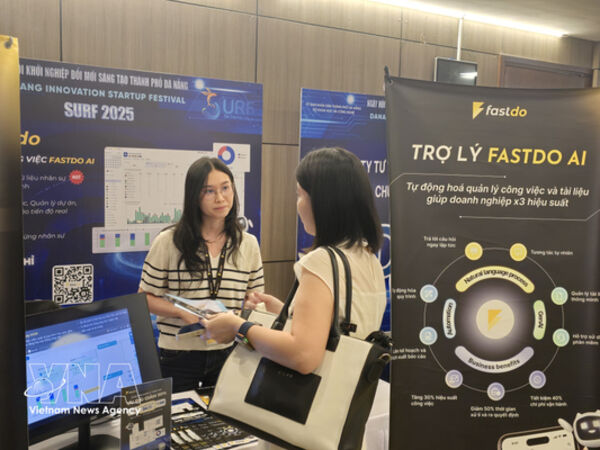
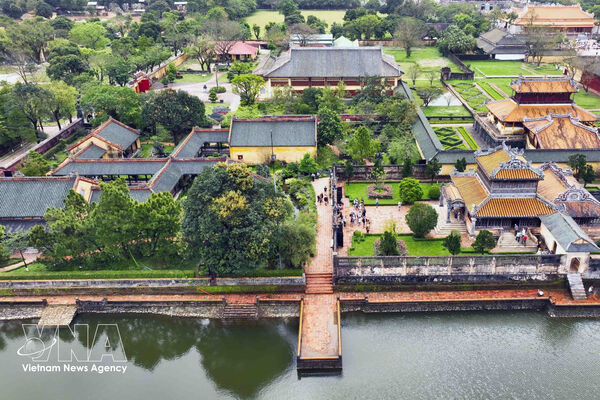
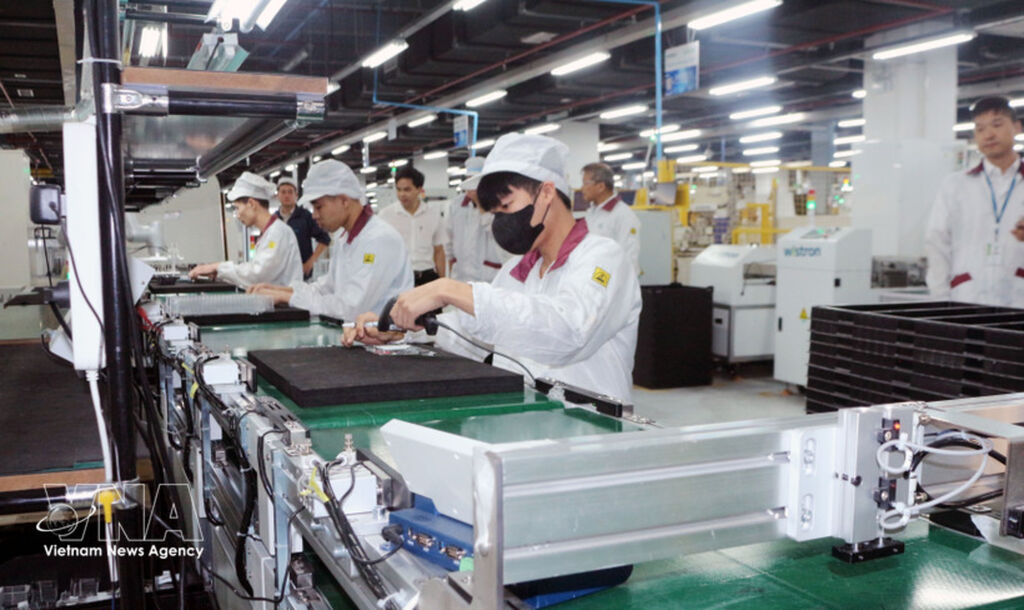
| Vietnam is emerging as an attractive destination for foreign high-tech investment. (Photo: VNA) |
Hanoi (VNA) – While Vietnam is attracting a wave of high-tech foreign direct investment (FDI), with major projects in semiconductors, electronics, artificial intelligence (AI) and advanced materials, experts say the country must strengthen its domestic capabilities to move beyond its role as a manufacturing hub and climb up global technology value chains.
High-tech FDI gains momentum
During the first four months of 2026, Vietnam secured several large-scale high-tech investments, reflecting an improvement in FDI quality as well as the country's strategy of selectively attracting projects that bring advanced technology, high added value and spillover effects for domestic firms.
Among the standout projects are Samsung Electro-Mechanics Vietnam's second facility with a total registered capital of 1.2 billion USD in Thai Nguyen province, and the over-2.2 billion-USD Quynh Lap LNG-fired power plant project in Nghe An province, both invested by the Republic of Korea (RoK). Others include an artificial graphite anode material plant for lithium-ion batteries worth 282 million USD of the RoK's Posco Future M in Thai Nguyen, and the plant expansion to nearly 891 million USD by Hong Kong's BYD Vietnam Electronics in Phu Tho province.
These projects demonstrate Vietnam's sustained attractiveness to investors in manufacturing, high technology and energy while highlighting the country's growing role as a favourite destination in the global reallocation of high-tech investment.
Dr. Dang Thao Quyen from RMIT University in Vietnam said investments in battery materials, electronics, data centres and AI signal a clear shift in investors’ priorities. The expansion of research and development activities by companies such as Qualcomm also suggests that Vietnam is emerging on the technology map of major global corporations.
While manufacturing remains dominant, the rising investment in energy and information and communications technology (ICT) indicates a transition from quantity to quality. The sharp increase in newly registered capital compared with 2025 further suggests that investors are choosing Vietnam for long-term production and innovation activities rather than simple assembly operations.
However, Quyen noted that most current projects focus on manufacturing and assembly while critical functions such as product design, advanced R&D and high-level supply chain management remain concentrated in countries that control core technologies, including the RoK, Japan and the US.
Quyen observed that Vietnam currently occupies a middle position in global value chains—a highly important role, but one that could be vulnerable to replacement if the country fails to upgrade its capabilities.
Enhancing domestic capabilities to move beyond strategic manufacturing hub
Economists say Vietnam should adopt a more selective approach to attracting FDI in the coming years, shifting from tax-based incentives toward other forms of support that are tied to investment outcomes and performance.
Greater participation by Vietnamese firms in supply chains, supporting industries and technology-intensive segments will benefit both local companies and foreign investors while enhancing the country's investment appeal, said Nguyen Van Toan, Vice Chairman of the Vietnam Association of Foreign Invested Enterprises.
He added that attracting next-generation high-tech FDI will require Vietnam to move beyond its low-cost advantage and strengthen domestic capabilities, enabling local firms to secure higher-value positions in global value chains.
Economist Dr Nguyen Minh Phong identified technological mastery and high-quality human resources as two of the most important factors of Vietnam's internal strength. He said that beyond long-term development strategies, financial capacity, innovation and adaptability, businesses need a skilled workforce capable of adapting to rapid advances in digitalisation, AI and automation.
Quyen noted that as global technology competition intensifies and technology blocs emerge, Vietnam's ability to attract high-tech investment also depends on institutional reliability, intellectual property protection and data governance.
Vietnam now has an opportunity to integrate more deeply into global technology supply chains. But turning investment inflows into genuine technological capability will require stronger R&D personnel, more effective technology transfer and incentive mechanisms linked to localisation and R&D, she added./.