Vietnam fine-tuning Extended Producer Responsibility policy to promote circular economy
Vietnam’s revised EPR framework is therefore expected to build a more comprehensive ecosystem covering collection, transportation, sorting, recycling, data management and supervision, making producers’ responsibilities closely linked to actual recycling outcomes. This will help EPR become a genuine driver of the recycling market and Vietnam’s transition toward the circular economy.
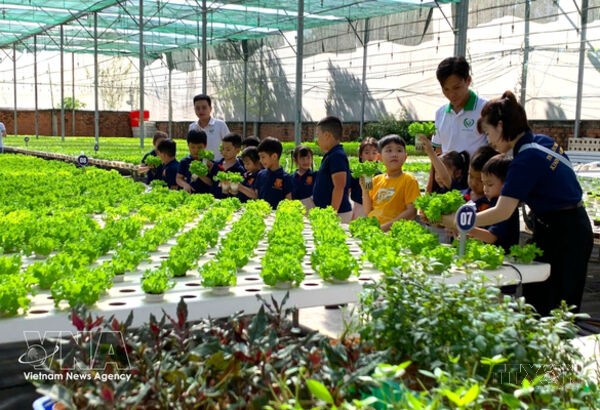
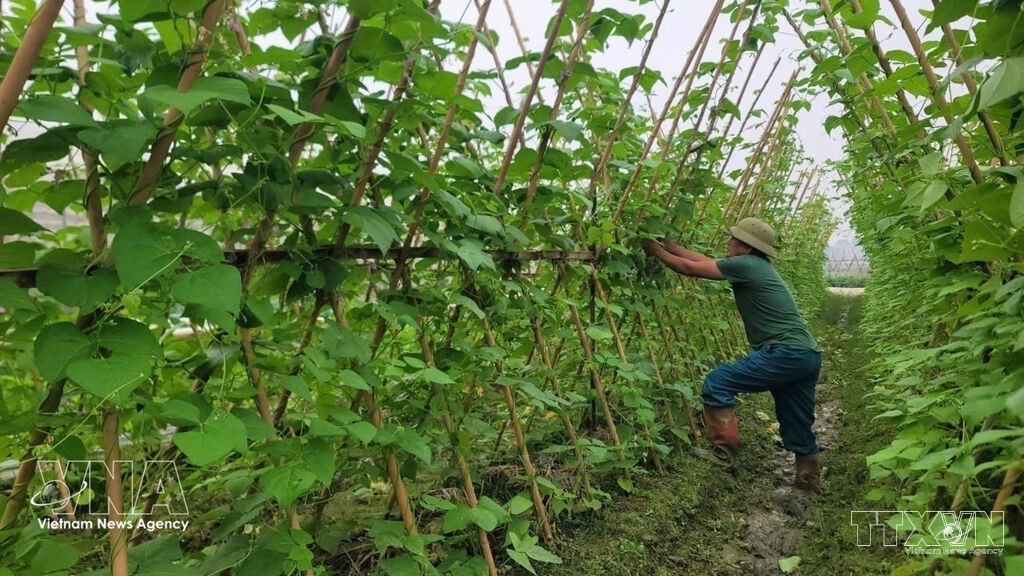
An organic vegetable model in Hanoi. (Illustrative photo: VNA)

Hanoi (VNA) – Vietnam is moving to revise its Extended Producer Responsibility (EPR) policy to strengthen the direct responsibility of producers and importers for products and packaging after use, while removing bottlenecks in collection and recycling.

The move is expected to make EPR more effective, stimulate the recycling market and promote the development of the circular economy.

EPR is regarded as an important tool for shifting from traditional waste management to a circular economic model. Instead of placing most responsibility on the State at the end of a product’s life cycle, producers and importers are required to take responsibility from the time products enter the market until they are collected and recycled after use. Vietnam has gradually established an EPR framework, but further improvements are needed to make the mechanism more effective and transparent. Current proposals focus on two major priorities: increasing businesses’ direct responsibility and addressing practical difficulties in implementation.

A notable change is to abolish financial contributions as a means of fulfilling recycling obligations. Under the proposal, producers and importers will be required to organise the collection and recycling of used products and packaging, either directly or through qualified organisations.

According to Tang The Cuong, Director of the Vietnam Environment Authority under the Ministry of Agriculture and Environment, EPR should not be viewed simply as a financial obligation. More importantly, it should encourage businesses to redesign products, select appropriate materials, organise collection and recycling, and invest in circular economy solutions.

The draft allows producers and importers to choose various methods, including self-organised collection and recycling, contracting recycling companies, authorising Producer Responsibility Organisations (PROs), exporting products for recycling, or combining these approaches.

However, the shift toward direct responsibility requires stronger collection networks. To address this bottleneck, the draft proposes allowing producers, importers, PROs, recycling facilities and waste treatment establishments to establish collection points, either independently or jointly.

International experience shows that there is no one-size-fits-all EPR model. The system must reflect each country’s institutional framework, market conditions and recycling capacity.

Vietnam’s revised EPR framework is therefore expected to build a more comprehensive ecosystem covering collection, transportation, sorting, recycling, data management and supervision, making producers’ responsibilities closely linked to actual recycling outcomes. This will help EPR become a genuine driver of the recycling market and Vietnam’s transition toward the circular economy./.
Related News

Government adopts action programme on environmental protection, climate resilience

The programme aims to translate the Party's orientations into concrete actions while strengthening environmental governance, enhancing climate resilience, and promoting a green, circular and low-carbon economy. It will serve as the basis for ministries, sectors and localities to formulate implementation plans for the 2026–2030 period, with a vision to 2045.

See Also

Japanese firm to produce key chip material in Vietnam, Malaysia

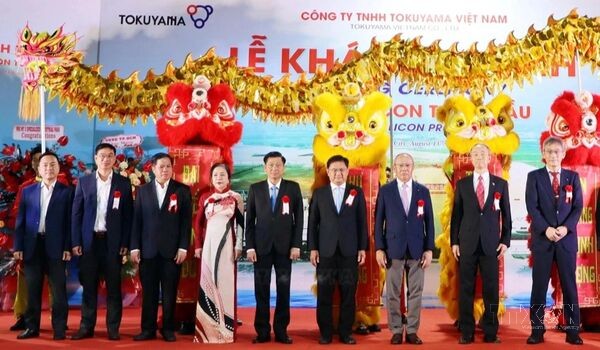
Tokuyama's Vietnam plant, inaugurated last week, will grind, clean and analyse polysilicon, an essential raw material for semiconductor wafers. Tokuyama is investing 60 million USD in the facility, which is ultimately expected to reach an annual capacity of 4,000 tonnes.

Vietnam, Canada look forward to early elevation of bilateral ties

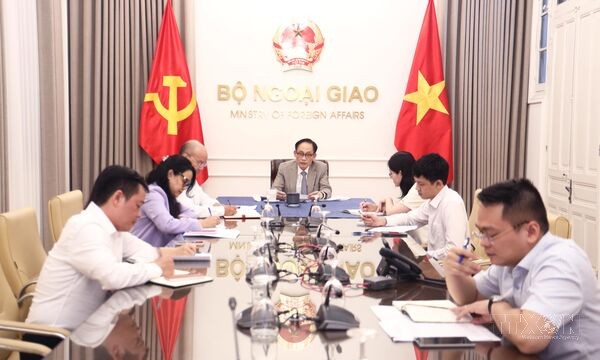
Foreign Minister Le Hoai Trung stressed Vietnam attaches importance to its relations with Canada and stands ready to work with the latter to step up substantive cooperation towards the early elevation of the Vietnam–Canada Comprehensive Partnership, in line with the political trust, cooperation potential and interests of the two countries’ peoples.

Dien Bien taps natural assets to develop green tourism

Not only known for its historical significance, Dien Bien also boasts unspoilt natural landscapes and a cool climate, creating favourable conditions for ecotourism. A range of green tourism models are taking shape, diversifying tourism products and enhancing the destination’s appeal.

Keeping the salt fields of Chau Ha alive

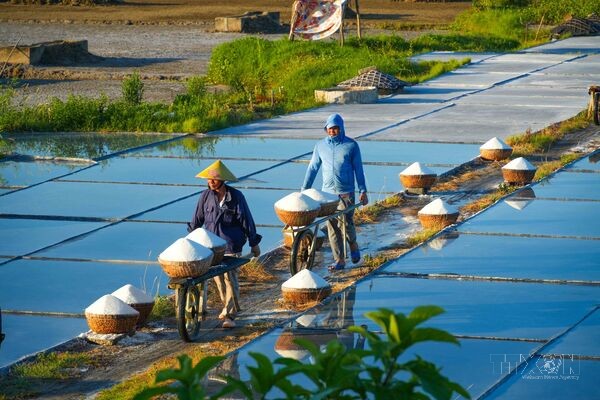
Under the scorching sun, salt farmers at Chau Ha salt field in Mai Phu commune, Ha Tinh province, work from early morning until late afternoon to produce pure white salt. But behind this generations-old trade are concerns over unstable incomes, weak demand and the risk of the craft fading as younger people seek other livelihoods.

Ho Chi Minh City advances strategy for strong maritime nation

The resolution marks a shift from focusing primarily on the maritime economy to viewing the sea as an economic, strategic and living space, requiring close coordination between development, defence, security, foreign affairs and modern maritime governance.

Southern Da Nang home to pristine beaches

Da Nang has a coastline stretching more than 200km, with the southern part of the city home to many beautiful, unspoilt beaches and the peaceful lifestyle of traditional fishing villages.

Vietnam seeks to build national brand for cultural industries

The draft law on cultural industry development seeks to establish a formal legal status for cultural industries within the national economic structure and connect their value chains to boost economic value, exports and strategic investment while promoting Vietnamese identity and soft power internationally.