 |
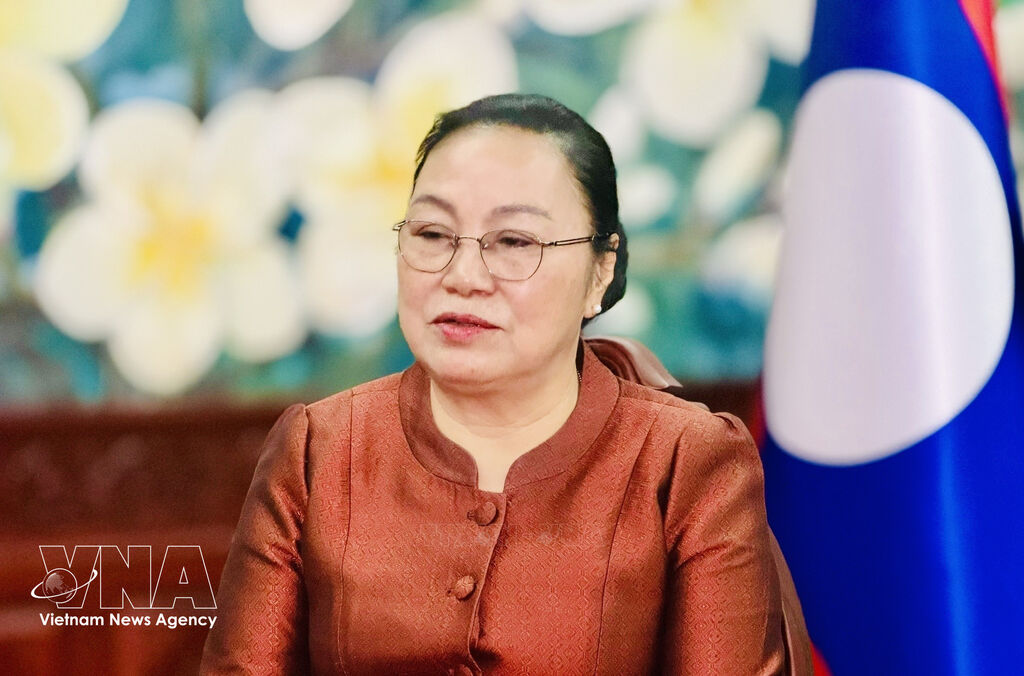
| Lao Ambassador to Vietnam Khamphao Ernthavanh in an interview with the Vietnam News Agency (Photo: VNA) |
Hanoi (VNA) – The upcoming official visit to Vietnam by Lao Prime Minister Saleumxay Kommasith and his spouse is expected to foster ties between the two countries bilaterally as well as under the CLMV and ACMECS frameworks, Lao Ambassador to Vietnam Khamphao Ernthavanh told the Vietnam News Agency ahead of the visit.
The Lao PM will also attend the 12th Cambodia-Laos-Myanmar-Vietnam Summit (CLMV-12) and the 11th Ayeyawady-Chao Phraya-Mekong Economic Cooperation Strategy Summit (ACMECS-11) in Hanoi from November 27 to 28, at the invitation of Vietnamese Prime Minister Le Minh Hung.
The ambassador described the visit as particularly significant, underlining that it will provide an important opportunity to further consolidate the great friendship, special solidarity, comprehensive cooperation and strategic cohesion between the Parties, States and people of Vietnam and Laos.
During the visit, the two PMs are expected to hold talks to review bilateral cooperation, particularly the implementation of agreements reached by the high-ranking leaders of the two Parties and States, and discuss orientations for future collaboration. The aim is to further deepen bilateral ties in a substantive and effective manner, bringing tangible benefits to both countries and their people.
The diplomat noted that the Lao PM's visit and participation in the two summits reflect Laos’ consistent commitment to strengthening bilateral relations and advancing regional and international cooperation.
First, the visit will reaffirm the strong political trust and close ties between Laos and Vietnam, while enabling the two sides to review the progress of cooperation and identify priorities for the coming period. It will also help strengthen links between bilateral cooperation and broader sub-regional initiatives.
Second, as active members of CLMV and ACMECS, Laos and Vietnam will have an opportunity to align their bilateral cooperation more closely with the priorities of these mechanisms, particularly in connectivity, trade facilitation, human resources development, digital cooperation and sustainable development.
The visit will also help advance Laos’s role as coordinator for transport within CLMV and its position as a key country under an ACMECS pillar, while promoting closer coordination with Vietnam in areas coordinated by the latter under CLMV, including information and communications technology (ICT), trade and investment, and human resource development.
Third, stronger Laos-Vietnam relations and closer sub-regional cooperation would contribute to narrowing development gaps, enhancing economic connectivity and reinforcing ASEAN centrality, thereby supporting the building of the ASEAN Community.
Laos hopes the visit will produce tangible outcomes, particularly in consolidating political trust, promoting substantive cooperation and strengthening coordination between the two countries and within the CLMV and ACMECS frameworks, the ambassador said.
Assessing Vietnam’s role in regional cooperation, particularly in the Mekong sub-region, Khamphao described the country as an active and responsible member of regional and international mechanisms, whose contributions have earned it growing trust among countries in the region and beyond.
She attributed this standing to Vietnam’s geographical advantages, economic potential, growing development experience and proactive foreign policy, which promotes cooperation and shared development. She also highlighted the country’s commitment to contributing to peace, stability and common development at both regional and international levels.
Within CLMV, the four member countries share the goals of promoting socio-economic development, narrowing development gaps, enhancing connectivity and deepening integration into the ASEAN Community.
As one of the five ACMECS member countries, Vietnam also plays an important role in promoting connectivity in trade, investment, transport, agriculture, tourism, human resource development, energy and environmental protection. The mechanism seeks to harness the respective strengths of its members, strengthen connectivity and promote balanced development across the sub-region.
She praised Vietnam’s active participation in maintaining dialogue, building consensus and strengthening coordination among member countries. Vietnam’s growing production capacity, together with its network of seaports and international trade gateways, also offers important advantages for regional connectivity.
Khamphao expressed her confidence that Vietnam will continue to play a responsible role in regional cooperation by promoting equal dialogue, respecting the legitimate interests of all countries and strengthening solidarity and coordination among member states.
She stressed that such cooperation has become increasingly important as the Mekong sub-region faces mounting challenges, including climate change, natural disasters, water and energy security, and volatility in the global economy.
The ambassador called for stronger cooperation in economic and infrastructure connectivity, particularly through cross-border transport routes, logistics, trade and investment, as well as measures to facilitate the movement of goods, services and people across the region.
Other priorities should include sustainable management and use of Mekong River water resources, environmental protection, climate change adaptation, disaster prevention and energy security. She also underscored the need to narrow development gaps by helping member countries strengthen institutional capacity, develop human resources, advance digital transformation, improve education quality and participate more deeply in regional supply chains.
With solidarity, cooperation and mutual benefit as guiding principles, Vietnam and other member countries could further enhance the effectiveness of CLMV, ACMECS and other Mekong cooperation mechanisms, contributing to regional peace, stability and prosperity, she said.
Reviewing the achievements of CLMV and ACMECS, the ambassador described the two mechanisms as important platforms for policy dialogue, experience sharing and economic connectivity. They have helped narrow development gaps, promote trade and investment, improve transport links, develop human resources and mobilise support from development partners.
For Laos, their practical benefits include scholarships and training programmes, technical assistance, cross-border trade facilitation projects, tourism and hospitality skills development, and measures to facilitate trade.
However, she acknowledged that both mechanisms continue to face challenges, and emphasised that both mechanisms complement ASEAN’s efforts to build its Community by supporting integration initiatives, narrowing development gaps, strengthening economic connectivity and reinforcing ASEAN centrality.
Looking ahead to the upcoming summits, she said that Laos plans to propose several priorities, including operationalising the ACMECS Development Fund and securing predictable, stable financing for priority projects.
It will also seek closer alignment between the ACMECS Master Plan, the CLMV cooperation framework, joint development plans with partners and ASEAN Community-building priorities. Other proposed areas of focus include infrastructure connectivity, trade and customs facilitation, the digital economy, green and sustainable development, human resource development, tourism, agriculture and energy.
Strengthening the capacity of the ACMECS Secretariat and CLMV coordination mechanisms, particularly in monitoring, supervision and evaluation, will also be important. Laos will further promote cooperation with development partners, including new ACMECS partners such as New Zealand, while continuing to implement the CLMV Economic Action Plan for 2025-2026.
The ambassador reaffirmed that Laos will continue to coordinate the transport sector within CLMV and serve as the focal country under an ACMECS pillar, while maintaining close coordination with Vietnam and other member countries./.