Vietnam remains Cambodia’s top seafood supplier in H1
Vietnam remained Cambodia’s largest seafood supplier, with shipments to the neighbouring market valued at more than 33 million USD. China ranked second, with exports worth over 16 million USD. Imports from other markets, including Hong Kong (China), Australia, France, Japan, the Republic of Korea and Malaysia, totaled around 10 million USD.
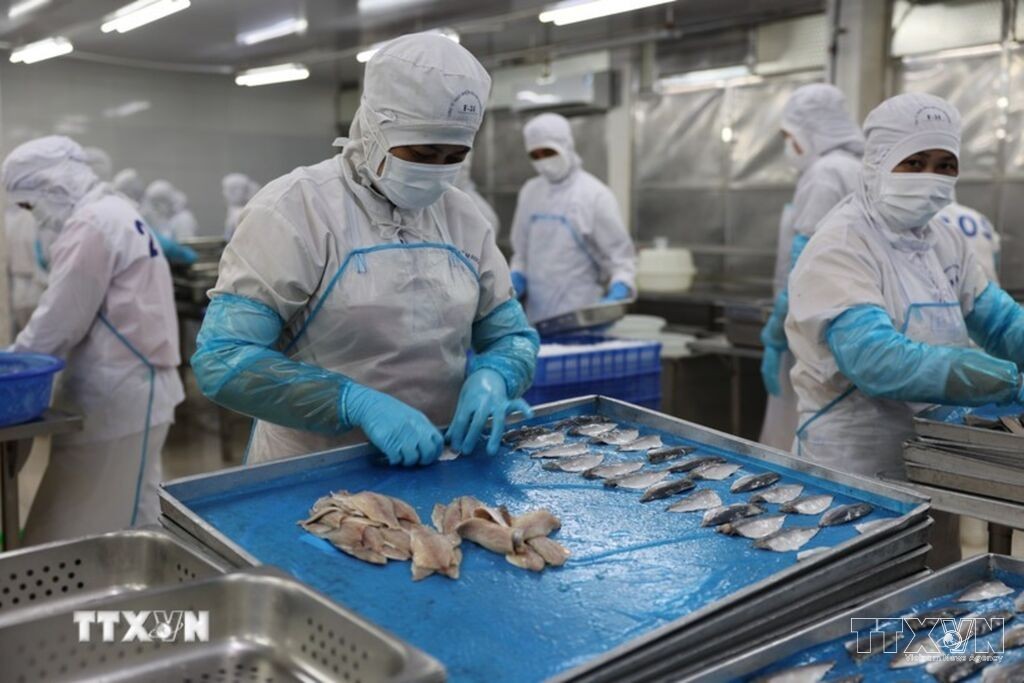
Aquatic products is processed at Ba Ria-Vung Tau Seafood Processing and Import-Export Joint Stock Company (Baseafood) in Ba Ria ward, Ho Chi Minh City. (Photo: VNA)

Phnom Penh (VNA) – Cambodia imported around 38,000 tonnes of tuna and other seafood products worth more than 61 million USD in the first half of 2026 to meet domestic demand, according to a report by the Cambodian Ministry of Commerce.

Vietnam remained Cambodia’s largest seafood supplier, with shipments to the neighbouring market valued at more than 33 million USD. China ranked second, with exports worth over 16 million USD. Imports from other markets, including Hong Kong (China), Australia, France, Japan, the Republic of Korea and Malaysia, totaled around 10 million USD.

Pen Sovicheat, Secretary of State and Spokesperson for the Cambodian Ministry of Commerce, said Cambodia imports a wide range of seafood products for domestic consumption, including tuna, chilled shrimp, squid, frozen seafood, clams and scallops.

Despite being a major seafood importer, Cambodia also exports locally caught seafood. In the first half of 2026, the country exported more than 1,200 tonnes of seafood to markets including mainland China, Hong Kong (China), India, the US, the Republic of Korea, Japan, France and Canada, earning more than 1 million USD.

In 2025, Cambodia imported around 50,000 tonnes of seafood products worth 74 million USD, while its exports totaled about 1,600 tonnes, generating more than 940,000 USD. Cambodian seafood exports include processed products such as fish cakes, shrimp cakes and fish roe, as well as other seafood products.

The Cambodian Ministry of Commerce is also promoting the registration of a geographical indication (GI) for crabs from Kep province. The initiative aims to commercialise the local seafood specialty, enhance its competitiveness in domestic and international markets, and boost the local economy. In the longer term, it is expected to support Cambodia’s seafood exports, particularly Kep crabs, while strengthening the coastal province’s position as a leading destination for tourists and seafood lovers./.
Related News

Ninh Binh strengthens aquatic resource protection

Every day, dozens of vessels arrive at Ninh Co Fishing Port in the northern province of Ninh Binh to complete entry and departure procedures. As part of efforts to improve seafood traceability, all fishing vessels now declare arrivals and departures through the electronic catch documentation and traceability system.

See Also

From a safe cyberspace to strong national security

In the digital age, cyberspace offers tremendous convenience. With just an Internet-connected device, people can communicate, study, do business and access information quickly, regardless of geographical boundaries.

2026–2030: Green economy share of GDP targeted at 10%

The 14th Party Central Committee's recent Conclusion No. 75-KL/TW on environmental protection and proactive response to climate change in the new period has called for the development of climate-resilient urban areas in response to increasingly extreme impacts from nature.

Vietnam targets Southeast Asia’s leading medical tourism position by 2030

Medical tourists to Vietnam currently mainly comprise overseas Vietnamese and visitors from Cambodia, Laos, the Republic of Korea, Japan, Australia and several European countries. Popular services include cosmetic dentistry, assisted reproduction, aesthetic medicine, general health check-ups and some advanced medical specialties.

Economic targets for 2030, 2035 and 2045

The Politburo’s Action Programme No. 33-CTr/TW, dated July 28, 2026, sets specific economic targets under the Resolution of the 14th Party Central Committee’s third meeting on reforming Vietnam’s development model, including average annual GDP growth of at least 10% in 2026–2030, 8–8.5% in 2031–2035, and around 7.5% in 2036–2045.

VIFC seeks to unlock int’l capital for Vietnam’s economy

The draft Urban Development Law, expected to be passed by the National Assembly on August 24, 2026, continues to codify mechanisms for the Vietnam International Financial Centre (VIFC), creating an additional legal foundation for the new model. Experts say the challenge is not only attracting international capital, but also creating mechanisms to channel it into businesses and the wider economy.

Public security force: “Steel shield” for national security and cybersecurity

Over the years, the People’s Public Security Force has played a pioneering and exemplary role in driving breakthroughs in digital transformation, becoming a backbone for the country, ministries, sectors and localities in the national digital transformation process, while safeguarding information security and cybersecurity in the new era.