Vietnam to award 1,500 full scholarships for strategic technology training abroad
By 2035, 1,500 Vietnamese citizens are expected to receive full scholarships for overseas study and research, including 100 undergraduate students, 400 master's students, 500 doctoral candidates and 500 postdoctoral researchers. The allocation may be adjusted in line with training needs and the state budget.
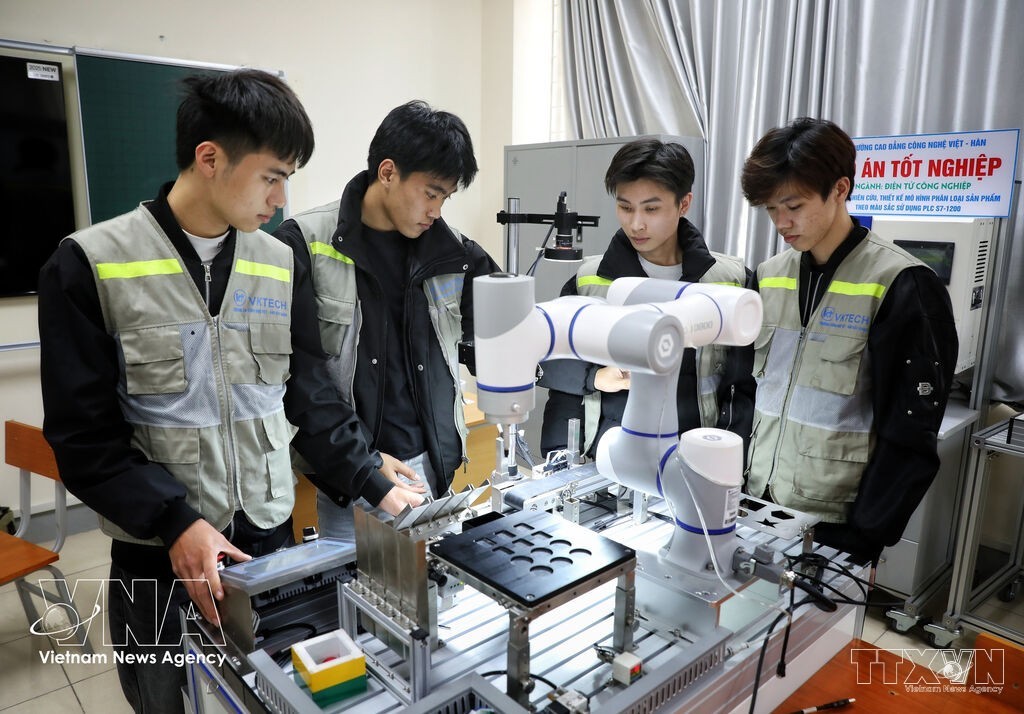
Students attend a microcontroller programming practicum at Viet-Han Bac Giang College of Technology. (Photo: VNA)

Hanoi (VNA) – Vietnam will offer full scholarships to outstanding students and young scientists to study and conduct research in strategic technologies at leading universities worldwide under a programme approved by the Government.

Deputy Prime Minister Le Tien Chau has signed Decision No. 1600/QD-TTg approving the programme, which is designed to build a high-quality workforce for strategic technology fields and support the target of making breakthroughs in science – technology development, innovation and national digital transformation.

By 2035, 1,500 Vietnamese citizens are expected to receive full scholarships for overseas study and research, including 100 undergraduate students, 400 master's students, 500 doctoral candidates and 500 postdoctoral researchers. The allocation may be adjusted in line with training needs and the state budget.

The programme targets Vietnamese citizens with strong academic or research capabilities and high development potential. Eligible candidates will be selected for fields considered important to the development of strategic technologies.

Undergraduate scholarships will target outstanding high school and first-year university students who have won top prizes in provincial- or national-level academic competitions, national science and engineering contests or international competitions organised or supported by the Ministry of Education and Training. First-year students at military and police universities with excellent academic and conduct records may also be nominated.

Master's candidates must hold a relevant bachelor's degree with an excellent academic record or equivalent, while PhD applicants must have a relevant master's degree with an academic score of at least 8.0 out of 10, or equivalent.

Postdoctoral candidates are expected to have strong research credentials, demonstrated through publications in reputable international journals, patents or applied scientific and technological achievements, as well as professional experience and development potential.

The programme will cover disciplines and training programmes directly related to the strategic technologies identified under Decision No. 21/2026/QD-TTg, dated April 30, 2026, and subsequent amendments. In cases where domestic training capacity remains insufficient, additional fields supporting the country's growth model reform may be considered.

Scholarship recipients will study at overseas institutions with strong capabilities in relevant fields and ranked among the world's top 500 by subject or discipline in reputable international rankings. Eligible programmes must be accredited or recognised in the host country and provide suitable conditions for research, technology access and transfer.

Selection will be competitive, transparent and nationwide, with criteria, quotas and results made public. Expert councils will assess applicants' capabilities, study and research plans, the quality of host institutions and supervisors, and their potential contribution after completing their programmes.
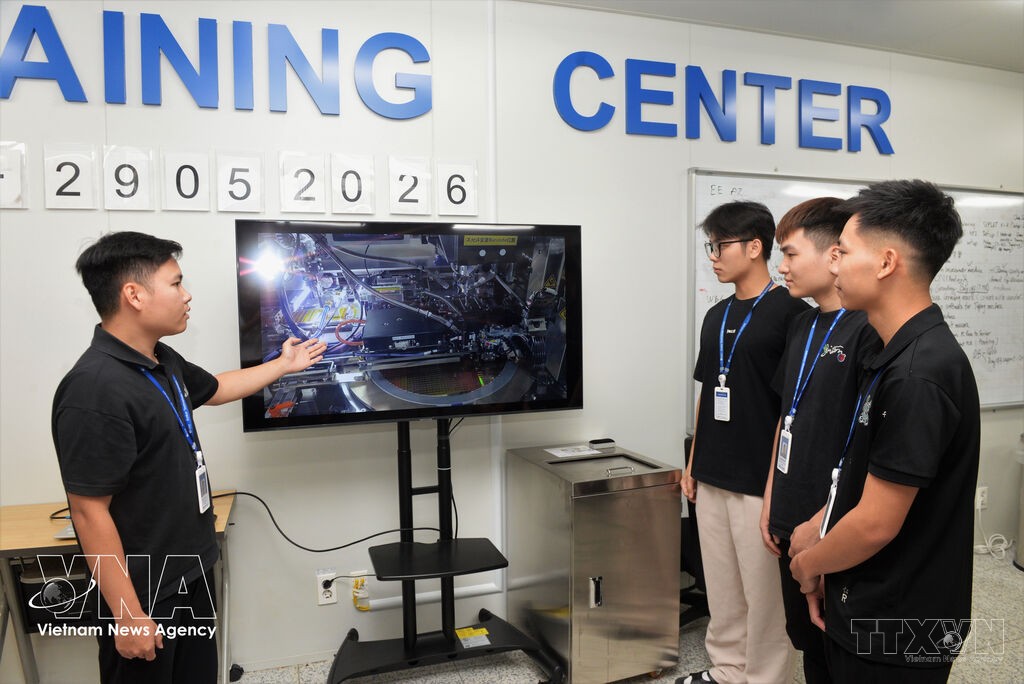
An expert guides workers on a semiconductor and high-tech production line at Amkor Technology Vietnam Co., Ltd. in Yen Phong Industrial Park, Bac Ninh Province. (Photo: VNA)

The programme will also establish mechanisms to monitor recipients' academic and research performance and their fulfilment of post-training commitments.

Funding will come primarily from the state budget, alongside support from domestic and foreign organisations and individuals, and other lawful sources.

Overseas training and research under the programme are scheduled to begin in 2027 and continue through 2035, following the completion of scholarship mechanisms, selection criteria, procedures and plans for the use of trained personnel.

The initiative underscores Vietnam's commitment to developing a strong pool of highly qualified talent and strengthening international cooperation in strategic technologies, supporting the country's long-term goals in science, technology, innovation and digital transformation./
Related News

Vietnam approves national programme on strategic technologies

The programme seeks to master, develop, perfect and commercialise highly competitive strategic technology products, with priority given to core technologies. It also aims to build a strategic technology ecosystem and strengthen linkages among the State, businesses and science and technology organisations.

Vietnam eyes global network of overseas Vietnamese experts in strategic technologies

In recent years, networks of OV experts and intellectuals have been established, with nearly 2,000 members. Five innovation and expert networks have also been formed in strategic technology areas such as artificial intelligence, semiconductors, quantum technology, cybersecurity, aviation, aerospace and unmanned aerial vehicles, connecting around 50 expert and intellectual associations overseas.

National programme on AI human resources development approved

The programme aims to develop an AI workforce of sufficient scale, structure and quality to meet the requirements of strategic technology sectors, enhance national technological self-reliance, promote innovation and digital transformation, and foster the digital economy and digital society.

See Also

2026–2030: Green economy share of GDP targeted at 10%

The 14th Party Central Committee's recent Conclusion No. 75-KL/TW on environmental protection and proactive response to climate change in the new period has called for the development of climate-resilient urban areas in response to increasingly extreme impacts from nature.

Vietnam targets Southeast Asia’s leading medical tourism position by 2030

Medical tourists to Vietnam currently mainly comprise overseas Vietnamese and visitors from Cambodia, Laos, the Republic of Korea, Japan, Australia and several European countries. Popular services include cosmetic dentistry, assisted reproduction, aesthetic medicine, general health check-ups and some advanced medical specialties.

Economic targets for 2030, 2035 and 2045

The Politburo’s Action Programme No. 33-CTr/TW, dated July 28, 2026, sets specific economic targets under the Resolution of the 14th Party Central Committee’s third meeting on reforming Vietnam’s development model, including average annual GDP growth of at least 10% in 2026–2030, 8–8.5% in 2031–2035, and around 7.5% in 2036–2045.

VIFC seeks to unlock int’l capital for Vietnam’s economy

The draft Urban Development Law, expected to be passed by the National Assembly on August 24, 2026, continues to codify mechanisms for the Vietnam International Financial Centre (VIFC), creating an additional legal foundation for the new model. Experts say the challenge is not only attracting international capital, but also creating mechanisms to channel it into businesses and the wider economy.

Public security force: “Steel shield” for national security and cybersecurity

Over the years, the People’s Public Security Force has played a pioneering and exemplary role in driving breakthroughs in digital transformation, becoming a backbone for the country, ministries, sectors and localities in the national digital transformation process, while safeguarding information security and cybersecurity in the new era.

Older persons are driver of national development: Deputy Prime Minister

Chairing a conference of the National Committee on Aging in Hanoi on August 17, Deputy Prime Minister Pham Thi Thanh Tra, who is also its Chairwoman, said the Party and State pay special attention to elderly affairs. At the same time, awareness across the entire political system and society has become increasingly clear, comprehensive and positive.

Vietnamese language celebrated as first computer-based proficiency test held overseas

For Vietnamese communities overseas, Vietnamese is not merely a means of communication but also an important part of cultural identity and a bond connecting people with their homeland. For foreigners who have developed an affection for Vietnam, learning the language opens another door to a deeper understanding of the country's culture, history and people.

Vietnam, US strengthen cooperation to ease suffering of AO/dioxin victims

A delegation from the Vietnam Association for Victims of Agent Orange/dioxin's chapter in Ho Chi Minh City (VAVA HCMC) visited the US directly inform American friends about the long-term consequences of AO/dioxin in Vietnam and seek the support of progressive groups, veterans, legal experts and youth organisations in efforts to care for the victims.