 |
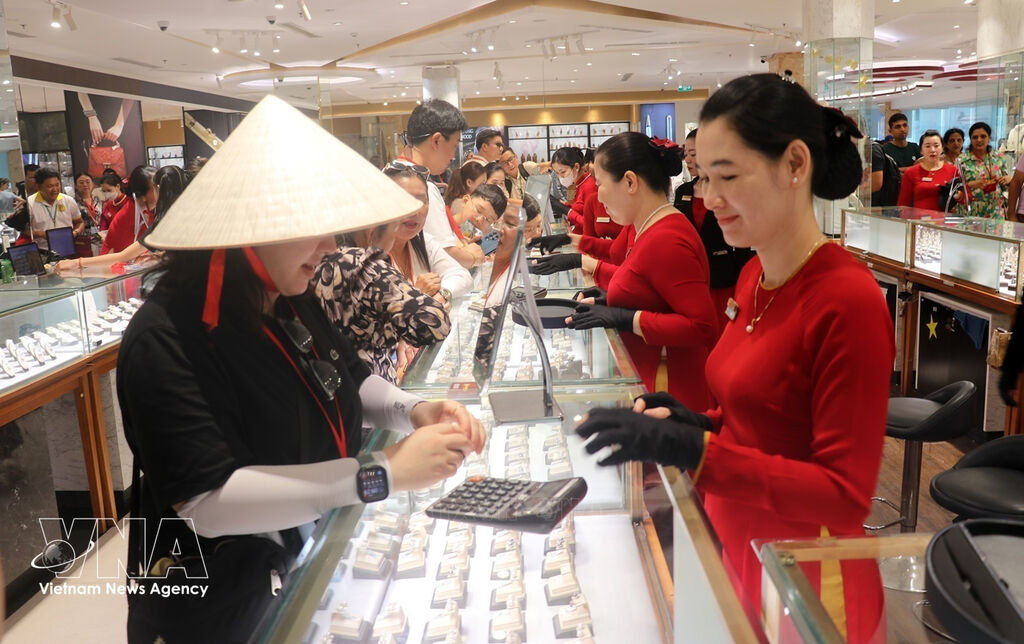
| Tourists shop at Ngoc Hien Pearl Farm in Phu Quoc city, An Giang province. (Photo: VNA) |
Hanoi (VNA) - Vietnam is stepping up efforts to develop shopping tourism, diversify visitor experiences and increase spending through modern retail models, a stronger night-time economy and better distribution networks.
Nguyen Trung Khanh, Director of the Vietnam National Authority of Tourism (VNAT), said the Politburo had identified tourism as a spearhead economic sector and a new growth driver under Politburo Resolution No. 26-NQ/TW, with visitor experience a key competitive advantage.
Shopping tourism remains underdeveloped in Vietnam despite its potential to attract visitors and boost revenue. Diversifying dining, shopping and entertainment services while extending stays would help increase tourist spending, Khanh said.
Vietnam welcomed more than 21 million international visitors and served around 137 million domestic tourist trips in 2025, generating about 1 quadrillion VND (38 billion USD). In 2026, it targets 25 million international arrivals, 150 million domestic trips and revenue of about 1.13 quadrillion VND.
Under Resolution No. 26-NQ/TW, the country aims to attract 40–50 million international visitors and 160 million domestic trips by 2030, earning 80–90 billion USD in tourism revenue. By 2045, it seeks to rank among the world’s top 30 destinations.
The VNAT and the Agency for Domestic Market Surveillance and Development under the Ministry of Industry and Trade have signed a memorandum of understanding for 2026–2030 to expand cooperation in domestic market development, consumption promotion and consumer protection.
The agreement also seeks to develop modern shopping tourism models, expand distribution channels for Vietnamese goods and improve visitor experiences.
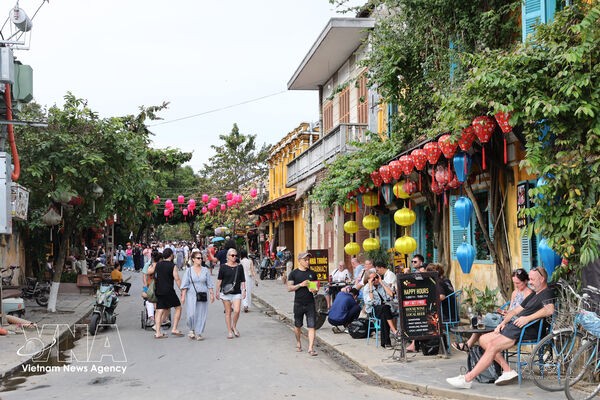
Khanh highlighted the potential of outlet shopping centres and night-time services to attract tourists and increase spending. He also called for stronger links between Vietnamese products, including OCOP goods and regional specialties, and tour operators, accommodation providers and retail outlets.
Cashless and cross-border payment systems would further improve convenience for international visitors, he added.
Tran Huu Linh, Director of the Agency for Domestic Market Surveillance and Development, said shopping tourism could diversify tourism products and bring Vietnamese goods, regional specialties and traditional handicrafts closer to consumers.
Combining shopping with cultural, culinary and local heritage experiences would also enhance destination appeal.
On September 25, 2026, the Ministry of Industry and Trade approved a project to develop outlet shopping models through 2030, with a vision to 2045, under Decision No. 2412/QD-BCT.
The project outlines three models: premium outlet villages combining shopping and tourism, outlet centres in urban areas or their outskirts, and outlets integrated into multifunctional complexes.
For the 2026–2030 period, the project prioritises pilot implementation in Hanoi, Ho Chi Minh City, Da Nang, Quang Ninh, and Phu Quoc. During 2030–2045, it aims to expand outlet shopping models across all three regions of Vietnam.
Linh said outlet centres were expected to increase international tourist spending, with Hanoi, Ho Chi Minh City and other localities exploring the necessary conditions for new shopping models.
The Ministry of Industry and Trade is also drafting a decree to replace Decree No. 60/2024/ND-CP on market development and management, including proposed responsibilities for provincial authorities in developing night markets.
The draft Domestic Market Development Strategy to 2030, with a vision to 2045, envisages combining night-time shopping, cuisine, culture, entertainment and tourism, while extending the operating hours of shopping centres and night markets.
With nearly 9,000 markets nationwide, improved management and investment are considered essential to developing these services.
Linh stressed that domestic consumption, including tourist spending, was important to GDP growth. Closer coordination between trade and tourism authorities would help stimulate consumption and support economic development.
Stronger trade-tourism links are expected to boost growth, improve the tourism business environment and strengthen Vietnam’s appeal as a safe, friendly and attractive destination./.