 |
| Following the launch ceremony, the 100-motorbike convoy travels from Dong Van across Ma Pi Leng Pass, taking in spectacular mountain scenery and the Nho Que River before finishing at Pa Vi Ha in Meo Vac commune. (Photo: VNA) |
Tuyen Quang (VNA) – A convoy of 100 motorbikes set off on a journey across Ma Pi Leng Pass on October 21 as part of a roadshow campaign to promote safe motorcycle travel in the northern province of Tuyen Quang, home to the Dong Van Karst Plateau UNESCO Global Geopark.
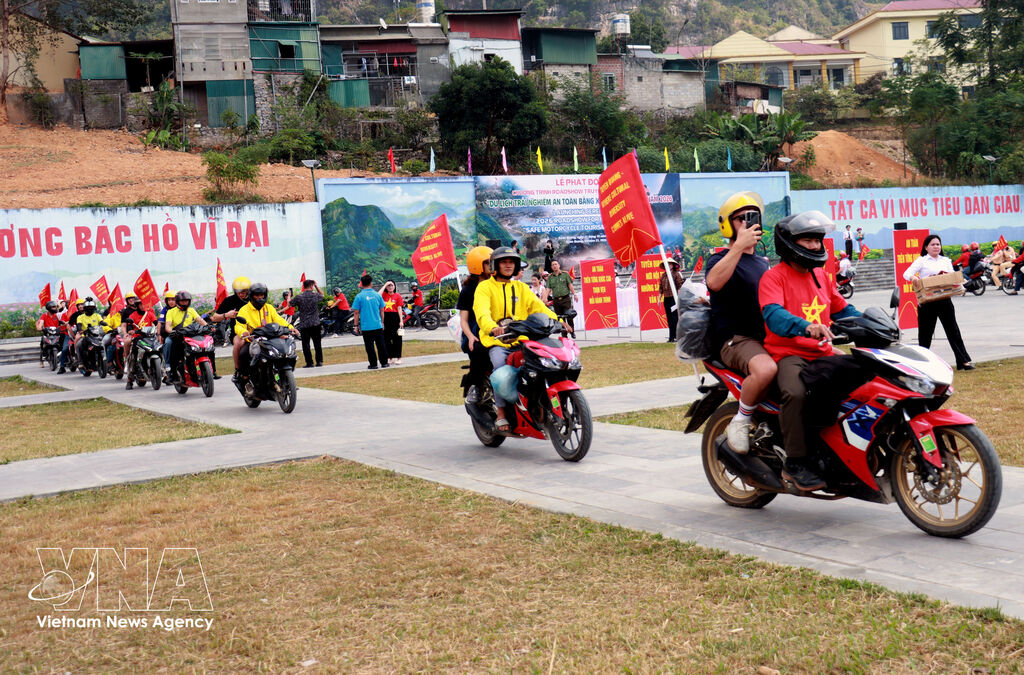
The campaign, themed “Safe Motorcycle Tourism Experiences”, was launched at Thanh Nien Square in Dong Van commune by the provincial Department of Culture, Sports and Tourism, in coordination with the provincial Department of Public Security, the provincial Tourism Association and localities within the geopark.
Nguyen Thi Hoai, Deputy Director of the Department of Culture, Sports and Tourism, said tourism promotion must go hand in hand with providing visitors with the information and guidance needed to ensure their safety throughout their journeys.
She stressed that safety must come first, service quality must provide the foundation, identity must remain a core value, and visitor satisfaction must serve as a measure of tourism development.
To ensure the campaign’s effectiveness, relevant agencies and local authorities were urged to strengthen inspections and management of tourism services.
Travel companies, accommodation providers, motorbike rental businesses and tour operators must ensure that vehicles meet technical requirements and protective equipment is available. They must also check driving licences, explain traffic regulations and provide visitors with guidance on handling unexpected situations.
Tour leaders are expected to maintain safe group formations, speeds and distances, while monitoring weather and road conditions and adjusting or suspending trips when necessary.
Visitors are advised to study routes and weather conditions, choose reputable service providers and strictly follow traffic regulations and instructions from tour organisers and authorities. Local communities are also encouraged to maintain their hospitality, protect the environment and preserve cultural traditions.
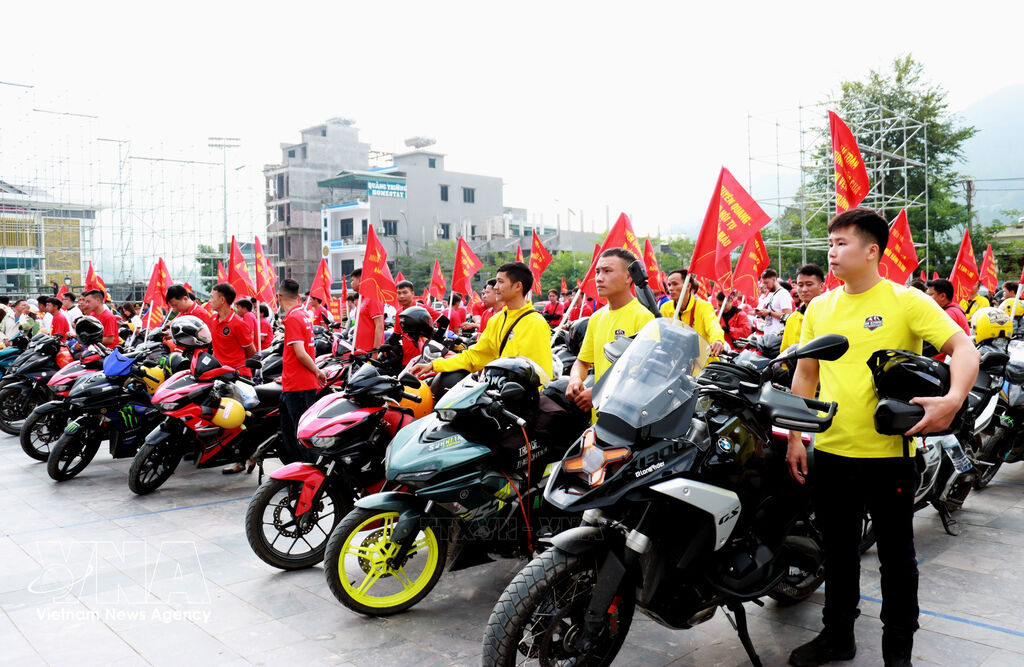 |
| Drivers joining the convoy (Photo: VNA) |
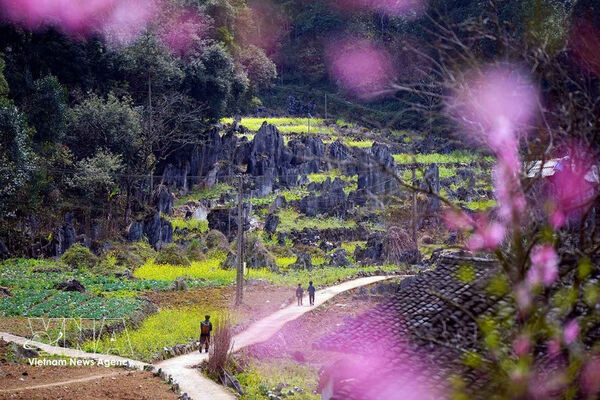
Tuyen Quang boasts diverse tourism attractions, including the special national relic site of Tan Trao, Na Hang–Lam Binh and the Dong Van Karst Plateau UNESCO Global Geopark. The motorcycle tourism route, widely known as the “Ha Giang Loop,” has become a distinctive product attracting large numbers of domestic and international visitors.
Following the provincial merger, improved connections between destinations are expected to diversify tourism products, extend visitors’ stays, increase spending and create livelihoods for local communities.
However, steep mountain passes, deep ravines, winding roads, fog, heavy rain and landslides pose safety risks, particularly for visitors with limited riding experience.
Following the launch ceremony, the 100-motorbike convoy travelled from Dong Van across Ma Pi Leng Pass, taking in spectacular mountain scenery and the Nho Que River before finishing at Pa Vi Ha in Meo Vac commune.
The campaign aims to raise the profile of Tuyen Quang tourism and the Ha Giang Loop while promoting a tourism model that is safe, professional, friendly and sustainable./.