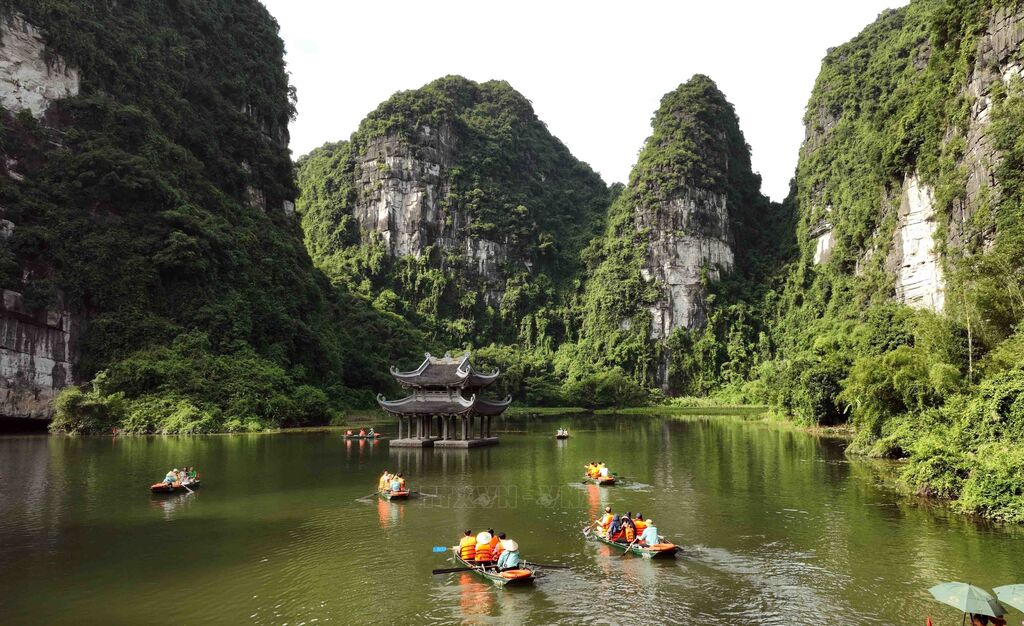
 |
| The Trang An Scenic Landscape Complex is a major attraction for visitors to Ninh Binh. (Photo: VNA) |
Hanoi (VNA) – In the face of intensifying global competition, growing environmental challenges and rising demand for sustainable travel, Vietnam’s tourism sector has reaffirmed its commitment to a green development pathway, with a strong focus on improving service quality, strengthening workforce training and expanding market promotion to drive a new phase of growth.
Industry leaders said the sector’s 21% expansion in 2025 carried broad significance, underscoring strong resilience and recovery momentum while reinforcing Vietnam’s competitiveness on the global tourism map.
Against a backdrop of ongoing global uncertainties marked by geopolitical tensions, high inflation and uneven tourism recovery, the robust growth figure is not only a point of pride but also a key driver encouraging the sector to step up efforts in the period ahead.
 |
| Ninh Binh is also among the localities moving towards a sustainable green destination. (Illustrative photo: VNA) |
Clearing bottlenecks
Vietnam’s tourism surge in 2025 was partly attributed to the rollout of breakthrough mechanisms and policies, particularly continued improvements in visa facilitation. Beyond expanding unilateral visa exemptions and implementing e-visas for citizens of all countries and territories, authorities also extended the permitted length of stay for international visitors. These timely adjustments have helped sharpen Vietnam’s competitive edge as a destination.
At the same time, a series of support measures for tourism businesses were issued and implemented, including cuts to appraisal fees for travel business licences, applying electricity tariffs for tourism accommodation facilities equivalent to those for the manufacturing sector, and streamlining administrative procedures. Such policies have enabled enterprises to recover, expand operations and raise service standards.
Notably, the renewal of tourism promotion and marketing, closely integrating culture and the arts, cinema and digital media in a more professional and targeted manner, has emerged as a standout highlight.
The Ministry of Culture, Sports and Tourism has made a strong mark through promotional campaigns in Europe, the US, China, Japan, the Republic of Korea, India and Australia, alongside participation in major global tourism fairs such as ITB Berlin and WTM London. Digital outreach has also gained momentum, with the Vietnam National Authority of Tourism’s website, vietnam.travel, ranking second in Southeast Asia.
Product development has likewise been aligned with emerging trends, including night-time tourism, wellness tourism, rural tourism, golf tourism and culinary tourism, aimed at enriching visitor experiences, extending length of stay and boosting spending.
Thanks to these efforts, Vietnam’s tourism sector in 2025, for the first time in its history, served around 135.5 million domestic tourists and welcomed nearly 21.2 million international arrivals, up more than 20% year-on-year and exceeding pre-COVID-19 levels, while total revenue surpassed 1 quadrillion VND (about 38 billion USD).
With national GDP growing by 8.02% in 2025, the service sector was assessed as recording strong expansion and contributing more than half of overall economic growth, with tourism identified as a key driving force.
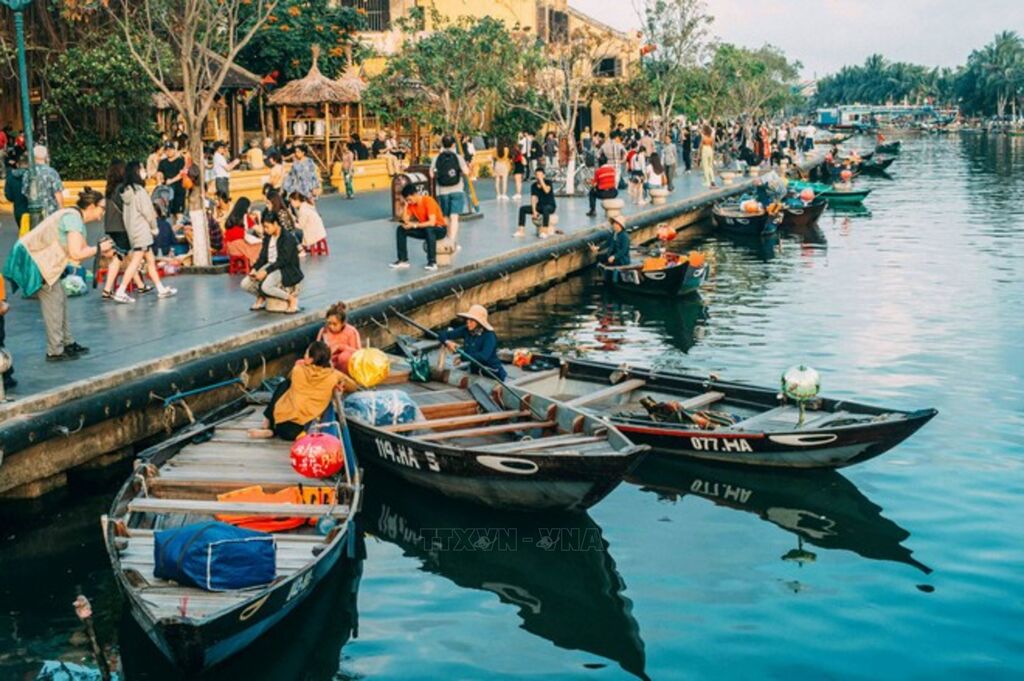 |
| Hoi An is regarded as a model green and sustainable destination in Vietnam. (Photo: VNA) |
Core product ecosystem
Looking ahead to 2026, the tourism sector targets about 25 million international arrivals, 150 million domestic holidaymakers and total revenue of around 1.12 quadrillion VND (approximately 43 billion USD), reflecting its ambition to develop tourism into a spearhead economic sector in line with the Government's goals.
According to Nguyen Trung Khanh, Director of the Vietnam National Authority of Tourism, the sector will focus on key product lines such as cultural tourism, nature-based tourism, marine and island tourism, and urban sightseeing.
Alongside these traditional products, localities and businesses are stepping up investment in creative, smart and green tourism products, including volunteer tourism, environmental protection tours, film set experiences, agricultural and rural tourism, street music activities, educational tourism linked to military experience, as well as virtual reality applications and automated guiding systems.
To sustain momentum in the new year, the ministry has recently directed efforts to further develop tourism products linked to cultural industries, while coordinating with the Ministry of Health to build medical and healthcare tourism products.
To attract higher-spending visitor segments, Vietnam is also studying and developing new and premium tourism products, particularly those tailored for Muslim travellers, he noted./.