 |
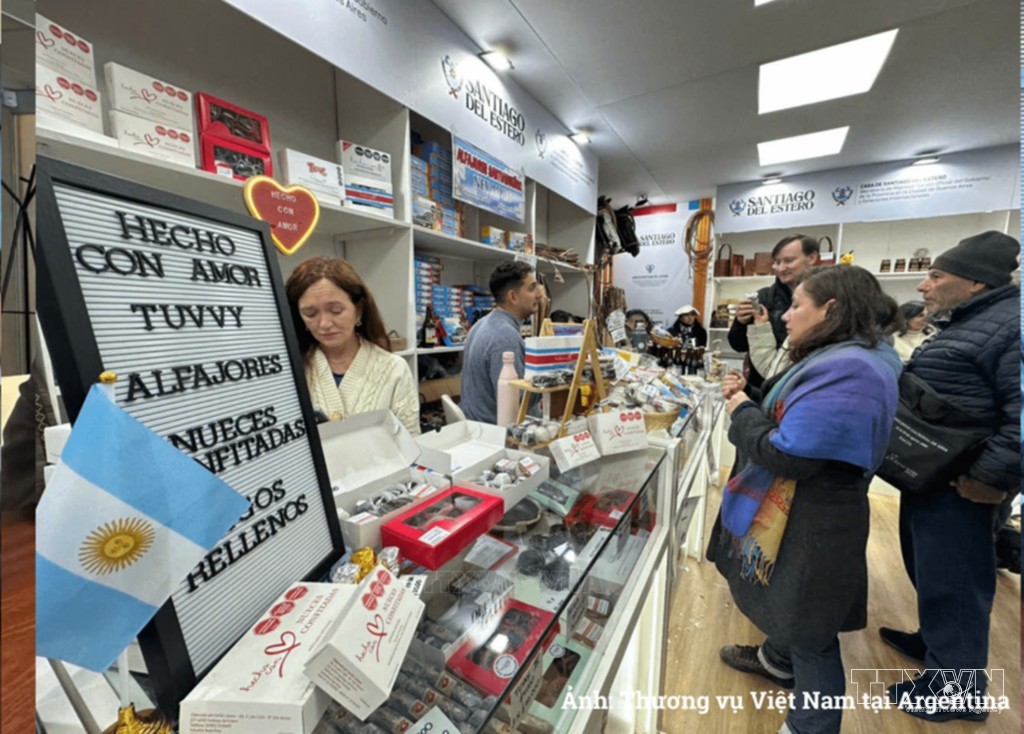
| In the first six months of 2026, Vietnam is among the countries with which Argentina recorded a large trade surplus. (Photo: Vietnamese Trade Office in Argentina) |
Hanoi (VNA) – Argentina, Uruguay and Paraguay are opening up new opportunities for Vietnamese goods as the three South American economies step up integration, investment and trade ties with international partners, according to the Vietnamese Trade Office in Argentina, which also covers the other two.
Data from Argentina’s National Institute of Statistics and Censuses (INDEC) show that in the first six months of 2026, Vietnam was among the countries with which Argentina recorded a large trade surplus. Argentina posted a trade surplus of over 1.3 billion USD with Vietnam during the period, with exports to the Southeast Asian country reaching about 1.8 billion USD, compared with imports of 469 million USD.
Recent economic reforms, simpler procedures, more flexible foreign exchange regulations and the removal of some trade barriers are making it easier for foreign goods to enter Argentina.
Notably, Argentina cut the import tariff on mobile phones originating outside the Southern Common Market (MERCOSUR) to zero from January 15, 2026. It also has strong demand for electronic equipment and components for assembly, telecommunications and consumer use, while Vietnam has developed large-scale electronics manufacturing capacity.
Electronic components, semi-finished products, technology accessories and equipment supporting digital transformation could therefore become promising export items, the office said.
Another opportunity comes from Argentina’s major projects in the Vaca Muerta oil and gas fields, lithium mining, renewable energy, logistics and infrastructure. These projects are generating demand for machinery, spare parts, electrical equipment and industrial supplies.
This means Vietnamese companies could move beyond short-term export orders to become suppliers for industrial, energy and infrastructure projects in South America, the office noted.
While Argentina is the largest market, Uruguay and Paraguay also offer specific advantages. Uruguay has a small population but a relatively open business environment. Its imports remained substantial in the first half of 2026, exceeding 1.18 billion USD on a free-on-board (FOB) basis in June alone.
Given the market’s size, Vietnamese businesses may find opportunities in niche segments such as electronics, machinery, processed food, apparel and consumer goods.
Paraguay, meanwhile, boasts strengths in agriculture and energy and occupies an important position in South America’s economic network. Opportunities for Vietnamese businesses cover the export of not only finished goods but also agricultural machinery, industrial equipment, spare parts and products for processing industries.
Aquatic products and processed foods are also considered promising areas. Paraguay’s advantages in soybeans, agricultural by-products, cotton and livestock products could complement Vietnam’s production needs and create opportunities for long-term bilateral trade.
The Trade Office identifies phones and electronic components, machinery, equipment, supporting industries, aquatic products and processed foods as potential sectors in the three countries during 2026–2030.
Vietnamese apparel, footwear and consumer goods have established a presence but face strong competition from other countries and suppliers within MERCOSUR. The office therefore recommends selective expansion rather than pursuing volume growth at all costs.
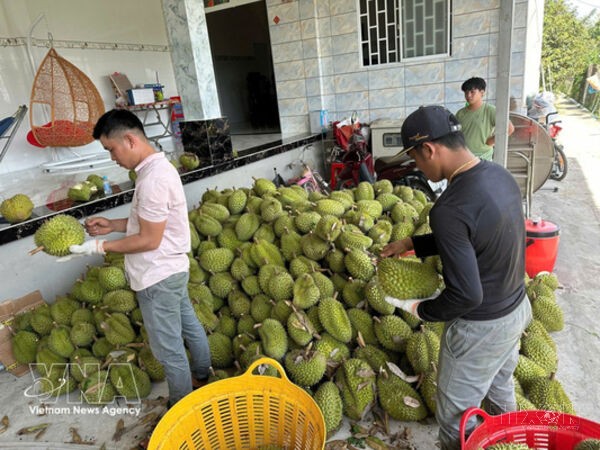
For agricultural products, direct competition in common commodities would be difficult as all the three countries have strong agricultural sectors. Better prospects lie in processed coffee, pepper, tropical fruit-based foods, beverages, organic products and other high-value-added items.
Nguyen Manh Khoi, head of the Vietnamese Trade Office in Argentina, said South America remains a market with substantial room for Vietnamese goods. He noted that interest is increasing from both sides, with Vietnamese businesses working to access South America and South American companies also seeking opportunities in Vietnam.
On July 22, CMA Paraguay worked with the trade office to explore the Vietnamese market and seek local partners. The company said it could adapt packaging, formulas and flavours to individual markets and is willing to produce private-label goods for retail chains.
The Trade Office invited CMA to join the Vietnam International Sourcing Expo 2026, scheduled for September 3–5 in Ho Chi Minh City, to connect the Paraguayan company with Vietnamese importers, supermarkets and retail chains.
According to experts, alongside negotiations on trade mechanisms between Vietnam and MERCOSUR, support for businesses should focus on Spanish-language market information, import regulations, technical standards, payment and exchange-rate issues, and partner networking.
South America is a distant market, but new openings are emerging. Turning these opportunities into sustainable market shares will require Vietnamese businesses to select the right markets, products and partners and build on-site distribution capacity, rather than relying solely on trade missions and short-term orders./.