 |
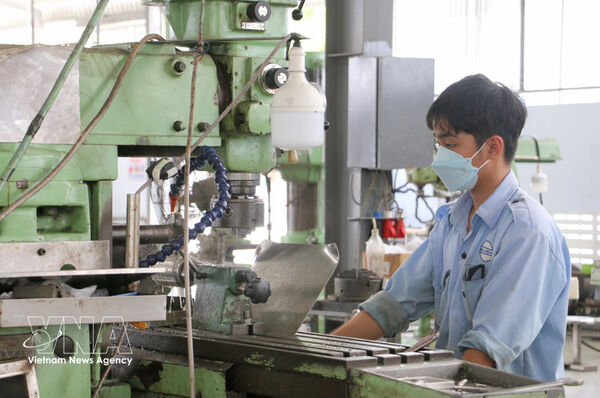
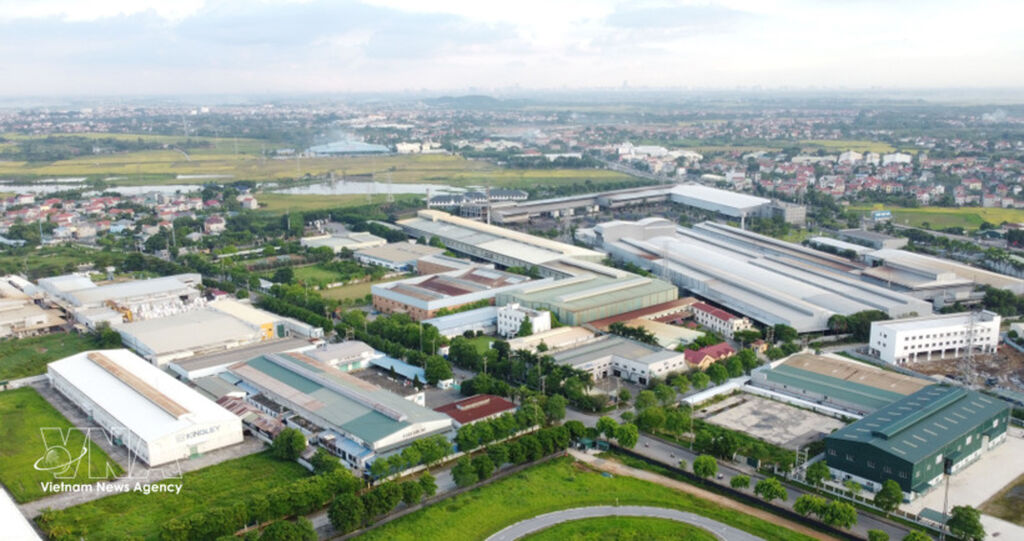
| The Binh Xuyen Industrial Park in Phu Tho province records an occupancy rate of 100%. (Photo: VNA) |
Hanoi (VNA) – Amid profound shifts in global trade that are making the business environment more fragmented and less predictable, Vietnam continues to be seen by foreign investors as a stable destination and a key link in global supply chains.
Sun Guoqiang, Chairman of the Shandong Business Association in Vietnam, said the country is drawing growing interest from Chinese enterprises, particularly in manufacturing, as they seek to build industrial capacity and integrate into global value chains.
Shandong firms have moved from exploration to more structured investment in Vietnam, focusing on execution capacity, adaptability to the local business environment, and supply chain localisation. The association will continue acting as a bridge to help businesses access policies, partners, and markets, while developing a digital trade promotion platform to improve investment efficiency.
Similarly, Bruno Jaspaert, Chairman of the European Chamber of Commerce in Vietnam (EuroCham), noted that European businesses maintain a consistent view on reforms needed to further strengthen Vietnam’s investment climate. Key priorities include infrastructure development and administrative procedure simplification to create a more enabling business environment.
Vietnam has also rolled out sector-specific policies to support businesses, such as investing in infrastructure and human resources for tourism, and enhancing legal transparency in agriculture, while policy stability and effective governance remain critical to improving competitiveness.
In 2026, Vietnam’s Investment Law and related policies are set for a new round of revisions, expected to reshape the investment landscape and business models.
Leaw Wee Ming, General Director of the Vietnam-Singapore Industrial Park (VSIP) Can Tho, said that with over 30 years of experience in Vietnam, VSIP prioritises partnerships with localities that demonstrate long-term vision, transparent governance, and strong reform commitment.
VSIP Can Tho not only provides comprehensive infrastructure but also serves as a bridge between authorities and investors, supporting projects from initial site surveys and legal procedures through to full operation. This model is seen as a competitive advantage for Vietnam in attracting global capital, particularly for projects aligned with environmental standards and sustainable development.
Meanwhile, Ho Chi Minh City is consolidating its position as Vietnam’s leading economic hub and is emerging as an internationally scaled megacity. With an area exceeding 6,700 sq.km, a population of over 14 million, and accounting for around 25% of national GDP, the city is not only a destination for capital flows but is accelerating in sectors that will define competitiveness in the coming decade.
Vice Chairman of the municipal People’s Committee Nguyen Cong Vinh said the city has the capacity to become a gateway for capital, technology, governance standards, and innovation models into the ASEAN market of over 700 million people, while advancing key sectors such as trade, finance, AI, semiconductors, and high-quality logistics.
To realise these ambitions, the city has identified trade promotion as a key growth driver, adopting Plan No. 61/KH-UBND with 74 activities in 2026, including 55 domestic programmes, 11 overseas initiatives, and eight support activities. Led by the Department of Industry and Trade, and the Investment and Trade Promotion Centre, these efforts aim to strengthen linkages between domestic and FDI enterprises and international partners, helping to build stable and sustainable supply chains./.