Vietnam's economy expected to grow 11% in 2027
AFP reported that Vietnam’s economy grew 8.4% year-on-year in the second quarter of 2026, exceeding the previous forecast of 7%. In the first half of the year, GDP expanded 8.2%, with industry and construction remaining key drivers of growth, alongside a recovery in manufacturing activity and domestic demand.
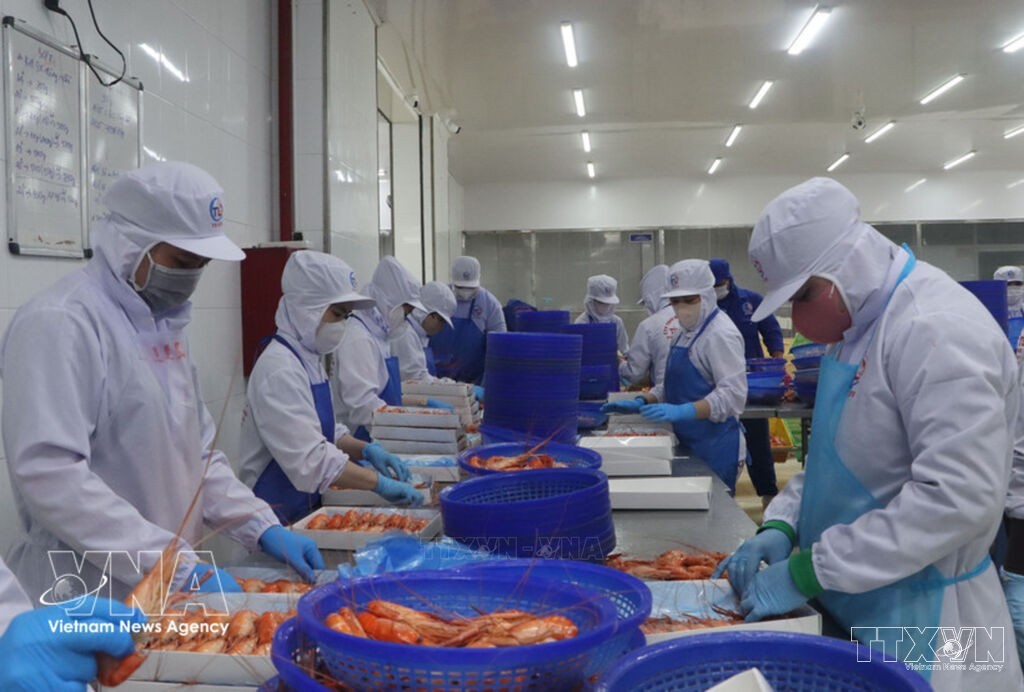
Processing prawns for export (Photo: VNA).

Hanoi (VNA) - International press agencies have published positive and optimistic assessments of Vietnam’s economic performance, highlighting its strong growth momentum, stable macroeconomic fundamentals and long-term development prospects.

AFP reported that Vietnam’s economy grew 8.4% year-on-year in the second quarter of 2026, exceeding the previous forecast of 7%. In the first half of the year, GDP expanded 8.2%, with industry and construction remaining key drivers of growth, alongside a recovery in manufacturing activity and domestic demand.

AFP quoted Standre Bezuidenhout of international law firm DFDL as saying Vietnam had demonstrated its ability to turn geopolitical and supply-chain shifts into opportunities to attract investment.

He noted that Vietnam continued to attract manufacturing activity, deepen trade integration and strengthen its position as a reliable destination for investment flows.

The growth momentum was also reflected in trade and foreign investment. AFP reported that Vietnam’s exports reached 266.52 billion USD in the first six months of 2026, up 21% year-on-year, while foreign investment rose 61% to 34.65 billion USD.

In a recent article citing a Standard Chartered report, Xinhua reported that the bank forecast Vietnam’s GDP to grow 9.5% in 2026 and 11% in 2027. Standard Chartered also lowered its 2026 inflation forecast for Vietnam to 4.4%, saying monetary policy could continue to support growth while keeping inflation under control.

Tim Leelahaphan, Standard Chartered’s senior economist for Thailand and Vietnam, said the Vietnamese economy had demonstrated strong resilience in the first half of 2026. Growth was driven by manufacturing, services and investment, supported by policies aimed at promoting economic expansion.

Against a backdrop of continued global economic uncertainty and inflationary pressures, Leelahaphan said Vietnam was entering the final months of 2026 from a strong position, underpinned by robust domestic demand, continued investment in infrastructure and production capacity, and an ongoing economic transformation. These factors are expected to support the country’s long-term development goals./.

See Also

Singapore’s experience offers lessons for Vietnam

Singapore’s experience in linking policies with business needs, mobilising technology corporations to address national challenges and ensuring vulnerable groups are not left behind could provide valuable lessons for Vietnam.

Talent development, attraction, utilisation must be part of national development strategy: Top leader

The ultimate goal of talent development, attraction and utilisation is to generate new projects, technologies, businesses, policies and values, build a workforce capable of driving rapid, sustainable and self-reliant national development, and create opportunities for all capable Vietnamese people to be identified, developed and given chances to contribute to the country, said top leader To Lam.

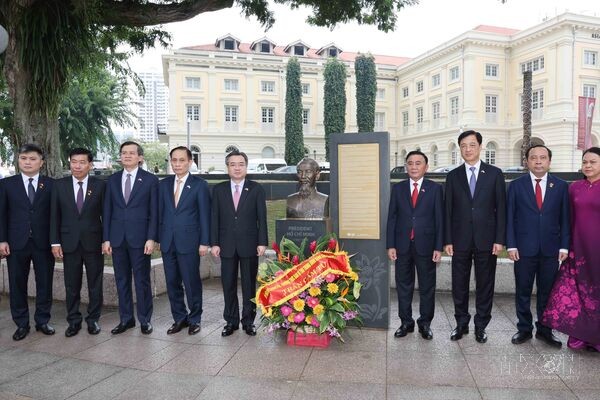
Key leader pays tribute to President Ho Chi Minh in Singapore

Politburo member and Standing member of the Communist Party of Vietnam (CPV) Central Committee’s Secretariat Tran Cam Tu and a high-ranking CPV delegation on August 24 paid tribute to President Ho Chi Minh at the statue and memorial plaque dedicated to him within the campus of the Asian Civilisations Museum in Singapore.

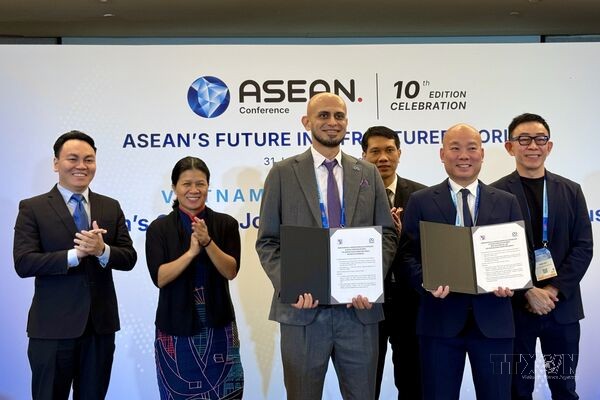
Vietnamese, Singaporean enterprises boost science-technology partnerships

Vietnam and Singapore are deepening cooperation among small- and medium-sized enterprises (SMEs) in science and technology, innovation and digital transformation. Strong government support and proactive engagement from the two business communities are creating new momentum for the bilateral digital economy and helping enterprises from both countries compete more confidently in global markets.

Vietnam fine-tuning Extended Producer Responsibility policy to promote circular economy

Vietnam’s revised EPR framework is therefore expected to build a more comprehensive ecosystem covering collection, transportation, sorting, recycling, data management and supervision, making producers’ responsibilities closely linked to actual recycling outcomes. This will help EPR become a genuine driver of the recycling market and Vietnam’s transition toward the circular economy.

Japanese firm to produce key chip material in Vietnam, Malaysia

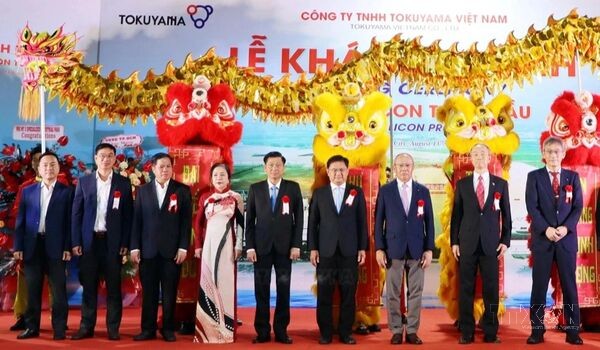
Tokuyama's Vietnam plant, inaugurated last week, will grind, clean and analyse polysilicon, an essential raw material for semiconductor wafers. Tokuyama is investing 60 million USD in the facility, which is ultimately expected to reach an annual capacity of 4,000 tonnes.

Vietnam, Canada look forward to early elevation of bilateral ties

Foreign Minister Le Hoai Trung stressed Vietnam attaches importance to its relations with Canada and stands ready to work with the latter to step up substantive cooperation towards the early elevation of the Vietnam–Canada Comprehensive Partnership, in line with the political trust, cooperation potential and interests of the two countries’ peoples.

Dien Bien taps natural assets to develop green tourism

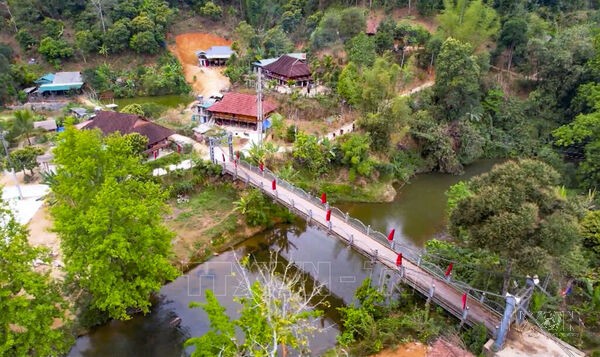
Not only known for its historical significance, Dien Bien also boasts unspoilt natural landscapes and a cool climate, creating favourable conditions for ecotourism. A range of green tourism models are taking shape, diversifying tourism products and enhancing the destination’s appeal.

Keeping the salt fields of Chau Ha alive

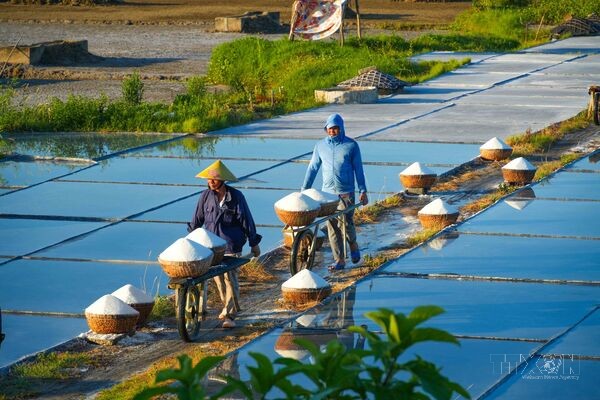
Under the scorching sun, salt farmers at Chau Ha salt field in Mai Phu commune, Ha Tinh province, work from early morning until late afternoon to produce pure white salt. But behind this generations-old trade are concerns over unstable incomes, weak demand and the risk of the craft fading as younger people seek other livelihoods.