 |
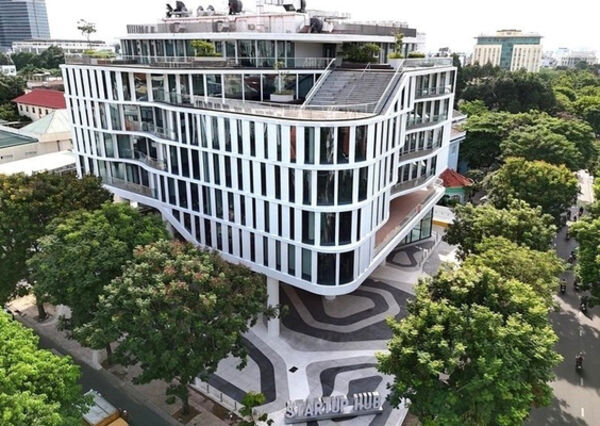
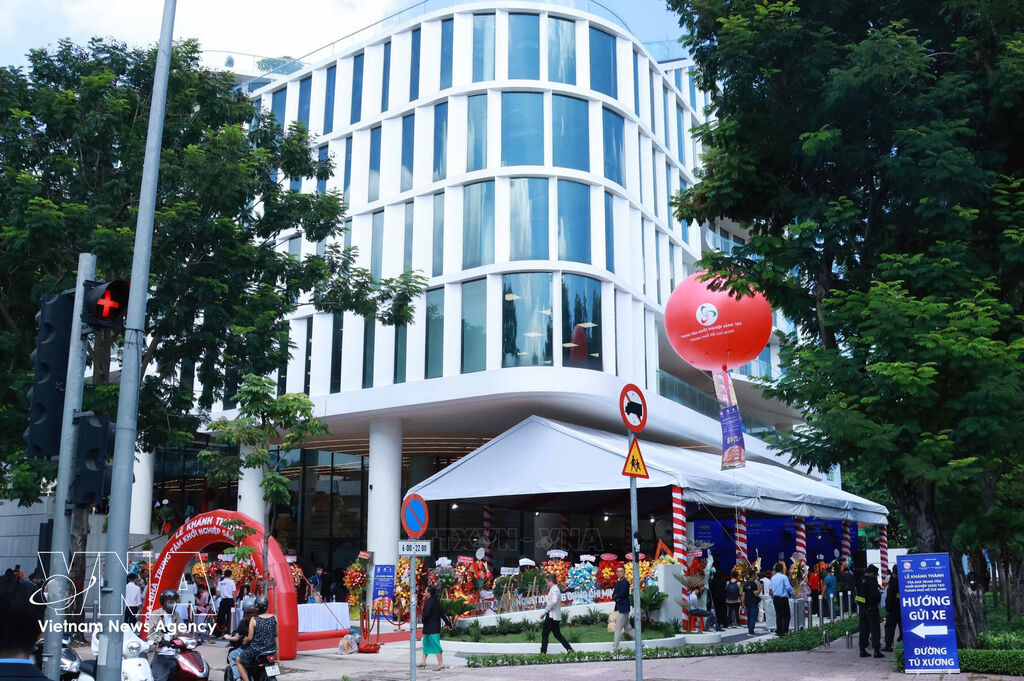
| The Startup and Innovation Hub of Ho Chi Minh City (SIHUB). (Photo: VNA) |
Hanoi (VNA) – Vietnam’s startup ecosystem is showing increasingly strong momentum on the global stage, backed by rapid growth in innovation activities, expanding policy support and rising international integration.
According to the Global Startup Ecosystem Index 2026 released by StartupBlink, Vietnam climbed five places to rank 50th globally, marking its highest position ever in the annual rankings.
The index, published annually since 2017, evaluates startup ecosystems in countries and cities worldwide based on factors such as ecosystem quality, business environment and scale of startup activities.
StartupBlink identifies Vietnam among the fastest-growing ecosystems within the global top 21–50 group. The report notes that this segment represents one of the world’s most dynamic ecosystem clusters, with growth rates significantly higher than those of leading startup hubs. Vietnam and Thailand are highlighted as Southeast Asia’s standout performers.
Vietnam currently has around 4,000 startups, 208 investment funds, 84 incubators and more than 20 startup support centres operating at both national and local levels.
One of the most notable developments this year is Ho Chi Minh City rising 12 places to rank 98th globally, entering the world’s top 100 startup ecosystems for the first time.
According to StartupBlink, Ho Chi Minh City now leads Southeast Asia in ecosystem maturity and performs strongly in fintech and blockchain, ranking 60th and 70th globally in the two sectors, respectively.
Beyond traditional startup hubs such as Hanoi, Ho Chi Minh City and Da Nang, innovation activities are increasingly spreading to other localities.
This year’s report marks the first appearance of Hai Phong in the global top 1,000 startup ecosystems, bringing the total number of Vietnamese cities in the rankings to four.
Experts said the development reflects the gradual expansion of innovation ecosystems to localities with strengths in manufacturing, logistics and technology rather than being concentrated solely in major urban centres.
StartupBlink also recognises Vietnam’s growing participation in its global ecosystem partnership network, including the National Startup Support Centre (NSSC), the Startup and Innovation Hub of Ho Chi Minh City (SIHUB), and local innovation ecosystems in Da Nang and Hai Phong.
The latest achievements come as Vietnam accelerates policies on science – technology, innovation and digital transformation under Resolution No. 57-NQ/TW of the Politburo.
The Ministry of Science and Technology has recently advised the Government on multiple mechanisms and policies to support startups, technology enterprises and strategic technologies.
Notably, the 2025 Law on Science, Technology and Innovation officially introduces the concepts of “strategic technologies” and “strategic technology products” into legislation for the first time.
Based on the law, the Prime Minister issued Decision No. 21/2026/QD-TTg on the list of national strategic technologies, identifying ten strategic technology groups and prioritised products such as artificial intelligence, semiconductors, quantum technology, robotics, low-earth-orbit satellites, green hydrogen and core digital infrastructure.
Under the 2026 action plan for implementing Resolution 57, Vietnam aims to increase the number of startups by 30%, establish 30–50 spin-off enterprises from universities and research institutes, and develop at least three innovation and startup centres in Hanoi, Da Nang and Ho Chi Minh City.
The country also targets the commercialisation of at least five strategic technology products, including semiconductor chips, 5G network equipment, industrial robots, AI applications and unmanned aerial vehicles (UAVs), while piloting technology sandbox models in major cities to promote the testing and deployment of new technologies./.