 |
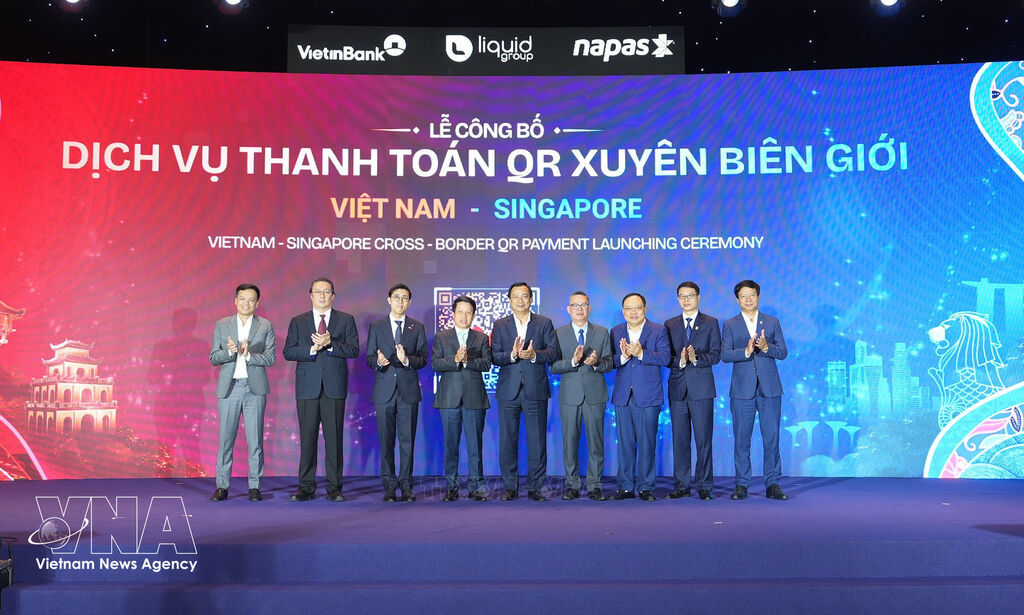
| Delegates at the launching ceremony. (Photo: VNA) |
Hanoi (VNA) – The National Payment Corporation of Vietnam (NAPAS), Singapore-based Liquid Group and Vietnam Joint Stock Commercial Bank for Industry and Trade (VietinBank) officially launched a cross-border QR payment service between Vietnam and Singapore on July 2.
The new connection is expected to facilitate tourism and trade while strengthening digital payment infrastructure in the Association of Southeast Asian Nations (ASEAN) region.
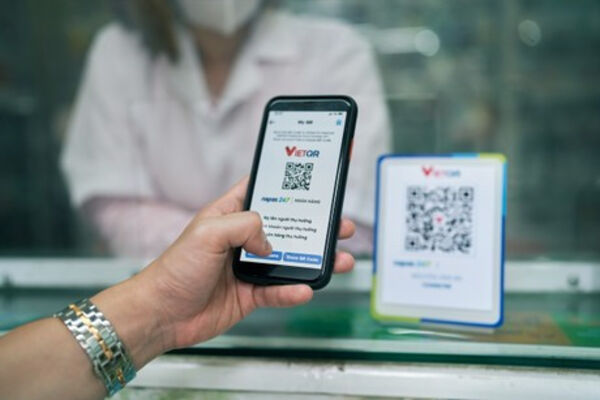
Under the new mechanism, users of payment applications within Singapore’s participating ecosystem can scan VietQRGlobal codes to make payments directly at participating merchants in Vietnam. Transactions are processed in real time, with the system automatically converting between the Singapore dollar (SGD) and the Vietnamese dong (VND), allowing users to pay without exchanging cash or relying on conventional payment methods.
The new service is also expected to benefit Vietnamese businesses. Retailers, hotels, restaurants and service providers will be able to serve international customers more conveniently without investing in dedicated payment terminals or handling multiple currencies. Instead, merchants can accept payments through the existing VietQRGlobal infrastructure. According to NAPAS, the service is expected to reach around 5 million users during the initial rollout through Liquid Group’s partner network in Singapore. The user base is expected to expand further as the Singaporean partner continues to grow its connected payment ecosystem.
Under the project, VietinBank serves as the settlement bank for QR payment transactions between the two countries. The new link also expands NAPAS’s cross-border QR payment network to six countries and territories, with Singapore becoming the fourth ASEAN market connected to Vietnam’s QR payment system.
As part of the cooperation roadmap, NAPAS and its partners plan to introduce outbound QR payments from Vietnam to Singapore later this year.
According to the Vietnam National Authority of Tourism, the country welcomed around 10.6 million international visitors in the first five months of 2026, up nearly 15% year on year and the highest figure recorded in many years. Singapore remained one of Vietnam’s fastest-growing source markets during the period.
A survey conducted by Changi Airport Group also found that three in five Singaporeans have visited Vietnam, with most expressing a desire to return. Singaporean travellers are regarded as relatively high-spending visitors who show a strong preference for electronic payment methods.
Against this backdrop, enabling visitors from Singapore to pay using the mobile payment applications they already use at home is expected to enhance the travel experience while reducing barriers to cross-border transactions./.