World Bank upgrades Vietnam to upper-middle-income status
According to the World Bank’s latest update released on July 1, Vietnam’s gross national income (GNI) per capita reached 4,970 USD in 2025, exceeding the institution’s 4,636 USD threshold for upper-middle-income economies.
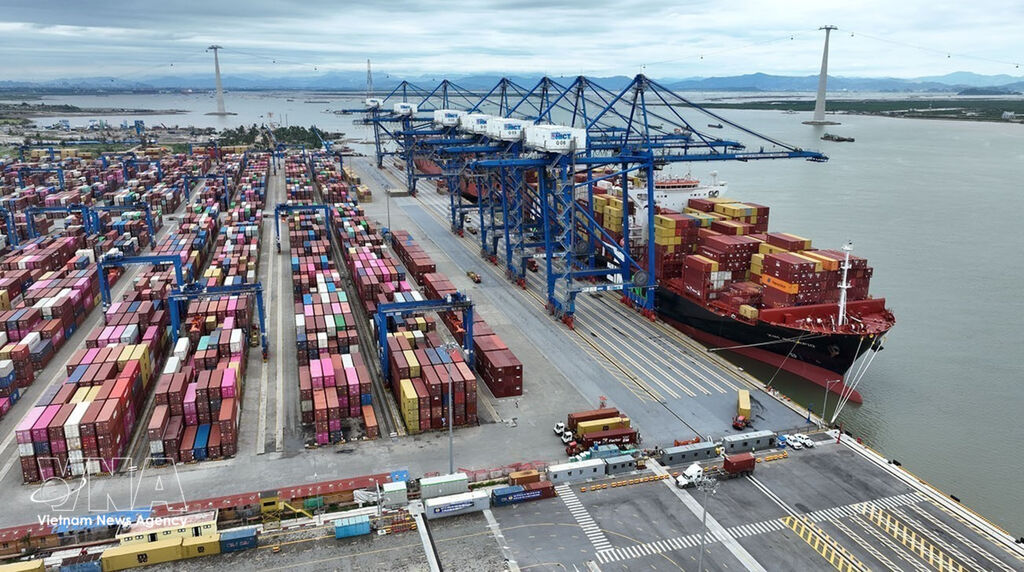
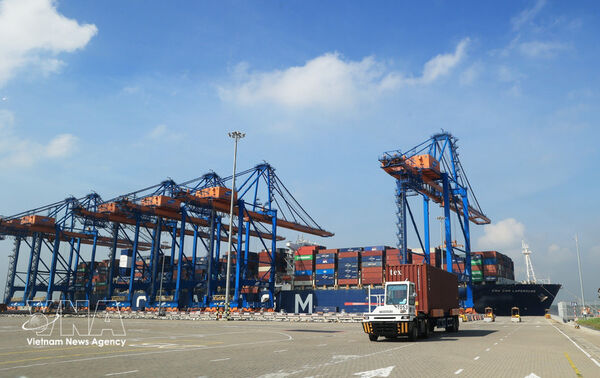
Cargo at Lach Huyen Container Terminal in Hai Phong city (Photo: VNA)

Hanoi (VNA) – The World Bank (WB) has reclassified Vietnam as an upper-middle-income country after years of sustained rapid economic growth, a move that experts say marks an important milestone and is likely to further strengthen international investor confidence in one of the region’s fastest-growing economies.

According to the bank’s latest update released on July 1, Vietnam’s gross national income (GNI) per capita reached 4,970 USD in 2025, exceeding the institution’s 4,636 USD threshold for upper-middle-income economies.

With the country’s reclassification, all five largest economies of Southeast Asia, namely Singapore, Malaysia, Thailand, Vietnam and the Philippines, have now attained upper-middle-income status or above.

Vietnam, one of Asia’s fastest-growing economies, is targeting double-digit economic growth from 2026, with momentum expected to come from business-friendly reforms and a sustained wave of infrastructure investment./.
Related News

Vietnam seen as ASEAN’s resilient growth bright spot

According to the World Bank (WB), buoyed by impressive GDP growth of 8% in 2025, Vietnam entered 2026 as one of Southeast Asia's strongest-performing economies. In its latest economic update released in May, the WB highlighted Vietnam’s robust fundamentals and favourable growth outlook.

See Also

Top leader attends ceremony marking 50 years of Saigon-Gia Dinh bearing late President’s name

Ho Chi Minh City has every reason to take pride in its remarkable achievements over the past half-century. From a war-ravaged urban centre facing enormous post-war difficulties, it gradually restored production, stabilised people's livelihoods, consolidated the achievements of the revolution, built an effective system of governance, and safeguarded national defence and security, thereby laying a solid foundation for long-term development.

Politburo sets six priorities for implementing Resolution No. 57

After 18 months of implementing Resolution No. 57, ministries, sectors and localities have adopted innovative and effective approaches that have generated positive momentum, while winning broad support from businesses, the scientific community and the public for policies on science, technology, innovation and digital transformation.

Localities propose reforms to improve three-tier administration model

A Hanoi official called for further decentralisation to commune-level authorities in line with resource allocation, continued streamlining of organisational structures to eliminate unnecessary intermediary layers, further refining the Party organisations’ model to align with the state administrative system, greater autonomy for non-business public service units, and wider participation of businesses and social organisations in delivering suitable public services.

New administrative system must deliver new governance capacity: Top leader

The Party and State leader described the restructuring as a broad, complex and far-reaching reform affecting almost every agency and public servant from the central to grassroots levels. While praising the significant initial achievements, he stressed that the results marked only the beginning and warned against complacency.