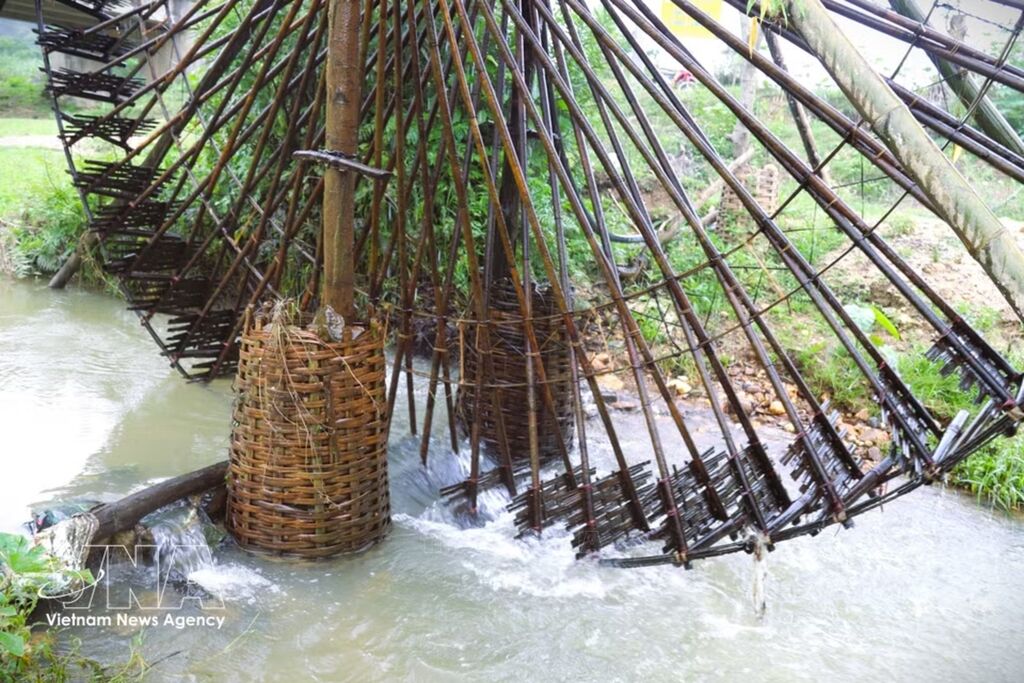
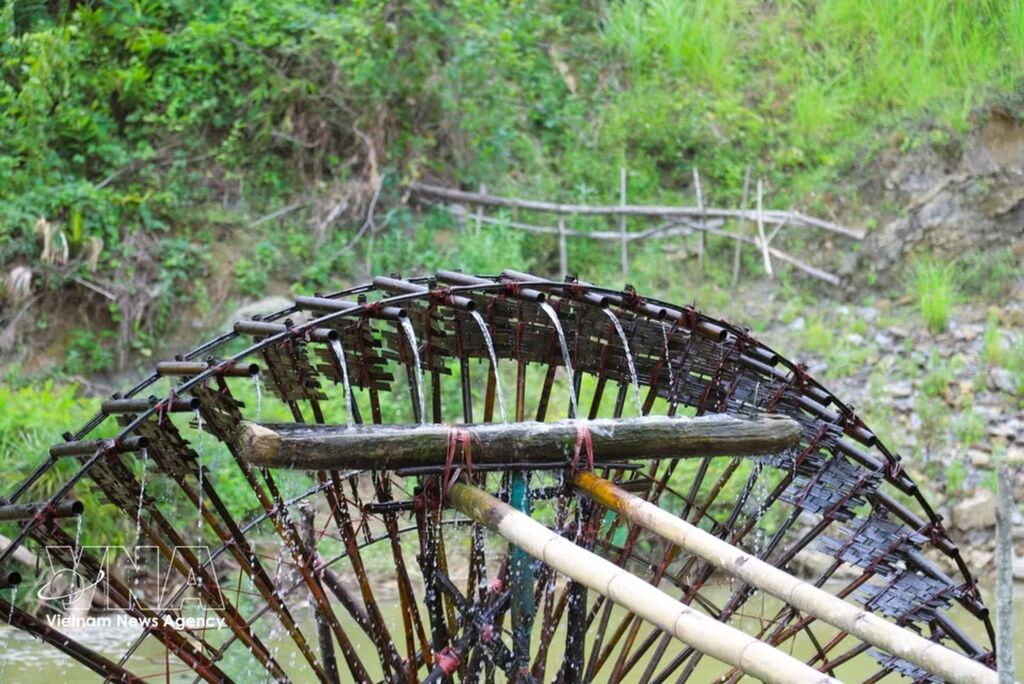
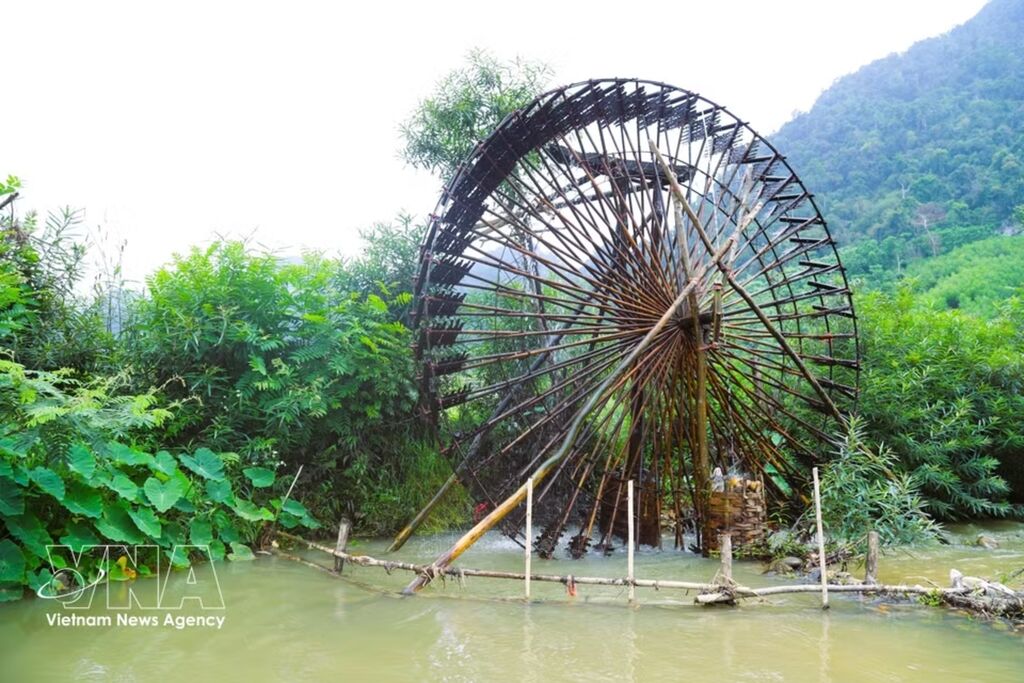
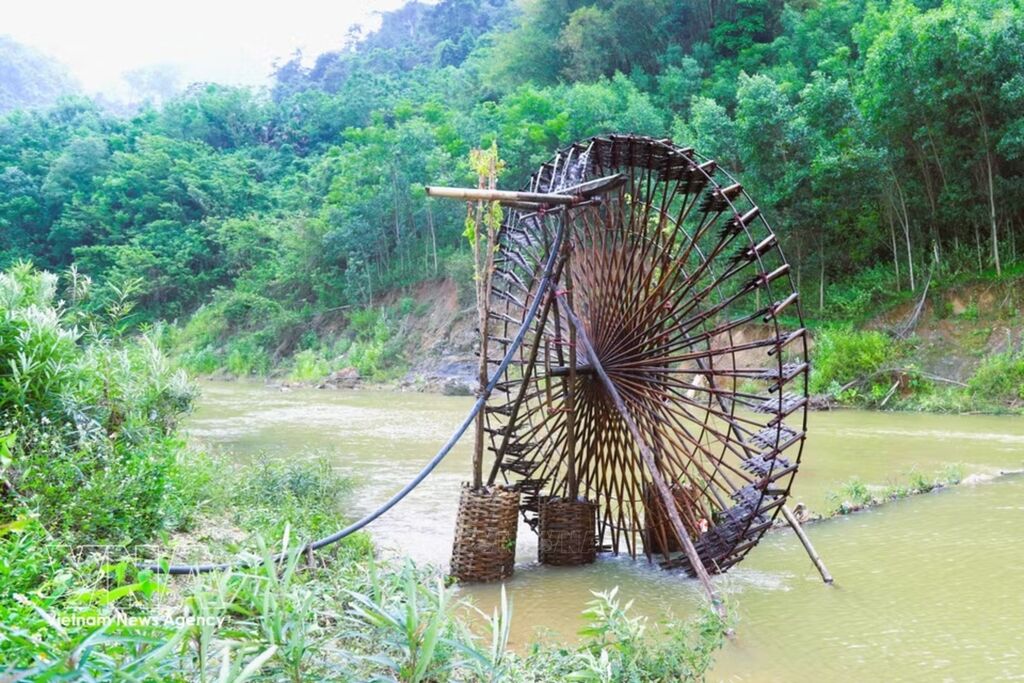
Each water wheel is a harmonious structure made up of multiple components. Its “soul” lies in dozens or even hundreds of evenly sized bamboo tubes attached to a central wooden axle, forming a sturdy wheel with a circumference of 7 to 15 metres. (Photo: Xuan Tien – VNA)
The weight of the water wheel is supported by a system of pillars embedded deep into the streambed and reinforced with stones packed in bamboo baskets, ensuring the structure remains upright and stable. (Photo: Xuan Tien – VNA)
To prevent debris such as branches and leaves from clogging the paddles and water tubes, locals build barriers upstream to block waste from flowing into the water wheel system. (Photo: Xuan Tien – VNA)
Water wheels are always installed along stream banks rather than midstream, carefully surveyed to minimise installation costs and effort while ensuring long-term, stable operation. Their durability comes from hundreds of interwoven bamboo stakes tied together with rattan strips at each joint. (Photo: Xuan Tien – VNA)
Hundreds of slightly tilted bamboo tubes are fixed along the wheel’s rim to lift water from the stream as the wheel rotates. (Photo: Xuan Tien – VNA)
Water wheels the highlights of Thai ethnic group in Nghe An province
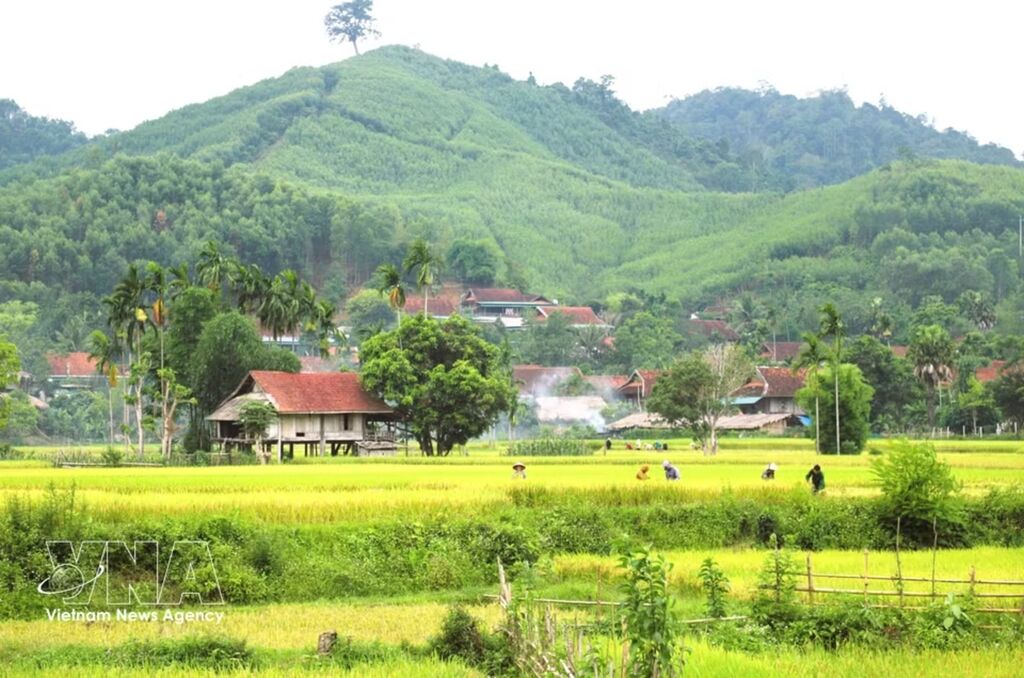
Water wheels are not only irrigation tools but also a distinctive cultural feature of the Thai ethnic community in Binh Chuan valley in the central province of Nghe An.